Learn about PRP injection therapy for shoulder pain and injuries. Discover how platelet-rich plasma treatment can help heal shoulder conditions without surgery.
The shoulder is one of the most complex and mobile joints in the human body, and one of the most commonly injured. PRP therapy has become an effective treatment across the full spectrum of shoulder pathologies, from tendinopathy and bursitis to osteoarthritis and ligament injury, offering a regenerative alternative when conservative measures fall short.
PRP therapy addresses a wide spectrum of shoulder conditions from tendinopathy to osteoarthritis
Shoulder Conditions Treated with PRP
PRP therapy is applicable to a wide range of shoulder disorders. Rotator cuff tendinopathy and partial tears represent the most common indication, followed by subacromial bursitis, glenohumeral osteoarthritis, biceps tendinopathy, and AC joint arthritis. The common thread is failed tissue healing that PRP's growth factor cascade can restart.
In the shoulder, ultrasound guidance is essential for precise delivery. The subacromial space, glenohumeral joint, biceps tendon sheath, and AC joint each require specific injection approaches, all performed safely and accurately by an experienced sports medicine or orthopedic specialist.
Condition
Injection Target
Evidence Level
Typical Protocol
Best Candidates
Rotator Cuff Tendinopathy
Intratendinous or peritendinous injection
Moderate (RCTs, systematic reviews)
1–2 injections under ultrasound guidance
Chronic tendinopathy; failed PT; partial tears
Frozen Shoulder (Adhesive Capsulitis)
Glenohumeral joint capsule
Moderate (19-study systematic review)
1–2 injections + PT capsular stretching
Any stage; refractory to PT or cortisone
Shoulder Bursitis
Subacromial bursa
Limited (case series, small RCTs)
1–2 injections
Chronic bursitis; failed cortisone
Shoulder Arthritis
Glenohumeral joint
Moderate (RCT vs. HA)
1–2 injections
Mild-moderate OA; not surgical candidate
Why PRP Is Well-Suited for Shoulder Pathology
The shoulder's high mobility demands and relatively poor blood supply in key tendons, particularly the supraspinatus, create conditions where normal healing is impaired. This hypovascular critical zone of the rotator cuff is precisely where PRP's delivery of concentrated growth factors provides the most benefit, supplementing a biologically deficient healing environment.
Unlike surgery, which requires anesthesia and months of rehabilitation, PRP is an outpatient procedure completed in 30–60 minutes with return to normal activity within days. For the broad range of shoulder pathologies amenable to regenerative treatment, this non-invasive profile is a major clinical advantage.
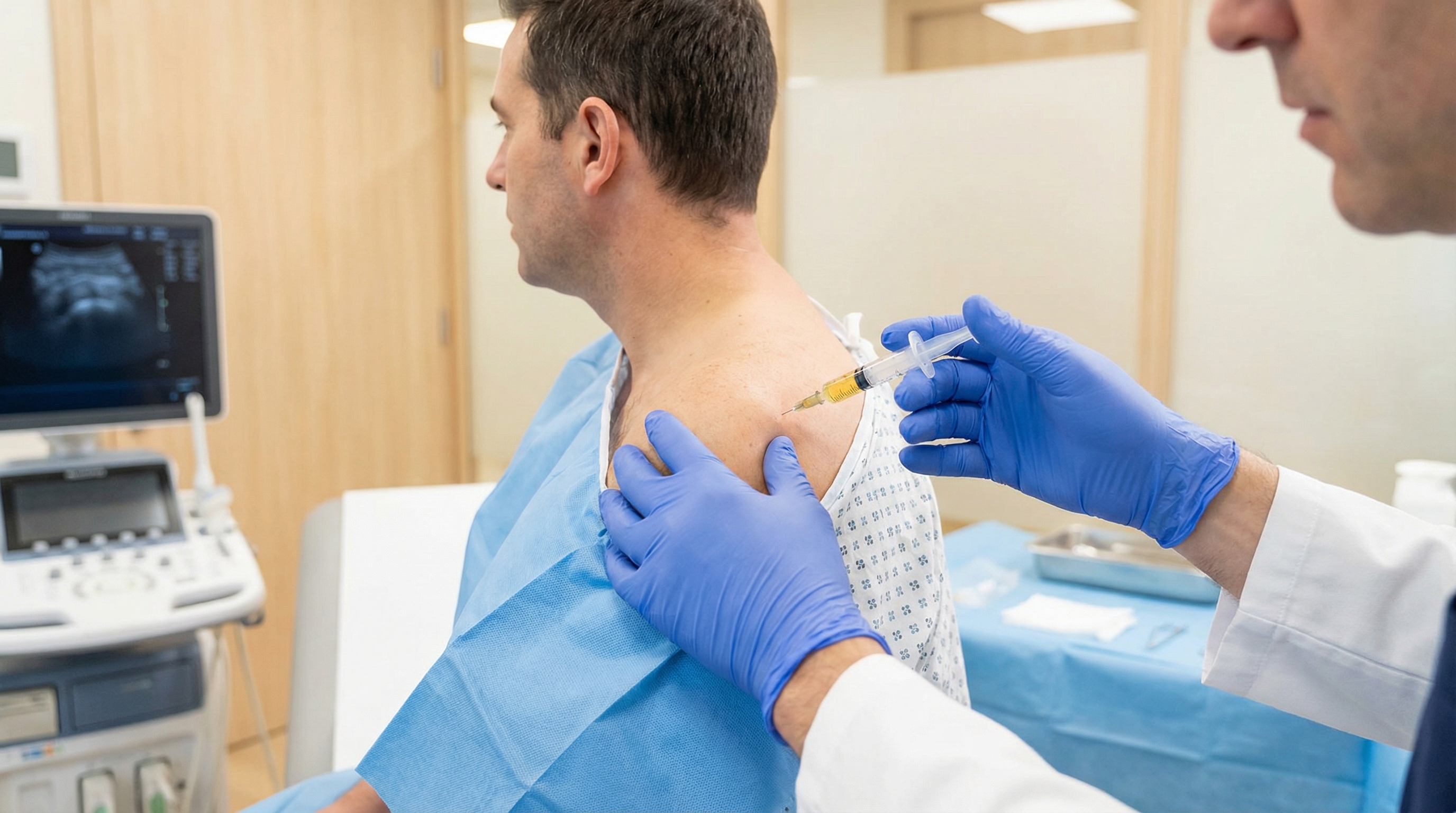
Shoulder PRP injection performed under ultrasound guidance in an outpatient clinical setting
Clinical Evidence Across Shoulder Conditions
A 2020 systematic review (PMID 32462527) pooling data from multiple randomized trials found PRP significantly superior to cortisone for shoulder pain and function at 3, 6, and 12 months across multiple shoulder pathologies. The advantage over cortisone grew over time, with the most pronounced difference at 12-month follow-up.
Research on PRP for glenohumeral OA (PMID 29046367) and rotator cuff tendinopathy (PMID 24700031) both demonstrate clinically meaningful improvements in pain and function, validating PRP's role across the full spectrum of shoulder conditions.
What to Expect from PRP Treatment for the Shoulder
A shoulder PRP injection is performed under ultrasound guidance as an outpatient procedure. Blood is drawn from the arm, processed in a centrifuge over 10–15 minutes, and the concentrated PRP is injected with a fine needle into the target structure. The entire process takes under an hour.
Most patients experience temporary soreness for 3–7 days post-injection as the growth factor cascade initiates healing. Significant improvement is typically evident at 4–8 weeks, with continued progress over 3–6 months. A course of 2–3 injections is recommended for most chronic shoulder conditions.
Am I a Candidate for Shoulder PRP?
Candidates include patients with rotator cuff tendinopathy or partial tears, subacromial bursitis, glenohumeral or AC joint osteoarthritis, or biceps tendinopathy who have not achieved lasting relief with physical therapy and cortisone injections.
Patients considering surgery, particularly for partial rotator cuff tears or moderate shoulder OA, are strong candidates for a PRP trial first. The procedure carries minimal risk and may provide the relief needed to avoid or delay surgical intervention.
1. Systematic review of PRP vs. cortisone for shoulder conditions. PMID 32462527
2. Rha DW, et al. PRP injection vs. dry needling in rotator cuff disease. PMID 24700031
Disclaimer: This content is for informational purposes only and does not constitute medical advice. Consult a qualified healthcare provider before pursuing any treatment.
Frequently Asked Questions
Find a Shoulder PRP Specialist Near You
Browse our directory of verified providers who offer PRP injections for rotator cuff, frozen shoulder, bursitis, and shoulder arthritis.