Platelet Rich Plasma Injections for Knees: A Closer Look at Pain Relief & Healing
Considering platelet rich plasma injections for knees? Learn how PRP shots for knee osteoarthritis work, their benefits, success rates, and potential risks.
The knee is one of the most common sites for PRP (Platelet-Rich Plasma) therapy. It is the largest joint in the body, bears the most repetitive load, and is home to several conditions, from osteoarthritis to tendon injuries to cartilage tears, where PRP's tissue-regenerating properties are directly relevant. This page provides an overview of how PRP is used across the range of knee conditions and what the evidence shows.
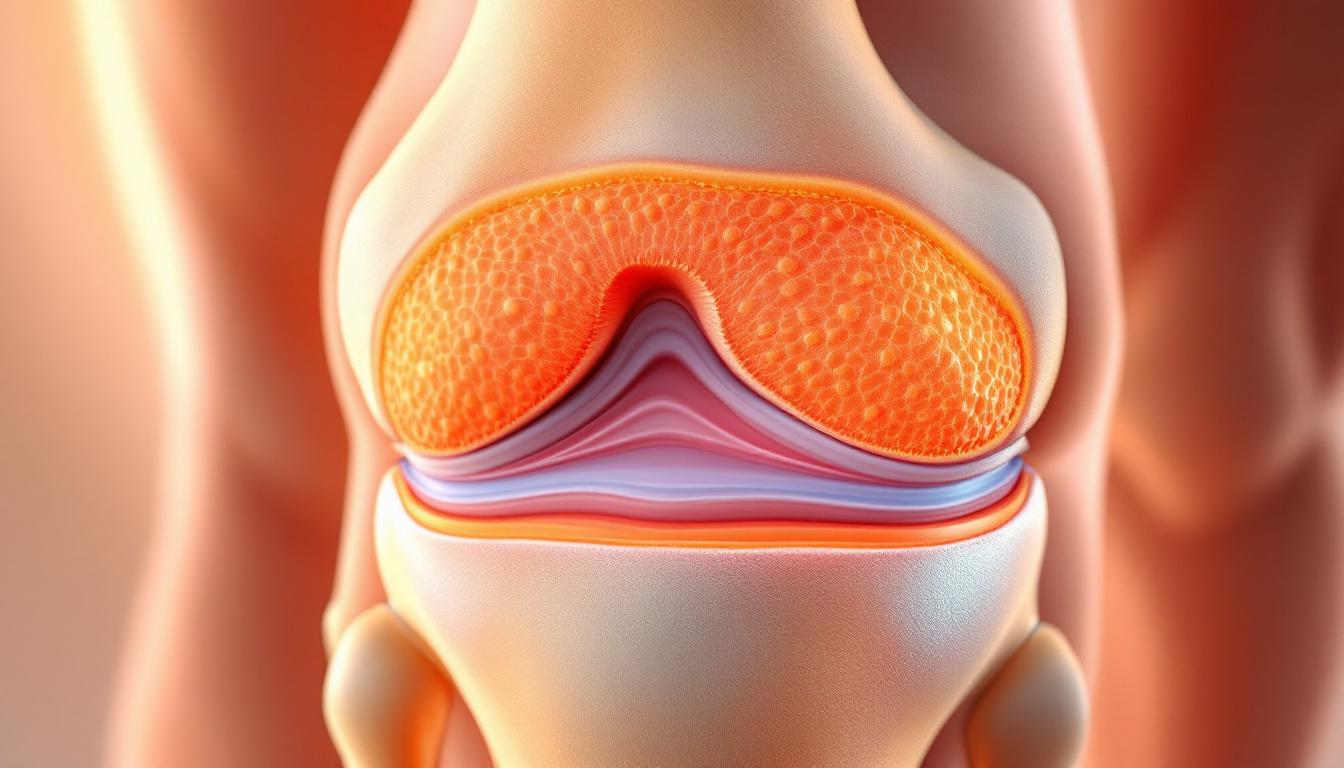
Knee joint anatomy and cartilage structure
Knee Conditions Treated With PRP
PRP is used for several distinct knee conditions, each with its own mechanism and evidence base. The most common are knee osteoarthritis, meniscus tears, patellar tendinitis (jumper's knee), and ACL/PCL injuries, both as a non-surgical treatment and as an adjunct to surgical repair.
Knee osteoarthritis is the condition with the strongest PRP evidence base. The knee cartilage breaks down over time, causing pain, stiffness, and reduced function that cortisone and hyaluronic acid injections only temporarily manage. PRP delivers concentrated growth factors, PDGF, TGF-β, IGF-1, that stimulate cartilage repair, reduce synovial inflammation, and protect remaining joint tissue.
Meniscus tears, particularly partial tears, can be treated with PRP to support healing in tissue that has limited natural blood supply. PRP is also used as an adjunct during surgical meniscus repair to accelerate healing and reduce re-tear risk.
Patellar tendinitis (jumper's knee) involves degeneration of the patellar tendon below the kneecap. Like other tendinopathies, it is now understood as a degenerative rather than purely inflammatory condition, which is exactly the type of tissue problem PRP is designed to address.
ACL and PCL injuries, ligament tears that often require surgical reconstruction, benefit from PRP applied at the time of surgery. Growth factors delivered directly to the graft site support ligament integration and may accelerate return to activity.
Condition
PRP Use Case
Evidence Level
Typical Protocol
Best Candidates
Knee Osteoarthritis
Intra-articular injection to reduce pain and protect cartilage
Strong (multiple large RCTs)
1–3 injections, 2–4 weeks apart
KL grade 1–3; failed cortisone/HA
Meniscus Tears
Injection for partial tears; surgical adjunct for repair
Moderate (RCTs and series)
1–2 injections or applied at surgery
Partial tears; post-repair augmentation
Patellar Tendinitis
Injection into degenerative tendon zone
Moderate (systematic reviews)
1–2 injections + PT program
Chronic cases (3+ months); failed PT
ACL/PCL Injuries
Applied at time of reconstruction surgery
Moderate (meta-analyses)
Single application during surgery
Ligament reconstruction patients
How PRP Works in the Knee
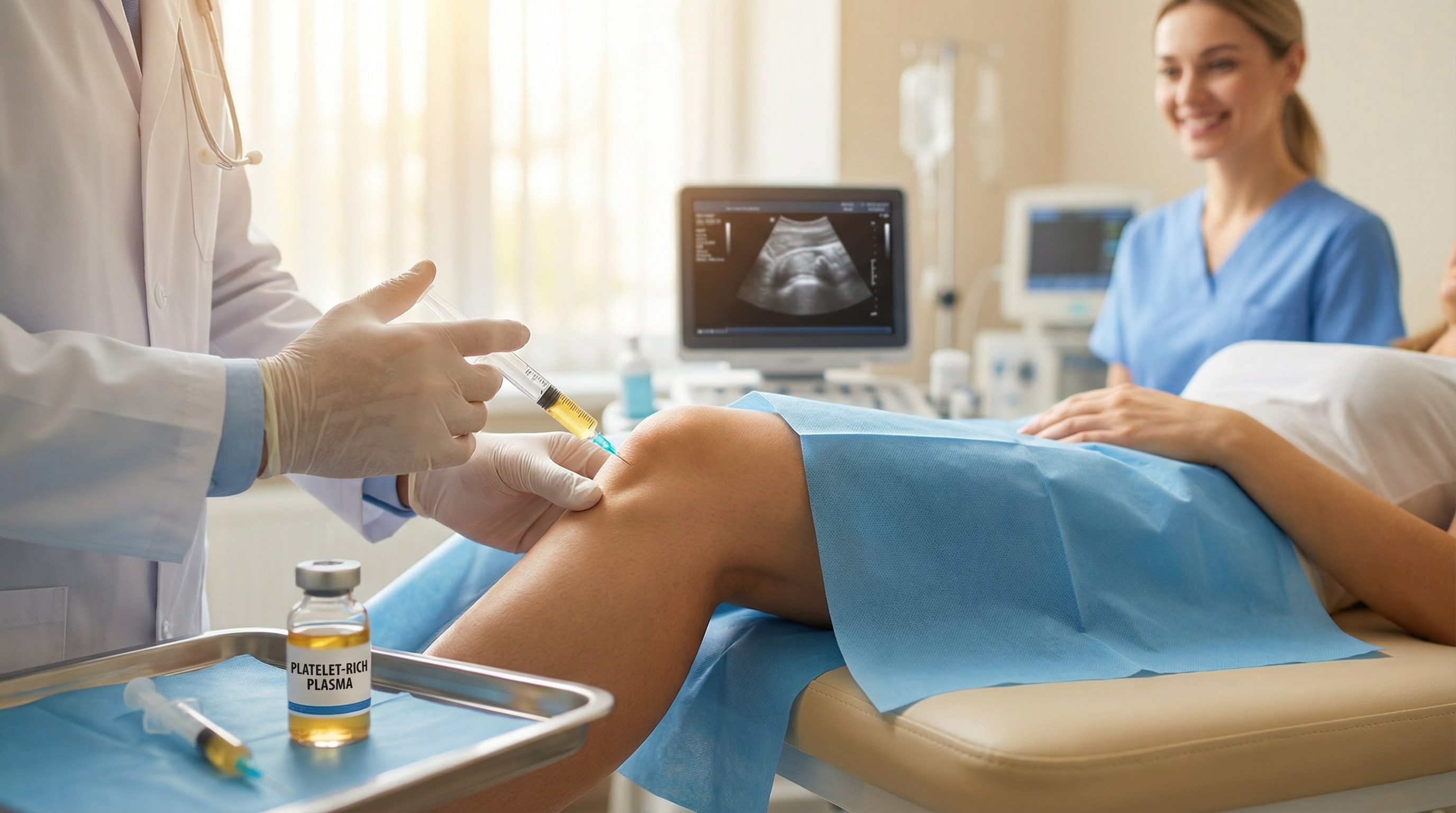
PRP is made by drawing a small blood sample, spinning it in a centrifuge to concentrate the platelet-rich fraction, and injecting it precisely into the knee joint or target tissue. The concentrated platelets release growth factors that activate the body's natural repair cascade, stimulating new collagen, cartilage matrix production, and blood vessel formation.
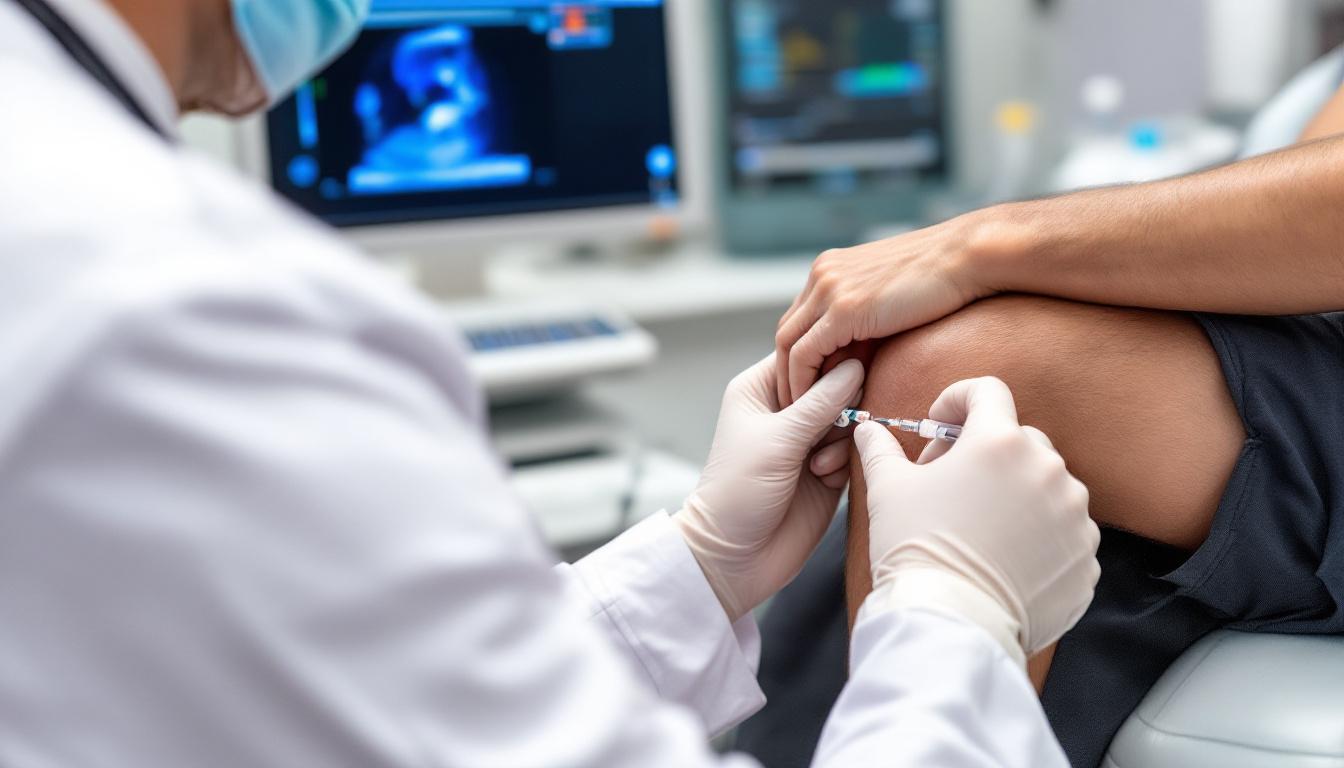
Cartilage, tendons, and ligaments all have a poor blood supply, which limits natural healing. PRP bypasses this limitation by delivering a concentrated biological signal directly to the tissue that needs repair. Ultrasound or fluoroscopic guidance is typically used to ensure precise placement within the joint or specific tissue target.
For patellar tendinopathy, a systematic review of 11 studies including 309 patients2 found that PRP produced clinically meaningful improvement in both pain and function across the majority of patients, with a favorable safety profile.
For surgical ligament repair, a 2023 meta-analysis of 22 RCTs3 found that PRP applied during ACL reconstruction significantly improved graft maturation and reduced the risk of graft failure compared to reconstruction without PRP.
PRP vs. Cortisone for Knee Conditions
Cortisone injections are commonly used for knee pain and work quickly, often within 1–2 weeks. But the benefit is short-lived, and repeated cortisone use degrades articular cartilage over time. For knee osteoarthritis specifically, multiple studies now show that PRP provides superior pain relief and function at 6 and 12 months.
PRP takes longer to take effect, most patients notice improvement at 4–8 weeks, but the results are more durable and do not carry the risk of cartilage or tendon breakdown that repeat corticosteroid injections do. For knee conditions where long-term tissue health matters, PRP is increasingly the preferred injectable option.
Who Is a Good Candidate for Knee PRP?
PRP is most appropriate for patients who have not achieved lasting relief from conservative treatments (physical therapy, NSAIDs, cortisone) and want to avoid or delay surgery. The best candidates tend to have mild to moderate osteoarthritis (Kellgren-Lawrence grade 1–3), chronic tendinopathy, or partial-thickness ligament/meniscus tears.
Imaging, typically an MRI or diagnostic ultrasound, is usually performed before treatment to confirm the diagnosis, assess the extent of tissue damage, and guide injection placement. Advanced stage (grade 4) knee osteoarthritis with bone-on-bone changes tends to show less benefit from PRP.
What to Expect
For intra-articular (joint) PRP in knee osteoarthritis, expect 2–3 days of increased knee soreness and swelling after injection, a normal part of the healing response. Most patients can bear weight and resume light activity immediately. High-impact activity (running, sports) should be avoided for 1–2 weeks.
Meaningful improvement typically begins at 4–8 weeks. Most clinical protocols use one to three injections, spaced 2–4 weeks apart for osteoarthritis. For tendinopathy, one or two injections are more typical, combined with a progressive physical therapy and eccentric loading program.
1. Xu Z, et al. Intra-articular platelet-rich plasma combined with hyaluronic acid injection for knee osteoarthritis: a systematic review and meta-analysis. J Orthop Surg Res. 2023;18(1):533. PMC: PMC10363074.
2. Fitzpatrick J, et al. Analysis of Platelet-Rich Plasma Extraction: Variations in Platelet and Blood Components Between 4 Common Commercial Kits. Orthop J Sports Med. 2017;5(1). PMID: 28786325.
3. Figueroa D, et al. Platelet-Rich Plasma Use in Anterior Cruciate Ligament Surgery: Systematic Review of the Literature. Arthroscopy. 2015;31(5):981-988. PMC: PMC9950249.
This content is for educational purposes only and does not constitute medical advice. Consult a qualified healthcare provider before starting any treatment.
Frequently Asked Questions
Find a Knee PRP Specialist Near You
Browse our directory of verified orthopedic PRP providers who treat knee pain, osteoarthritis, tendinopathy, and ligament injuries.