
PRP for Knee Osteoarthritis

    Explore how PRP injections can treat knee osteoarthritis. Learn about platelet-rich plasma therapy benefits, recovery, and results for knee osteoarthritis.
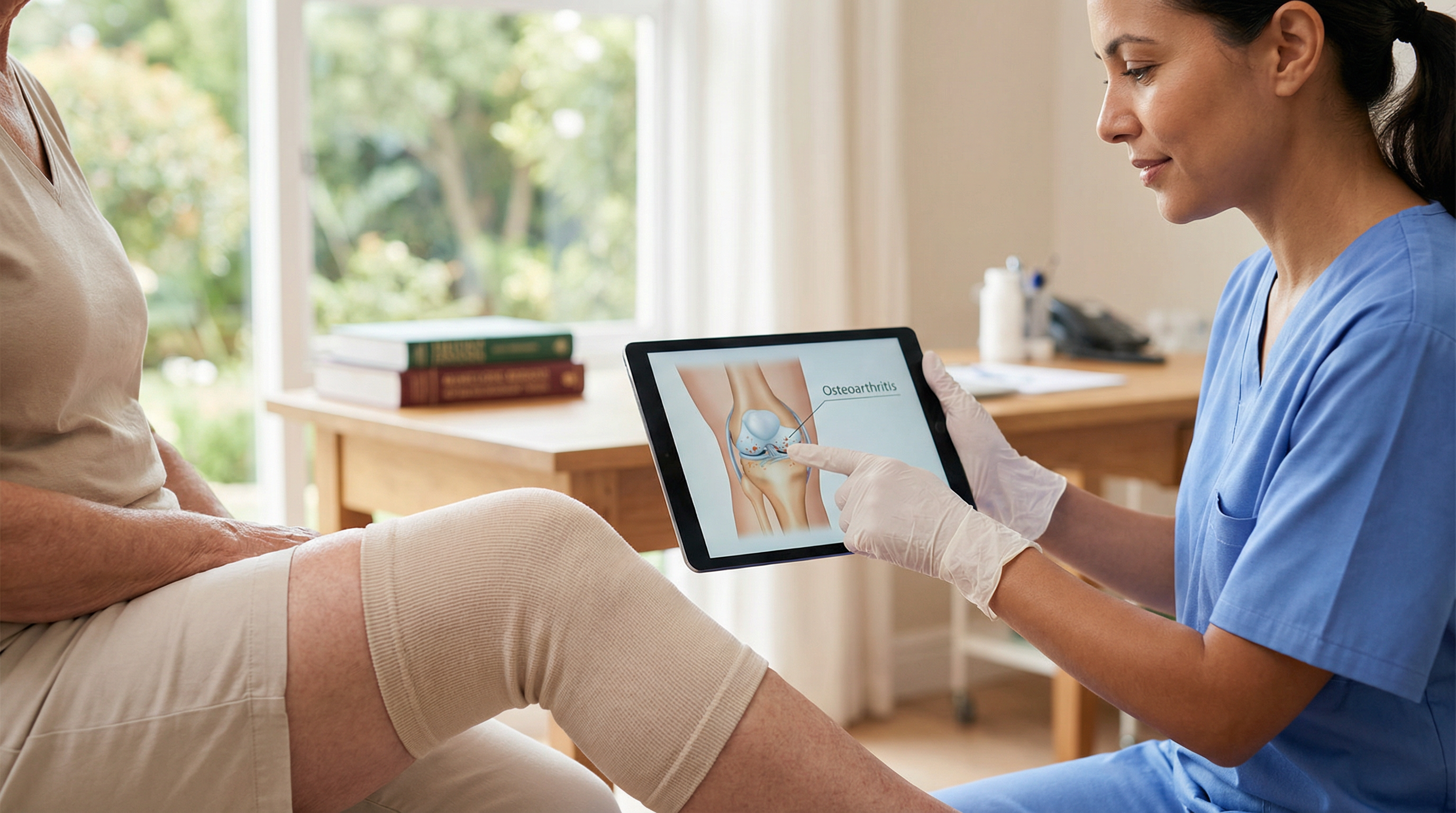
    Knee pain keeps more than 14 million Americans from doing the things they love, climbing stairs, walking the dog, staying active. For many of them, the culprit is knee osteoarthritis (KOA), a condition where the protective cartilage inside the joint gradually breaks down. Platelet-Rich Plasma (PRP) therapy offers a minimally invasive, surgery-free approach that uses your own blood to stimulate healing. Here is what the evidence says.
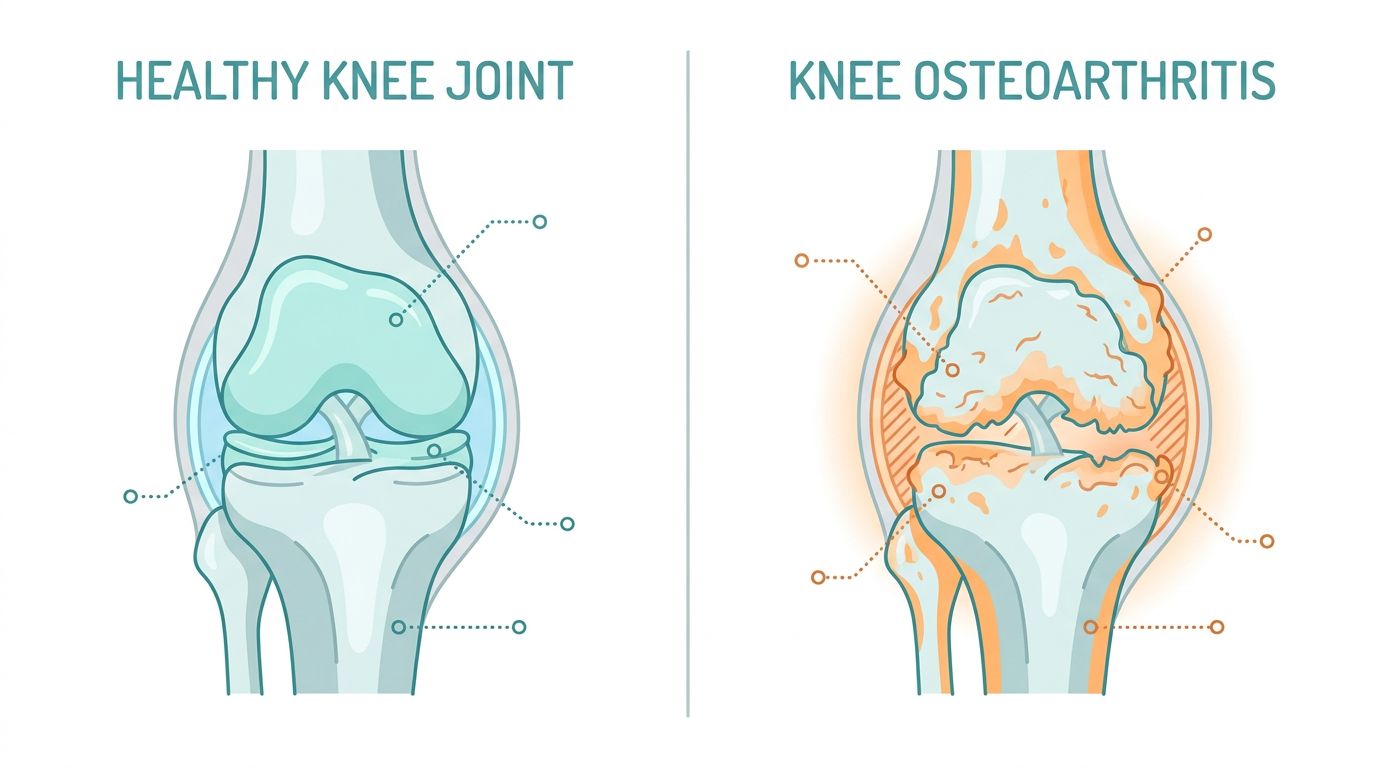
    Healthy knee joint versus knee osteoarthritis showing cartilage wear and bone-on-bone contact
    Healthy knee joint versus knee osteoarthritis showing cartilage wear and bone-on-bone contact

    What Is Knee Osteoarthritis?

    Osteoarthritis is the most common form of arthritis. In the knee, it occurs when the cartilage that cushions the ends of the femur and tibia wears down over time. Without that cushion, bone begins to rub against bone, causing pain, inflammation, and stiffness.
    KOA affects an estimated 365 million people worldwide and is one of the leading causes of disability in adults over 50. Risk factors include age, excess body weight, previous knee injuries, and repetitive stress from occupation or sport. While there is no cure, several treatments can slow the progression and significantly reduce pain.

    Common Symptoms

    KOA symptoms tend to develop slowly and worsen over time. Most people notice:
    • Pain during or after movement, especially after sitting for long periods, climbing stairs, or walking on uneven ground
    • Stiffness in the morning or after rest that improves within 30 minutes of moving
    • Swelling or a sensation of warmth around the joint
    • A grinding, clicking, or crackling sound when bending the knee (called crepitus)
    • Reduced range of motion that makes it harder to fully straighten or bend the leg

    How PRP Therapy Works for Knee Osteoarthritis

    PRP stands for Platelet-Rich Plasma, a concentrated portion of your own blood that is rich in growth factors and anti-inflammatory proteins. The treatment takes about an hour from start to finish.
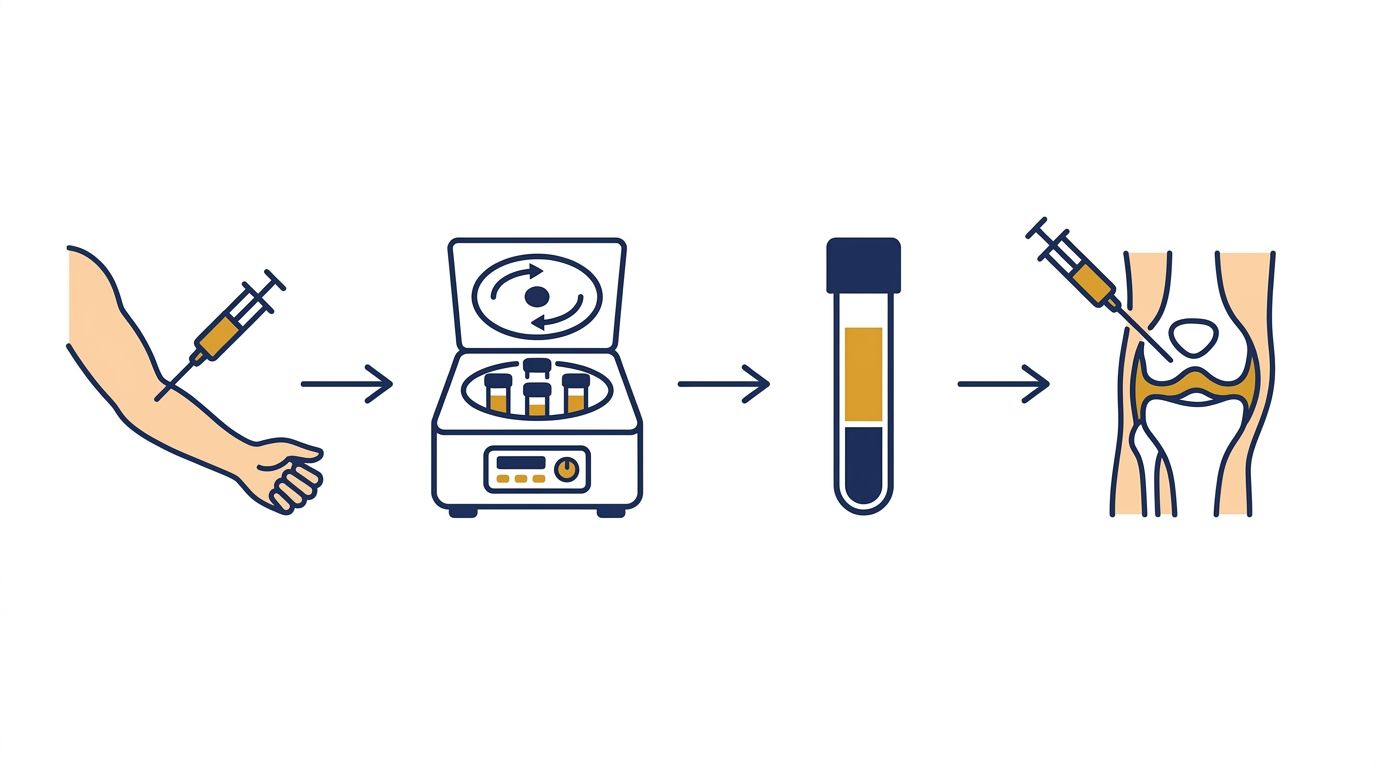
    1. <b>Blood draw.</b> A small amount of your blood is drawn, just like a routine lab test.
    2. <b>Centrifuge.</b> The blood is placed in a centrifuge that spins at high speed, separating the platelet-rich plasma from red blood cells. This concentrates the platelets to 5–10 times their normal level in whole blood.
    3. <b>Injection.</b> The concentrated PRP is injected directly into the knee joint, usually guided by ultrasound to ensure precise placement.
    4. <b>Healing begins.</b> The growth factors in the PRP, including PDGF, TGF-β, VEGF, and IGF-1, trigger a healing response in the damaged tissue. They help reduce inflammation, protect remaining cartilage, and promote the formation of new tissue.
    The process uses your own biology, so there is no risk of allergic reaction or rejection. Most patients need 1–3 injections, spaced several weeks apart, for the best results.
    Four-step PRP process: blood draw, centrifuge processing, platelet concentration, and knee injection
    Four-step PRP process: blood draw, centrifuge processing, platelet concentration, and knee injection

    What the Research Shows

    The evidence base for PRP in knee OA has grown substantially over the past several years. A 2025 meta-analysis of randomized controlled trials1 found that PRP injections produced clinically significant improvement in pain and function, and that the benefit was strongly influenced by platelet concentration, with higher-concentration preparations yielding better outcomes.
    A 2023 systematic review and meta-analysis published in Frontiers in Medicine2 analyzed 24 randomized controlled trials involving 1,344 patients. PRP significantly reduced Visual Analog Scale (VAS) pain scores compared to control treatments (MD = −1.03, 95% CI [−1.16, −0.9]). Notably, leukocyte-poor PRP (LP-PRP) produced greater pain relief than leukocyte-rich formulations.
    A systematic review and meta-analysis comparing PRP to other knee OA therapies3 found PRP ranked highest for pain reduction and functional improvement among all treatments studied, including hyaluronic acid, corticosteroids, and saline, at both 6-month and 12-month follow-up points.
    A comprehensive 2025 narrative review4 confirmed that PRP outperforms hyaluronic acid on WOMAC pain and total scores at 12 months, and identified that patients with mild-to-moderate KOA (Kellgren-Lawrence grades I–III) respond best to treatment.

    Who Is a Good Candidate for Knee PRP?

    PRP works best for patients with mild to moderate knee osteoarthritis (Kellgren-Lawrence grades I–III). If the joint has deteriorated to bone-on-bone (grade IV), the structural damage may be too advanced for PRP to provide meaningful relief, and surgical evaluation may be more appropriate.
    Good candidates typically include people who have tried conservative treatments (physical therapy, NSAIDs, cortisone injections) without adequate relief, who want to delay or avoid surgery, or who are not surgical candidates due to age or other health factors. A qualified orthopedic PRP provider will review your X-rays and medical history to determine whether PRP is appropriate for your case.
    Active adult hiking outdoors, representing restored mobility and quality of life after PRP knee treatment
    Active adult hiking outdoors, representing restored mobility and quality of life after PRP knee treatment

    What to Expect After Treatment

    Most patients experience some soreness at the injection site for 2–5 days following treatment. This is a normal inflammatory response as the growth factors begin working. Strenuous activity should be limited for about a week.
    Improvement in pain and mobility typically begins within 4–6 weeks, with maximum benefit reached around 3–6 months. Results tend to last 6–12 months, and some patients return for a follow-up injection to maintain relief. Research supports that multiple injections (typically 3 over 6 weeks) produce better and longer-lasting results than a single injection.
    Use the OrthopedicPRP provider directory to find a specialist near you who offers PRP for knee conditions and can evaluate your individual case.

    Sources

    1. Hohmann E, et al. PRP Injections for the Treatment of Knee Osteoarthritis: The Improvement Is Clinically Significant and Influenced by Platelet Concentration: A Meta-analysis of Randomized Controlled Trials. PMC. 2025. https://pmc.ncbi.nlm.nih.gov/articles/PMC11874499/
    2. Dai WL, et al. Efficacy and safety of platelet-rich plasma injections for the treatment of osteoarthritis: a systematic review and meta-analysis of randomized controlled trials. Front Med (Lausanne). 2023;10:1204144. PMID: 37441691.
    3. Migliorini F, et al. How Does Platelet-Rich Plasma Compare Clinically to Other Therapies in the Treatment of Knee Osteoarthritis? A Systematic Review and Meta-analysis. PubMed. 2022. PMID: 35316112.
    4. Platelet-Rich Plasma for Knee Osteoarthritis: A Comprehensive Narrative Review of the Mechanisms, Preparation Protocols, and Clinical Evidence. J Clin Med. 2025;14(11):3983. https://pmc.ncbi.nlm.nih.gov/articles/PMC12156035/
    This content is for educational purposes only and does not constitute medical advice. Consult a qualified healthcare provider before starting any treatment.
    TreatmentHow It WorksDuration of ReliefInvasivenessSide Effects
    PRP TherapyGrowth factors stimulate healing and reduce inflammation6–12+ monthsMinimally invasive injectionTemporary soreness; very low risk
    Cortisone InjectionSteroid suppresses inflammation short-term4–8 weeksInjectionPotential cartilage damage with repeated use
    Hyaluronic AcidLubricates the joint3–6 monthsInjectionOccasional flare reaction
    NSAIDs (oral)Reduce pain and inflammation systemicallyOngoing (symptom management)NoneGI, kidney, cardiovascular risks with long-term use
    Total Knee ReplacementReplaces the joint with a prosthetic10–20 yearsMajor surgerySurgical risks; lengthy rehabilitation

    Frequently Asked Questions

    Find a Knee PRP Specialist Near You

    Search our verified directory of orthopedic PRP providers who specialize in knee osteoarthritis treatment.

    Search Providers

    Other Conditions

    PRP for Achilles Tendinitis

    Explore how PRP injections can treat achilles tendinitis. Learn about platelet-rich plasma therapy benefits, recovery, and results for achilles tendinitis.

    PRP for ACL Injuries

    Explore how PRP injections can treat acl injuries. Learn about platelet-rich plasma therapy benefits, recovery, and results for acl injuries.

    PRP for Ankle Sprains

    Explore how PRP injections can treat ankle sprains. Learn about platelet-rich plasma therapy benefits, recovery, and results for ankle sprains.

    PRP for Carpal Tunnel Syndrome

    Explore how PRP injections can treat carpal tunnel syndrome. Learn about platelet-rich plasma therapy benefits, recovery, and results for carpal tunnel syndr...

    PRP for Chronic Low Back Pain

    Explore how PRP injections can treat chronic low back pain. Learn about platelet-rich plasma therapy benefits, recovery, and results for chronic low back pain.

    PRP for De Quervain's Tenosynovitis

    Explore how PRP injections can treat de quervain's tenosynovitis. Learn about platelet-rich plasma therapy benefits, recovery, and results for de quervain's ...

    PRP for Disc Degeneration

    Explore how PRP injections can treat disc degeneration. Learn about platelet-rich plasma therapy benefits, recovery, and results for disc degeneration.

    PRP for Elbow Bursitis

    Explore how PRP injections can treat elbow bursitis. Learn about platelet-rich plasma therapy benefits, recovery, and results for elbow bursitis.

    PRP for Facet Joint Syndrome

    Explore how PRP injections can treat facet joint syndrome. Learn about platelet-rich plasma therapy benefits, recovery, and results for facet joint syndrome.

    PRP for Frozen Shoulder

    Explore how PRP injections can treat frozen shoulder. Learn about platelet-rich plasma therapy benefits, recovery, and results for frozen shoulder.

    Find a Specialist

    Connect with board-certified providers offering PRP therapy.