Explore how PRP injections can treat chronic low back pain. Learn about platelet-rich plasma therapy benefits, recovery, and results for chronic low back pain.
Chronic low back pain affects roughly 20% of adults in the United States and ranks as the leading cause of disability worldwide. When standard treatments, physical therapy, NSAIDs, and corticosteroid injections, provide only temporary relief, platelet-rich plasma (PRP) therapy offers a biologically targeted alternative. By concentrating growth factors from your own blood and delivering them directly to damaged spinal structures, PRP aims to reduce inflammation and stimulate tissue repair at the source of pain.
Understanding Chronic Low Back Pain
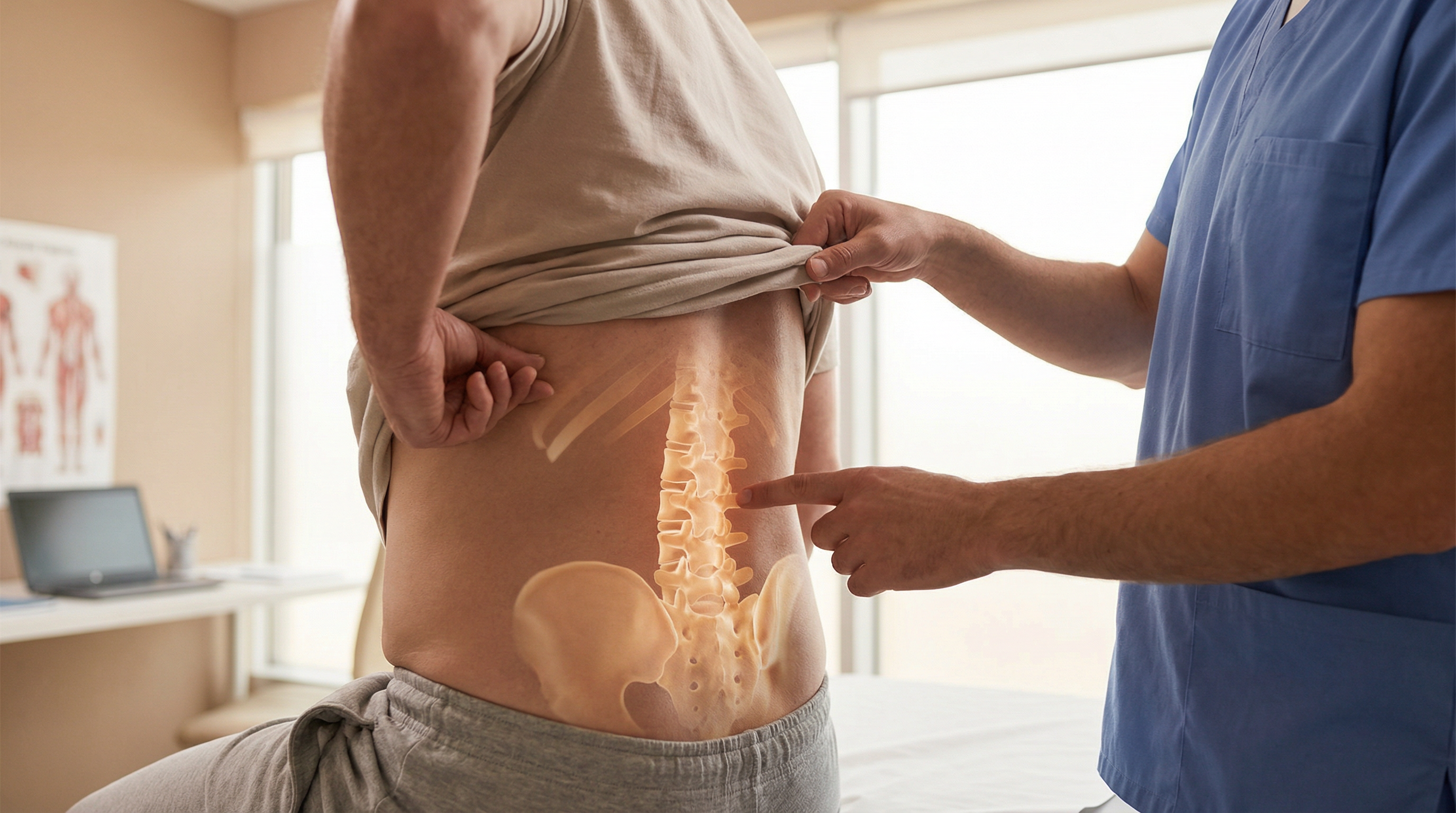
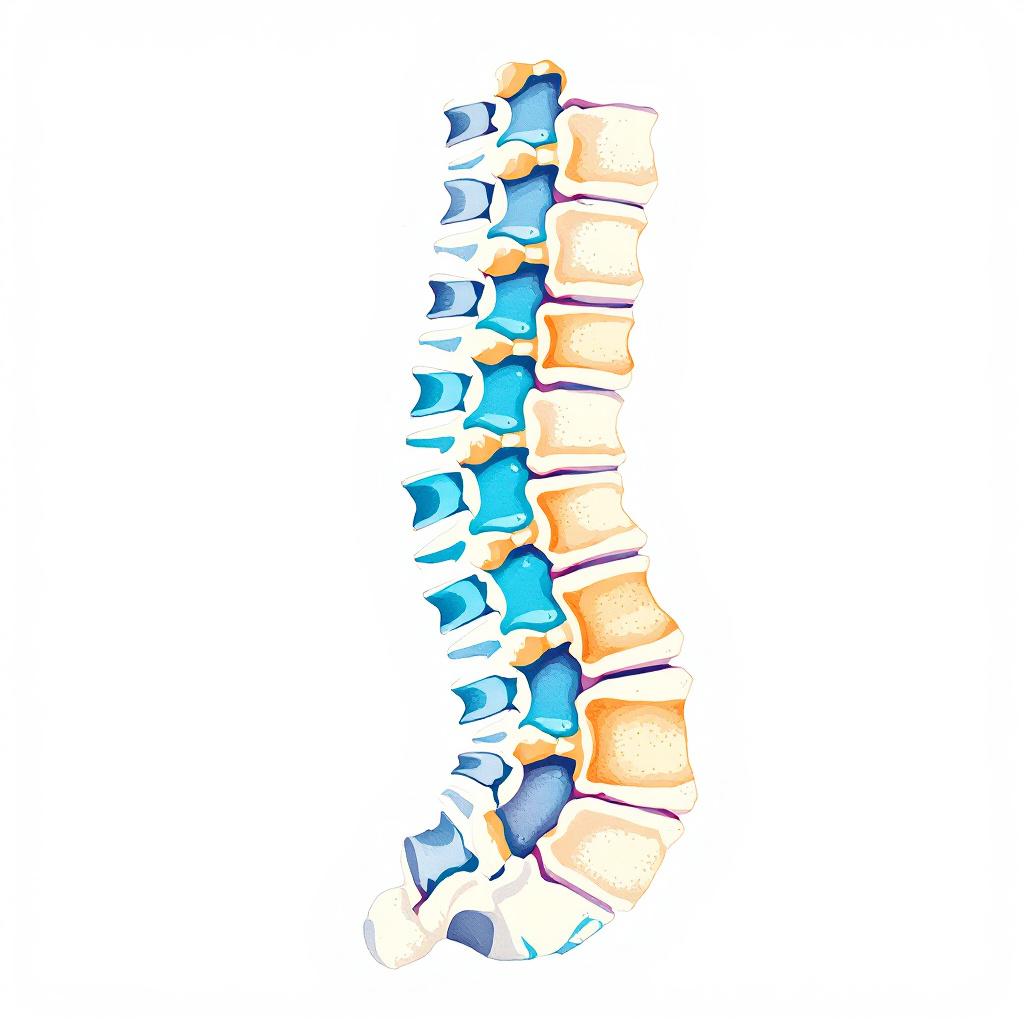
Chronic low back pain is defined as pain persisting for more than 12 weeks. Unlike acute back injuries, chronic pain typically stems from structural degeneration rather than a single traumatic event. The three most common pain generators in the lumbar spine are:
Facet joints, The small paired joints between each vertebra can develop osteoarthritis, producing localized pain that worsens with extension and rotation.
Intervertebral discs, As discs lose hydration and height over time, internal disc disruption and annular tears generate discogenic pain, often described as a deep, aching pressure.
Sacroiliac (SI) joint, The joint connecting the spine to the pelvis can become inflamed or hypermobile, producing pain in the lower back, buttock, and upper leg.
Accurate diagnosis requires identifying which structure is generating pain, often through diagnostic nerve blocks or imaging, because treatment must target the specific pain source to be effective.
Application
Patient Profile
Evidence Level
Typical Protocol
Best Candidates
Discogenic Chronic LBP
Axial low back pain from disc disease, failed 6+ months conservative care, pain reproduction on provocative discography
Trigger points confirmed on examination, normal or near-normal MRI, failed cortisone and standard injections
How PRP Is Used for Chronic Low Back Pain
PRP is applied differently depending on the identified pain generator:
Intradiscal PRP involves injecting PRP directly into the nucleus pulposus of a degenerated disc under fluoroscopic (X-ray) guidance. The growth factors, including PDGF, TGF-β, and VEGF, aim to stimulate nucleus pulposus cell proliferation and slow proteoglycan degradation, theoretically restoring disc biology and reducing painful nerve sensitization.
Facet joint PRP targets the synovial capsule of arthritic facet joints, following the same technique as a conventional facet injection but substituting PRP for corticosteroid.
Sacroiliac joint PRP delivers concentrated platelets into the SI joint space to address ligamentous laxity and synovial inflammation that contribute to pelvic instability and referred pain.
All three approaches are performed under image guidance at an outpatient interventional pain or sports medicine clinic and typically take 30–60 minutes.
What the Research Shows
The most rigorous clinical evidence for spinal PRP comes from a prospective, double-blind, randomized controlled trial by Tuakli-Wosornu and colleagues published in PM&R (2016). In that study, patients with chronic discogenic low back pain received intradiscal PRP or a contrast agent control. The PRP group demonstrated significant improvements in functional disability scores and pain intensity at one month and maintained gains through eight months of follow-up.
Facet joint PRP has been evaluated in several small randomized trials comparing it to corticosteroid injections. A 2016 study by Wu and colleagues found that PRP produced comparable short-term relief to corticosteroid but with longer-lasting effects at six months, consistent with PRP's regenerative rather than purely anti-inflammatory mechanism.
Evidence for SI joint PRP is more preliminary, but early observational studies suggest sustained pain reduction in appropriately selected patients, particularly those with ligamentous laxity documented on stress imaging.
Overall, spinal PRP research is still maturing. Effect sizes are generally moderate, and larger multicenter trials are ongoing. Physicians experienced in fluoroscopically guided spinal procedures are best positioned to discuss individualized expectations.
PRP vs. Cortisone and Epidural Injections
Corticosteroid injections, whether into facet joints, the epidural space, or the SI joint, are the conventional injectable treatment for chronic low back pain. They deliver powerful anti-inflammatory effects quickly but do not repair underlying structural damage, and repeated injections may accelerate cartilage and disc degeneration over time.
Epidural steroid injections (ESIs) target nerve root inflammation and work best for radicular pain (sciatica) rather than axial low back pain. For purely discogenic or facet-mediated pain, ESIs often provide modest benefit because they do not reach the structural pain generator directly.
PRP is derived from your own blood, carries no risk of steroid-related side effects (such as elevated blood sugar or adrenal suppression), and is theoretically capable of promoting healing rather than simply suppressing symptoms. The trade-off is that PRP typically requires 4–8 weeks to produce noticeable results, longer than faster-acting cortisone, and insurance coverage remains limited.
Who Is a Good Candidate?
PRP for chronic low back pain is most appropriate when:
Chronic back pain has persisted for 12 or more weeks
MRI or discography confirms degenerated discs or facet joint arthritis as the pain source
Physical therapy and oral medications have provided insufficient relief
Diagnostic nerve blocks have confirmed the specific target structure
No active infection, coagulopathy, or significant disc herniation causing nerve compression is present
The patient is a non-smoker (smoking impairs platelet function and disc biology)
PRP is generally not the first step in low back pain management. It is positioned after conservative care has been optimized and before considering more invasive surgical options such as spinal fusion or artificial disc replacement.
What to Expect
The procedure takes place in an interventional suite equipped with fluoroscopy. Your physician will numb the skin and target area with local anesthetic before advancing the needle under live imaging guidance to the precise location, whether the disc, facet joint, or SI joint. The PRP is then slowly injected, and you will be monitored briefly before discharge.
Expect 2–7 days of increased soreness at the injection site as the platelet-derived growth factors initiate a localized healing response. Avoid anti-inflammatory medications (NSAIDs, corticosteroids) for at least two weeks post-injection, as these blunt the platelet-mediated healing cascade. Most patients are advised to limit strenuous activity for one week.
Functional improvement typically begins at 4–6 weeks and continues for several months. Depending on your response, a series of 2–3 injections spaced 4–6 weeks apart may be recommended for degenerative disc cases. Your physician will reassess at follow-up visits using standardized outcome measures to track your progress.
Sources
1. Tuakli-Wosornu YA, Terry A, Boachie-Adjei K, et al. Lumbar intradiscal platelet-rich plasma (PRP) injections: a prospective, double-blind, randomized controlled study. PM R. 2016;8(1):1-10. PMID: 26835989.
2. Wu J, Zhou J, Liu C, et al. A prospective study comparing platelet-rich plasma and local anesthetic/corticosteroid in intra-articular injection for the treatment of lumbar facet joint syndrome. Pain Pract. 2017;17(7):914-924.
3. Singla V, Batra YK, Bhardwaj N, Goni VG, Marwaha N. Steroid vs. PRP injections in chronic low back pain. Pain Physician. 2017;20:e99-e105.
Frequently Asked Questions
Find a Chronic Back Pain PRP Specialist Near You
Connect with an interventional spine or regenerative medicine specialist in your area.