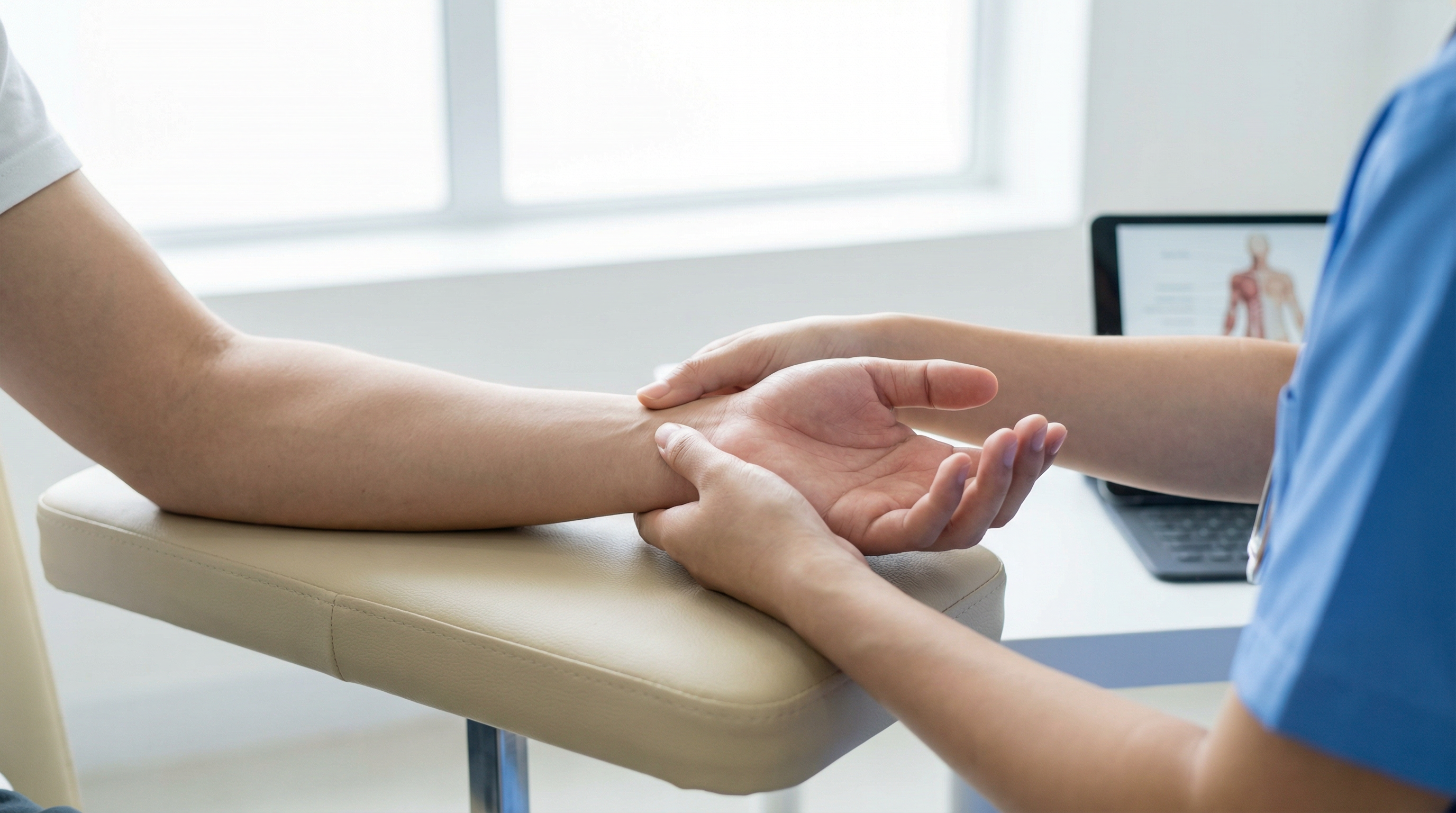
Explore how PRP injections can treat carpal tunnel syndrome. Learn about platelet-rich plasma therapy benefits, recovery, and results for carpal tunnel syndr...
Carpal tunnel syndrome is one of the most common nerve compression injuries in the upper extremity, and one of the most undertreated. When splinting, activity modification, and cortisone injections no longer provide lasting relief, surgery becomes the default recommendation. PRP (Platelet-Rich Plasma) therapy offers a non-surgical alternative that addresses the nerve compression and perineural inflammation driving symptoms, with growing evidence for durable improvement in mild to moderate cases.
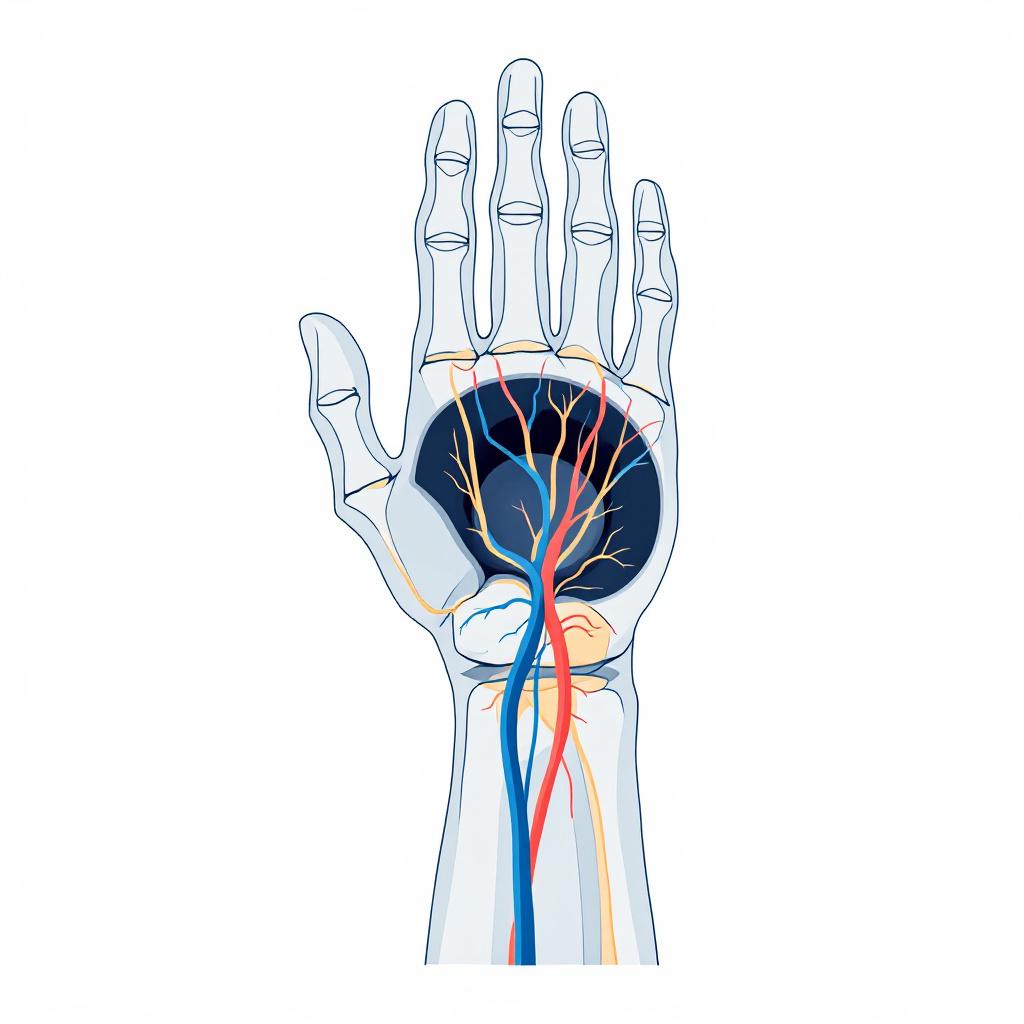
The median nerve passes through the narrow carpal tunnel alongside nine flexor tendons, compression here causes the hallmark numbness and tingling of CTS
What Is Carpal Tunnel Syndrome?
The carpal tunnel is a narrow passageway at the wrist through which the median nerve and nine flexor tendons travel into the hand. When swelling of the surrounding tissues narrows this space, the median nerve gets compressed. The result is numbness, tingling, and pain in the thumb, index finger, middle finger, and half of the ring finger, typically worse at night and with repetitive hand use.
CTS is classified by severity. Mild cases involve intermittent symptoms and early nerve conduction changes. Moderate cases show consistent symptoms and measurable slowing of nerve conduction. Severe cases involve significant motor dysfunction, constant numbness, and thenar muscle wasting. Most patients seek treatment in the mild to moderate range, where non-surgical options are most effective.
Conservative management, nighttime splinting, ergonomic adjustments, anti-inflammatory medications, and corticosteroid injections, controls symptoms in many patients. But for those with persistent or recurrent symptoms despite these measures, the usual next step is surgical decompression. PRP offers a biologically active bridge between failed conservative care and surgery.
PRP for CTS uses a technique called perineural injection, the platelet-rich plasma is delivered around the median nerve within the carpal tunnel, not into the nerve itself. The growth factors PRP contains (PDGF, TGF-β, IGF-1, and VEGF) reduce perineural inflammation, decrease swelling of the nerve sheath, and promote repair of the compressed nerve tissue.
Ultrasound guidance is essential. The median nerve is clearly visible on ultrasound at the wrist, it can be measured, its cross-sectional area assessed, and the needle guided precisely into the perineural space. This precision matters: placing PRP adjacent to the nerve rather than into adjacent structures is what drives outcomes. Blind injection based on landmarks alone is significantly less effective.
Unlike corticosteroid injections, which work by suppressing inflammation systemically, PRP targets the specific biological processes causing nerve compression. The goal is tissue-level repair, reducing the chronic perineural inflammation and fibrosis that maintain the compression, rather than temporarily masking it.
What the Research Shows
A 2025 meta-analysis of 7 randomized controlled trials involving 365 patients1 found that PRP significantly improved both symptom severity scores and functional status scores in CTS patients at 1, 3, and 6 months compared to conventional treatment. The authors concluded that PRP is a safe and effective non-surgical option, particularly for patients with mild to moderate nerve compression.
A 2021 prospective randomized double-blind controlled trial of 24 patients with bilateral CTS2, where one wrist received PRP and the other received saline, found that a single PRP injection produced significant improvements in BCTQ symptom severity scores at all follow-up time points over 12 months. The study is notable for its rigor: the bilateral design controlled for individual variation, and the 12-month follow-up confirmed that relief was durable rather than short-term.
Across these studies, the safety profile of PRP for CTS is excellent. No serious adverse events have been reported. The most common post-injection experience is 2–5 days of temporary wrist soreness, consistent with PRP's known inflammatory healing response.
Nerve gliding exercises and ergonomic adjustments complement PRP therapy for optimal carpal tunnel recovery
PRP vs. Cortisone for Carpal Tunnel Syndrome
Corticosteroid injections are the most common non-surgical injection treatment for CTS. They work quickly, many patients feel relief within 1–2 weeks, making them appealing for short-term symptom management. But the relief is rarely permanent. Most patients see benefit for 4–12 weeks, and repeat injections produce diminishing returns.
PRP's mechanism is fundamentally different. Rather than suppressing perineural inflammation temporarily, it delivers growth factors that support nerve sheath repair and reduce the chronic inflammation causing compression. The onset is slower, most patients begin noticing improvement at 4–8 weeks, but the benefit extends through 6–12 months and appears more durable based on the available evidence.
For patients who have had cortisone injections with good initial response but recurrent symptoms, PRP is a logical next step. It does not carry the tissue-thinning risks that repeated cortisone injections do, and there is no evidence that prior cortisone use reduces PRP's effectiveness.
Who Is a Good Candidate?
PRP is best suited for patients with mild to moderate CTS confirmed on nerve conduction studies. Good candidates have persistent or recurrent symptoms despite a trial of conservative care, splinting, ergonomic changes, activity modification, and prior cortisone injections with limited lasting relief. Patients who prefer to avoid surgical decompression or who are not surgical candidates are also appropriate.
PRP is not appropriate for severe CTS with significant motor deficit or thenar wasting, these cases require surgical decompression, where the mechanical compression must be physically released. PRP also is not a first-line treatment for mild cases that have not yet tried conservative management. Patients with active infection at the injection site or clotting disorders are not candidates.
Ultrasound measurement of the median nerve cross-sectional area (normal is approximately 9–10 mm²; enlarged in CTS) can help quantify severity and confirm the diagnosis before injection. Post-injection ultrasound can also document nerve changes over time.
What to Expect
CTS PRP is performed as an outpatient procedure under ultrasound guidance. The wrist is cleaned and a local anesthetic may be used. The needle is placed under real-time ultrasound imaging to position it in the perineural space adjacent to the median nerve in the carpal tunnel. The PRP is then injected slowly to distribute around the nerve sheath.
Expect 2–5 days of increased wrist soreness after the injection. Light hand use is generally permitted within 1–2 days. Repetitive gripping, heavy lifting, and vibrating tools should be avoided for 1–2 weeks. Nighttime splinting during the recovery period is recommended to reduce nerve tension while healing progresses.
Meaningful improvement in numbness, tingling, and hand function typically begins at 4–8 weeks. Most protocols use one injection with reassessment at 6–8 weeks, a second injection may be considered for partial responders. Hand therapy focusing on nerve gliding exercises and ergonomic training complements PRP and supports recovery.
1. Du Y, Jiang X, Fu K, Cui C. Efficacy and safety of platelet-rich plasma in the treatment of carpal tunnel syndrome: A meta-analysis. Medicine (Baltimore). 2025;104(44):e45010. doi:10.1097/MD.0000000000045010. PMID: 41261653.
2. Chen SR, Shen YP, Ho TY, et al. One-Year Efficacy of Platelet-Rich Plasma for Moderate-to-Severe Carpal Tunnel Syndrome: A Prospective, Randomized, Double-Blind, Controlled Trial. Arch Phys Med Rehabil. 2021;102(5):951-958. doi:10.1016/j.apmr.2020.12.025. PMID: 33548206.
This content is for educational purposes only and does not constitute medical advice. Consult a qualified healthcare provider before starting any treatment.
Frequently Asked Questions
Find a Carpal Tunnel PRP Specialist Near You
Browse our directory of verified providers who offer PRP injections for carpal tunnel syndrome and other hand and wrist conditions.