Explore how PRP injections can treat acl injuries. Learn about platelet-rich plasma therapy benefits, recovery, and results for acl injuries.
ACL injuries range from partial ligament tears that can heal conservatively to complete ruptures requiring surgery. PRP (Platelet-Rich Plasma) therapy is used in two distinct ACL contexts: as a standalone injection for partial tears in carefully selected patients, and as a surgical adjunct during ACL reconstruction to support graft healing and reduce postoperative pain. Understanding where the evidence is strong, and where it is limited, helps patients and clinicians make informed decisions about its use.
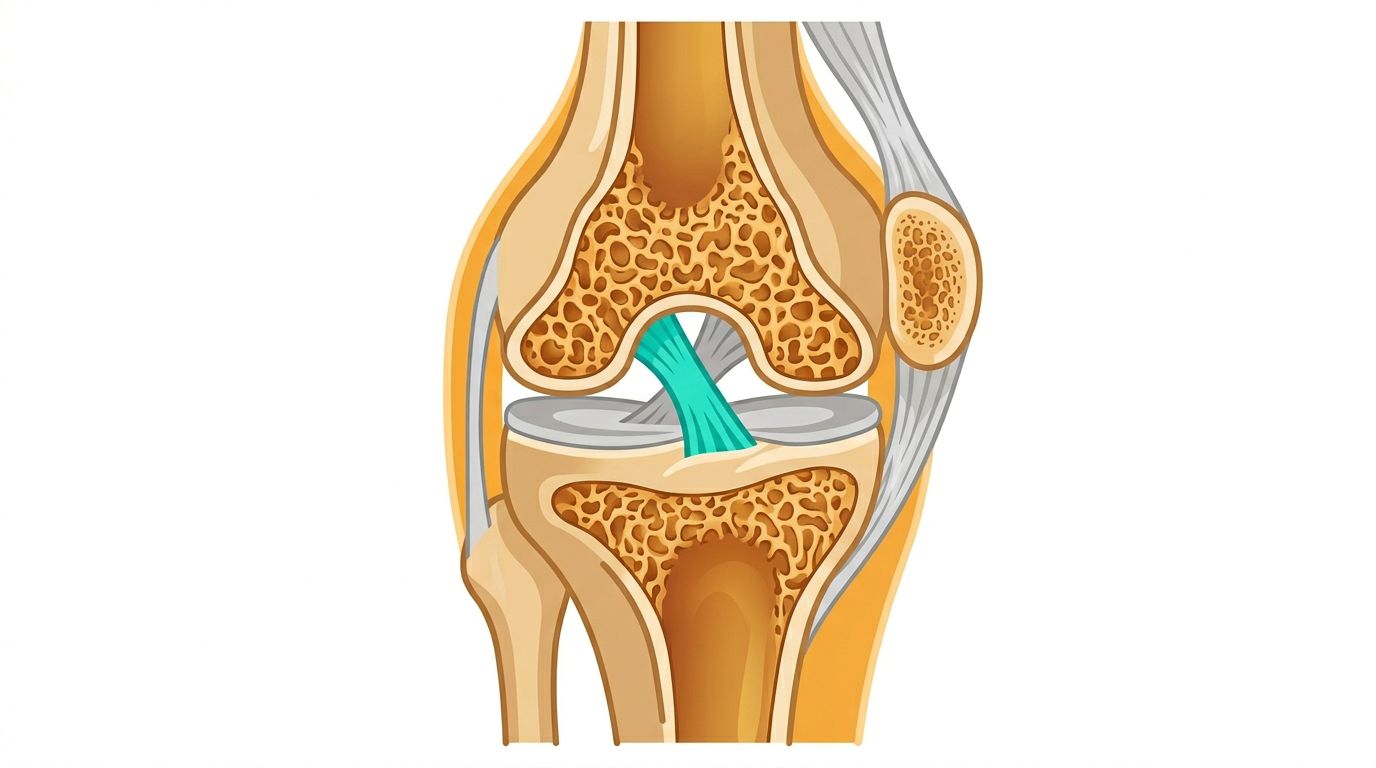
The ACL stabilizes the knee against forward tibial movement and rotational forces
ACL Injuries and PRP
The anterior cruciate ligament (ACL) stabilizes the knee by preventing the tibia from sliding forward under the femur and controlling rotational forces. It is one of the most commonly injured ligaments in sports, with approximately 200,000 ACL reconstructions performed annually in the United States.
ACL injuries are classified by grade. Grade 1 and 2 sprains involve partial tearing with preserved ligament continuity, these may be managed conservatively with physical therapy, bracing, and in select cases, PRP injection to support healing. Grade 3 injuries involve complete rupture and typically require surgical reconstruction in active individuals.
PRP for partial ACL tears delivers concentrated growth factors, PDGF, TGF-β, IGF-1, and VEGF, directly into the injured ligament under ultrasound or fluoroscopic guidance, with the goal of accelerating intrinsic healing and reducing scar tissue formation.
Application
Injury Type
Evidence Level
Typical Protocol
Best Candidates
Surgical adjunct (ACLR)
Complete ACL tear requiring reconstruction
Moderate (18-RCT meta-analysis, 1,082 patients)
Applied at graft/tunnels during surgery
Any patient undergoing ACLR; hamstring autograft preferred
Non-surgical injection
Grade 1–2 partial ACL tear
Limited (observational studies)
1–2 injections under image guidance
Partial tears on MRI; failed PT at 6–8 weeks; athletes
PRP as a Surgical Adjunct in ACL Reconstruction
The most evidence for PRP in ACL injuries comes from its use as an adjunct during ACL reconstruction (ACLR). In this setting, PRP is applied directly to the graft or injected into the bone tunnels at the time of surgery with the goal of improving graft-to-bone healing, reducing postoperative pain, and accelerating rehabilitation.
A 2025 updated meta-analysis of 18 randomized controlled trials involving 1,082 patients1 found that PRP significantly improved knee stability after ACL reconstruction, with KT-1000 measurements favoring PRP over controls (mean difference: -0.57 mm, 95% CI: -0.94 to -0.20). The authors described this as moderate evidence supporting PRP for knee stability enhancement following ACLR.
A 2022 systematic review and meta-analysis of 14 randomized controlled trials2 found that PRP reduced postoperative pain and improved knee function scores in the short and medium term (up to 6 months) but was not superior to control at 12 months. The benefit was most consistent when PRP was injected at graft harvest sites for pain control and into the graft tunnels for early functional recovery.
Limitations of the Evidence
The evidence for PRP in ACL injuries is more nuanced than for conditions like plantar fasciitis or lateral epicondylitis. Both meta-analyses confirm short-term benefits in pain and function, but neither found lasting structural superiority, PRP does not appear to accelerate graft maturation or reduce tunnel widening at one year. Complication rates are similar between PRP and control groups across all studies.
For partial ACL tears managed conservatively, evidence is limited to smaller observational studies. PRP injections are used in this context by some sports medicine specialists, particularly for high-level athletes with partial tears where surgery would be disruptive, but no large RCTs specifically address this application.
PRP therapy supports return to athletic performance after ACL injury
Who Is a Good Candidate?
PRP as a surgical adjunct is most appropriate for patients undergoing ACL reconstruction who want to optimize short-term recovery, reduce postoperative pain, and potentially improve early knee stability. Hamstring autograft reconstructions may benefit more than patellar tendon grafts, as the hamstring tendon-to-bone healing interface is the area where PRP growth factors are most biologically active.
For non-surgical partial ACL tears, PRP may be considered for patients with grade 1–2 sprains confirmed on MRI, who are pursuing conservative management and have not fully responded to physical therapy and activity modification at 6–8 weeks. Athletes seeking accelerated return-to-sport timelines may benefit from PRP injection early in the recovery course.
PRP is not a treatment for complete ACL rupture in patients requiring reconstruction, it is an adjunct, not a replacement for surgery in those cases.
What to Expect
For non-surgical ACL PRP injection, the procedure is performed as an outpatient injection under ultrasound or fluoroscopic guidance. Expect 2–5 days of increased knee soreness. Structured physical therapy is essential alongside PRP, ligament healing without progressive loading is incomplete regardless of biological support.
When used as a surgical adjunct, PRP is applied at the time of ACL reconstruction and requires no additional recovery beyond the surgery itself. Postoperative rehabilitation follows the standard ACLR protocol, typically 9–12 months to full return-to-sport for competitive athletes.
1. Serag I, Abouzid M, Hikal H, et al. Platelet-rich plasma in anterior cruciate ligament reconstruction: An updated systematic review and quantitative meta-analysis of randomized controlled trials. Chin J Traumatol. 2025. doi:10.1016/j.cjtee.2025.02.008. PMID: 40744844.
2. Zhu T, Zhou J, Hwang J, Xu X. Effects of Platelet-Rich Plasma on Clinical Outcomes After Anterior Cruciate Ligament Reconstruction: A Systematic Review and Meta-analysis. Orthop J Sports Med. 2022;10(1):23259671211061535. doi:10.1177/23259671211061535. PMID: 35127959.
This content is for educational purposes only and does not constitute medical advice. Consult a qualified healthcare provider before starting any treatment.
Frequently Asked Questions
Find an ACL PRP Specialist Near You
Browse our directory of verified orthopedic providers who offer PRP for ACL injuries and other knee conditions.