Learn about PRP injection therapy for hand & wrist pain and injuries. Discover how platelet-rich plasma treatment can help heal hand & wrist conditions witho...
The hands and wrists perform thousands of precise movements every day. Tendons, nerves, and small joints in the hand are vulnerable to overuse, inflammation, and degeneration, conditions that often respond poorly to cortisone over time. PRP (Platelet-Rich Plasma) therapy is now applied to several hand and wrist conditions, delivering concentrated growth factors directly to damaged or inflamed tissue to stimulate repair and reduce chronic pain.
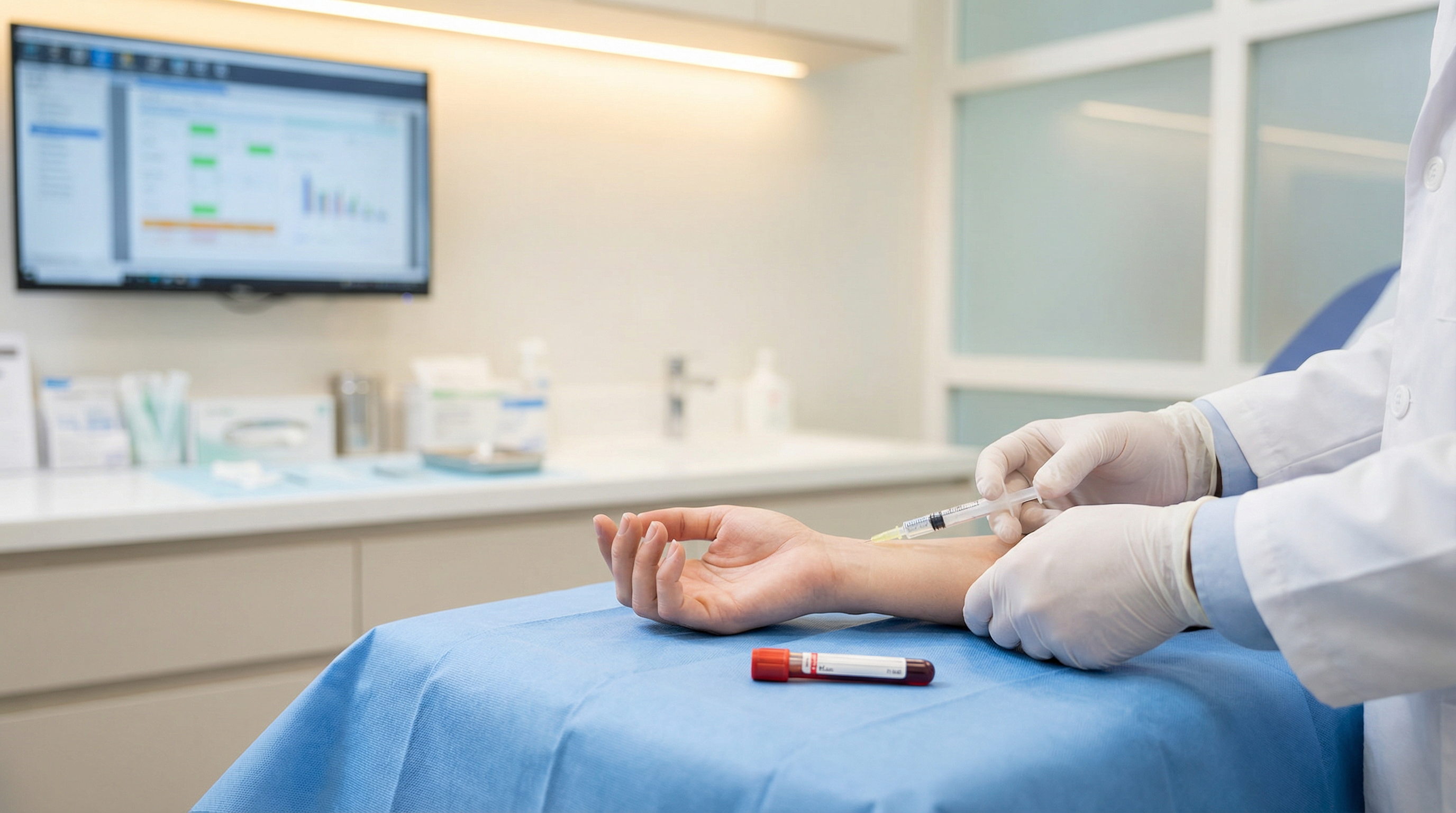
Hand and wrist examination for PRP treatment planning
Hand and Wrist Conditions Treated With PRP
PRP is applied to several distinct structures in the hand and wrist. The most common applications are carpal tunnel syndrome, de Quervain's tenosynovitis, trigger finger, and thumb CMC (basal joint) arthritis.
Carpal tunnel syndrome (CTS) involves compression of the median nerve as it passes through the carpal tunnel at the wrist. It causes numbness, tingling, and weakness in the hand that worsens at night and with repetitive use. PRP injected around the median nerve, perineural injection, has been shown to reduce nerve compression, decrease swelling of the nerve sheath, and improve both pain and functional scores in mild to moderate CTS.
De Quervain's tenosynovitis is inflammation and thickening of the sheath surrounding the tendons on the thumb side of the wrist, the abductor pollicis longus and extensor pollicis brevis. It causes pain and swelling at the base of the thumb that worsens with gripping, pinching, and lifting. PRP injected into the tendon sheath targets the chronic inflammation and tendon degeneration that drives this condition.
Trigger finger (stenosing tenosynovitis) involves inflammation and narrowing of the tendon sheath around a finger flexor tendon, causing the finger to catch, lock, or pop when bent. PRP injection into the tendon sheath is an emerging option for patients who have not responded to cortisone or who want to avoid repeated steroid injections. Evidence is currently limited to small studies, but the biological rationale supports its use in selected patients.
Thumb CMC arthritis (basal joint arthritis) involves cartilage breakdown in the trapeziometacarpal joint at the base of the thumb, one of the most commonly affected joints in hand osteoarthritis. It causes pain, weakness, and reduced pinch strength that limits everyday tasks. PRP injected into the CMC joint delivers growth factors that reduce synovial inflammation and support cartilage matrix maintenance.
PRP is prepared by drawing a small blood sample and concentrating the platelet-rich fraction through centrifugation. The growth factors it contains, PDGF, TGF-β, IGF-1, and VEGF, activate resident cells in tendons, nerve sheaths, and joint cartilage to produce new matrix, clear inflammatory debris, and restore tissue function.
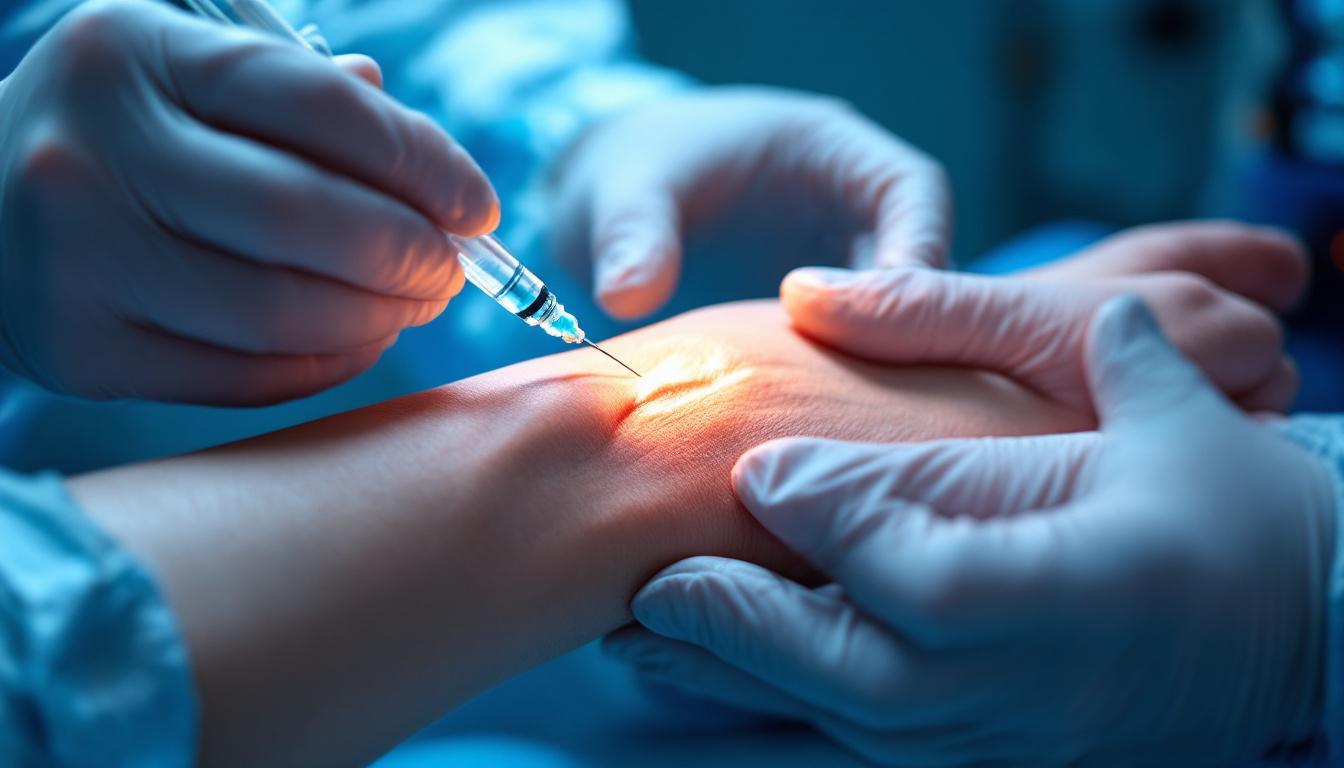
Ultrasound guidance is standard for all hand and wrist PRP injections. The small, closely packed structures of the wrist make precision essential, ultrasound ensures the needle is placed accurately in the tendon sheath, perineural space, or joint rather than into adjacent structures. Image-guided injection outperforms landmark-guided technique for all hand and wrist targets.
PRP injection into wrist joint under ultrasound guidance
What the Research Shows
For carpal tunnel syndrome, a 2025 meta-analysis of 7 randomized controlled trials involving 365 patients1 found that PRP significantly improved symptom severity and functional status scores at 1, 3, and 6 months compared to conventional treatment. The authors concluded that PRP is a safe and effective option for CTS, particularly for patients with mild to moderate nerve compression who prefer non-surgical management.
For de Quervain's tenosynovitis, a 2024 systematic review and meta-analysis2 found that PRP injection was associated with significantly greater reduction in VAS pain scores at one month and six months compared to conservative approaches. The pooled analysis supports PRP as an effective non-surgical alternative for de Quervain's, with a more durable treatment response than cortisone at longer-term follow-up.
For thumb CMC arthritis, a prospective randomized controlled trial of 33 patients comparing PRP to corticosteroid injections3 found that after 12 months of follow-up, PRP produced significantly better pain scores, functional outcomes, and patient satisfaction than cortisone. The study concluded that cortisone provides short-term relief but PRP achieves a lasting effect up to 12 months in early-to-moderate thumb arthritis.
PRP vs. Cortisone for Hand and Wrist Conditions
Cortisone injections are among the most common treatments for CTS, de Quervain's, and trigger finger. They provide fast relief, often within 1–2 weeks, but the benefit typically fades within 4–12 weeks. For trigger finger and de Quervain's, the first cortisone injection often works well; the second and third injections produce diminishing returns and carry a risk of tendon weakening with repeated use.
PRP works more slowly, meaningful improvement typically begins at 4–8 weeks, but addresses the underlying tissue degeneration and chronic inflammation rather than suppressing symptoms temporarily. For patients who have already had cortisone injections with limited lasting benefit, or who want to minimize steroid exposure, PRP offers a biologically different approach with a more sustained evidence profile.
Who Is a Good Candidate for Hand and Wrist PRP?
PRP is best suited for patients with chronic hand or wrist pain (3+ months) that has not responded adequately to conservative care, splinting, physical therapy, NSAIDs, or prior cortisone injections. Good candidates have imaging-confirmed pathology on ultrasound or MRI, such as tendon sheath thickening, median nerve swelling, or thumb CMC joint degeneration.
PRP is generally not recommended as a first-line treatment for mild, early-stage conditions that haven't yet failed conservative care. For severe carpal tunnel syndrome with significant motor loss or thenar wasting, surgical decompression is the appropriate intervention. For complete tendon ruptures or advanced CMC arthritis requiring joint reconstruction, PRP alone is insufficient.
What to Expect
Hand and wrist PRP is performed as an outpatient procedure under ultrasound guidance. Expect 2–5 days of increased local soreness after the injection, a normal part of the healing response. Light hand use is generally permitted within 1–2 days; heavy gripping, pinching, or repetitive strain should be restricted for 2 weeks.
Meaningful improvement typically begins at 4–8 weeks. Most protocols use one injection, with a second considered at 6–8 weeks for incomplete responders. For carpal tunnel syndrome, splinting at night is recommended alongside PRP. For de Quervain's and trigger finger, tendon loading exercises guided by a hand therapist optimize the tissue remodeling response.
1. Du Y, Jiang X, Fu K, Cui C. Efficacy and safety of platelet-rich plasma in the treatment of carpal tunnel syndrome: A meta-analysis. Medicine (Baltimore). 2025;104(44):e45010. doi:10.1097/MD.0000000000045010. PMID: 41261653.
2. Hidajat NN, Magetsari RMSN, Steven G, Budiman J, Prasetiyo GT. Platelet-rich plasma for de Quervain's tenosynovitis: A systematic review and meta-analysis. World J Orthop. 2024;15(9):858-869. doi:10.5312/wjo.v15.i9.858. PMID: 39318495.
3. Malahias MA, et al. Platelet-Rich Plasma versus Corticosteroid Intra-Articular Injections for the Treatment of Trapeziometacarpal Arthritis: A Prospective Randomized Controlled Clinical Trial. Cartilage. 2021;12(1):51-61. doi:10.1177/1947603518805230. PMID: 30343590.
This content is for educational purposes only and does not constitute medical advice. Consult a qualified healthcare provider before starting any treatment.
Frequently Asked Questions
Find a Hand and Wrist PRP Specialist Near You
Browse our directory of verified providers who offer PRP injections for carpal tunnel syndrome, de Quervain's, trigger finger, and thumb arthritis.