Learn about PRP injection therapy for hip pain and injuries. Discover how platelet-rich plasma treatment can help heal hip conditions without surgery.
The hip bears more load per step than almost any other joint in the body. Arthritis, tendon degeneration, and labral injury are common causes of deep hip pain that often respond poorly to cortisone and lead patients toward surgery. PRP (Platelet-Rich Plasma) therapy offers a biologically active option for several hip conditions, delivering concentrated growth factors directly to the damaged tissue to promote repair and reduce chronic inflammation.
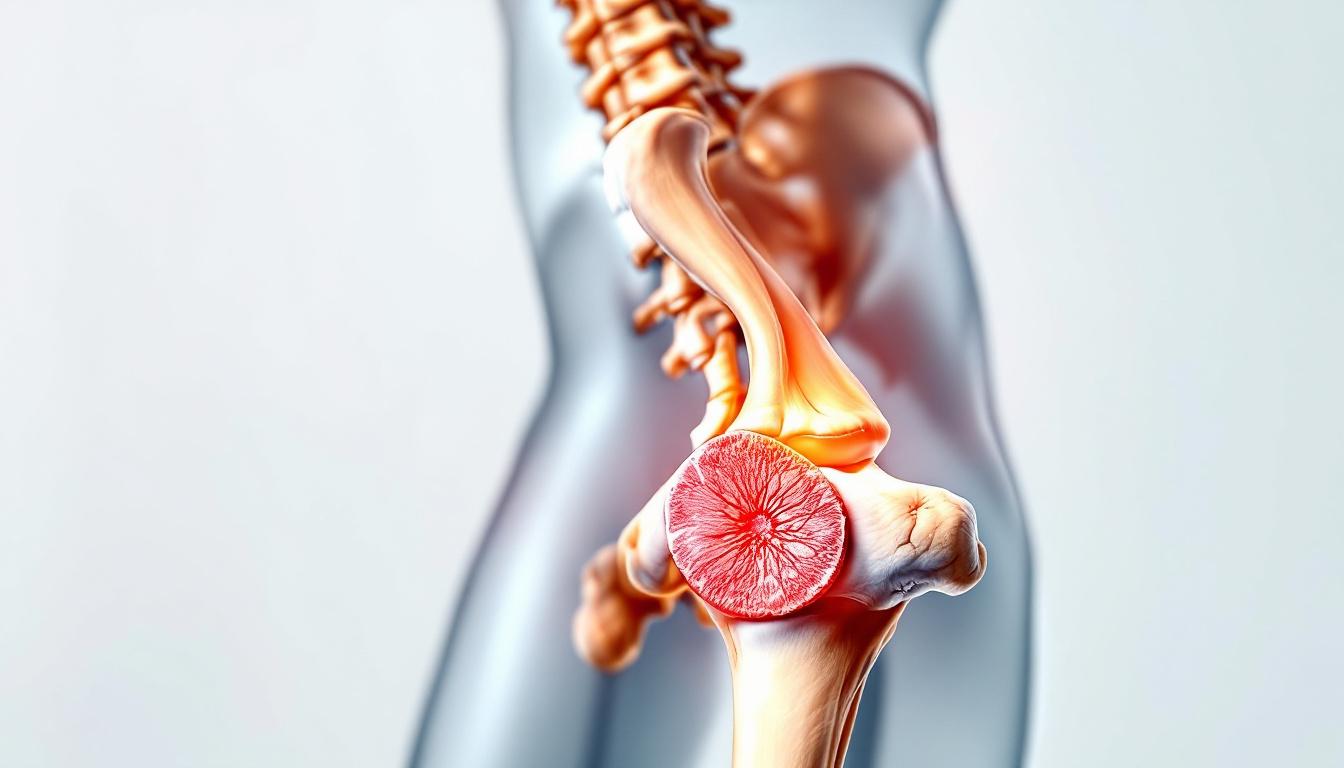
Hip joint anatomy and PRP treatment overview
Hip Conditions Treated With PRP
PRP is applied across several distinct hip conditions, each targeting a different structure. The most common are hip osteoarthritis, greater trochanteric pain syndrome (lateral hip bursitis and gluteal tendinopathy), and hip labral tears.
Hip osteoarthritis causes progressive cartilage breakdown in the ball-and-socket joint, leading to pain, stiffness, and reduced mobility. For patients not yet ready for total hip replacement, PRP injected into the joint delivers growth factors that reduce synovial inflammation, support cartilage matrix maintenance, and provide meaningful pain relief.
Greater trochanteric pain syndrome (GTPS), commonly called hip bursitis, is the most common cause of lateral hip pain. It typically involves degeneration of the gluteal tendons that attach to the greater trochanter of the femur, often accompanied by bursal inflammation. PRP injected into the degenerative tendon zone treats the root cause of this condition rather than temporarily suppressing inflammation.
Hip labral tears involve damage to the cartilaginous ring that deepens the hip socket and stabilizes the joint. Labral tears cause deep groin pain, clicking, and mechanical symptoms. PRP injected into the hip joint under image guidance may support labral healing in partial tears and is sometimes used as an adjunct during surgical labral repair to promote tissue integration.
Condition
Injection Target
Evidence Level
Typical Protocol
Best Candidates
Hip Osteoarthritis
Intra-articular hip joint
Moderate (meta-analysis, 8 studies)
1–2 injections under fluoroscopy/US
KL grade 1–3; failed PT/cortisone
Greater Trochanteric Pain Syndrome
Gluteal tendon / greater trochanter region
Moderate (9-study systematic review)
1–2 injections under ultrasound
Chronic GTPS; failed PT; prior cortisone
Hip Labral Tears
Intra-articular; labral tissue
Limited (pilot studies)
1 injection; or surgical adjunct
Partial tears; non-surgical candidates
How PRP Works in the Hip
PRP is prepared by drawing a small blood sample and centrifuging it to concentrate the platelet-rich fraction. The growth factors it contains, PDGF, TGF-β, IGF-1, VEGF, stimulate resident cells in joint cartilage, tendons, and ligaments to produce new matrix and reduce inflammatory mediators.
Because the hip is a deep joint surrounded by significant soft tissue, image guidance is essential. Fluoroscopy or ultrasound is used to confirm needle placement in the joint or target tendon. Precision of delivery is directly related to treatment success.
Patient walking comfortably after hip PRP treatment
What the Research Shows
A 2022 systematic review and meta-analysis of 8 studies involving 331 patients with hip osteoarthritis1 found that PRP significantly reduced pain at multiple time points compared to baseline, with the greatest effect at 1–2 months. The analysis found no lasting adverse effects, and outcomes with single leukocyte-poor injections tended to outperform multiple or larger-volume injections, a useful protocol insight for clinicians.
For greater trochanteric pain syndrome, a 2024 systematic review of 9 studies involving 508 patients2 found that 69% of patients reported successful outcomes after PRP injection. Pain scores improved from 8.1 at baseline to 4.6 post-injection. Multiple studies found PRP to produce superior outcomes compared to corticosteroid injection at 24-week follow-up, consistent with PRP's pattern of delayed but more durable benefit across tendinopathies.
For hip labral tears, the evidence remains limited, a small pilot study found improved pain and function at follow-up, but large-scale randomized trials are not yet available. PRP is most commonly used for labral tears as a non-surgical option in carefully selected patients or as a surgical adjunct.
PRP vs. Cortisone for Hip Conditions
Cortisone injections are widely used for hip OA and GTPS and provide fast relief, often within 1–2 weeks. For GTPS specifically, however, this benefit is typically short-lived, and repeated cortisone injections can weaken the gluteal tendons over time, potentially making the underlying condition worse.
PRP takes longer to work, meaningful improvement typically begins at 4–8 weeks, but multiple studies now show it produces superior outcomes to cortisone at 6 months for GTPS, and comparable outcomes to hyaluronic acid for hip OA. For patients with chronic lateral hip pain who have had multiple cortisone injections, PRP is a more biologically appropriate next step.
Who Is a Good Candidate for Hip PRP?
PRP is best suited for patients with chronic hip pain (3+ months) that has not adequately responded to conservative care, physical therapy, load modification, NSAIDs, or prior cortisone injections. Good candidates have imaging-confirmed pathology: degenerative hip OA (typically Kellgren-Lawrence grade 1–3), gluteal tendinopathy confirmed on MRI or ultrasound, or a partial hip labral tear.
Patients with bone-on-bone hip arthritis requiring joint replacement, complete gluteal tendon tears, or full-thickness labral tears typically require surgical evaluation rather than PRP alone.
What to Expect
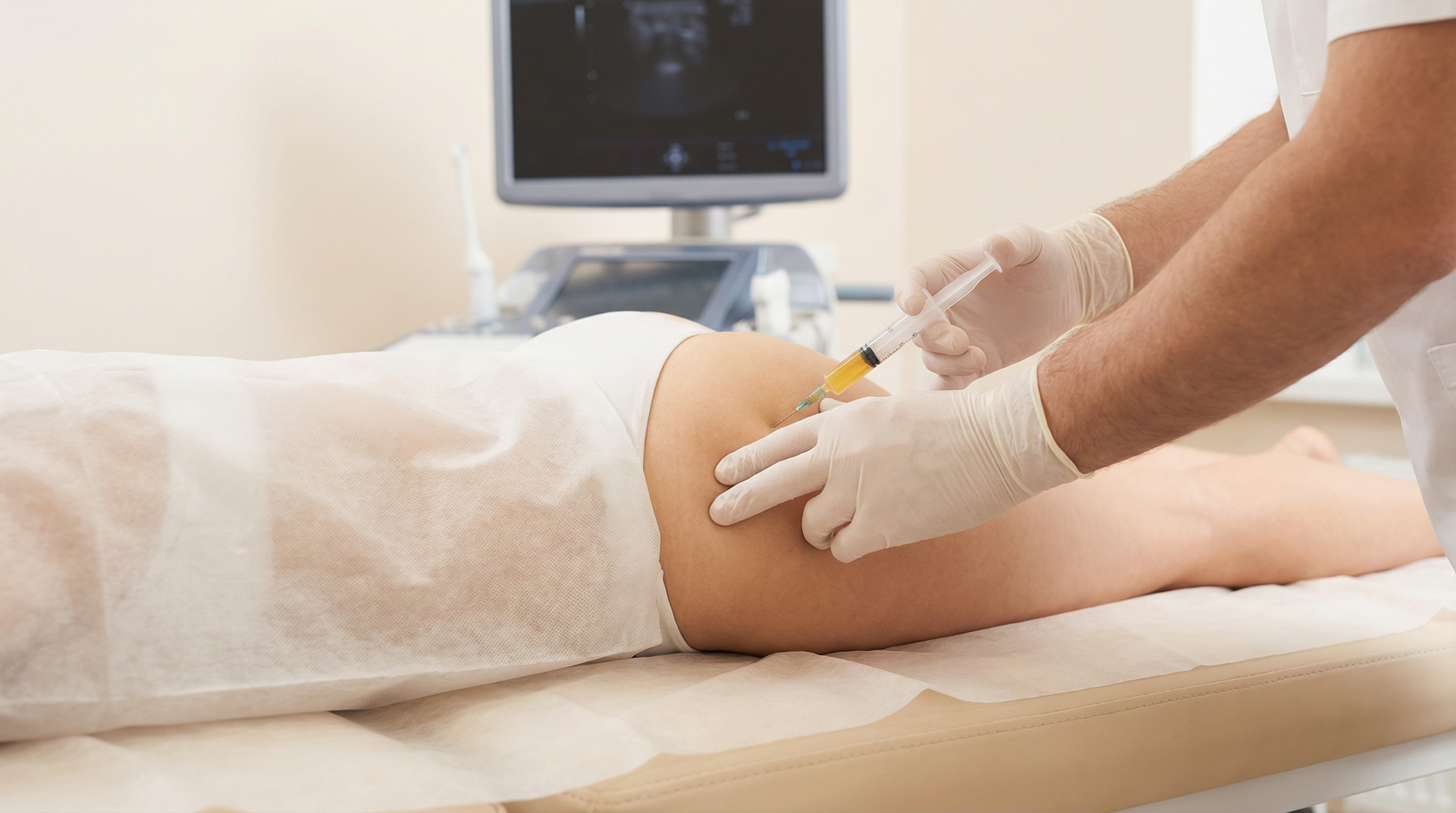
Hip PRP is performed as an outpatient procedure under fluoroscopic or ultrasound guidance. Expect 2–5 days of increased local pain after the injection, a normal part of the healing response. Light activity is generally permitted immediately; high-impact activity (running, heavy lifting) should be restricted for 1–2 weeks.
Meaningful improvement typically begins at 4–8 weeks. Most protocols use one to two injections. Physical therapy, particularly gluteal strengthening and load-management programs for GTPS, is strongly recommended alongside PRP to guide tissue remodeling and prevent recurrence.
1. Ye Y, et al. The Use of Intra-articular Platelet-Rich Plasma as a Therapeutic Intervention for Hip Osteoarthritis: A Systematic Review and Meta-analysis. Orthop J Sports Med. 2022;10(8). PMID: 35971803.
2. Deng Z, et al. Greater Trochanteric Pain Syndrome and the Efficacy of Platelet-Rich Plasma Injections: A Systematic Review. Orthop J Sports Med. 2024. PMC: PMC11604237.
This content is for educational purposes only and does not constitute medical advice. Consult a qualified healthcare provider before starting any treatment.
Frequently Asked Questions
Find a Hip PRP Specialist Near You
Browse our directory of verified orthopedic PRP providers who treat hip osteoarthritis, bursitis, and labral pathology.