Explore how PRP injections can treat hip bursitis. Learn about platelet-rich plasma therapy benefits, recovery, and results for hip bursitis.
Hip bursitis, more accurately called greater trochanteric pain syndrome (GTPS), causes chronic lateral hip pain that radiates down the outer thigh and often fails to resolve with cortisone alone. PRP (Platelet-Rich Plasma) is an emerging option for GTPS patients who have not achieved lasting relief from injections or physical therapy. The evidence is genuinely mixed: a 2025 double-blind randomized controlled trial found no significant difference between PRP and placebo, while a 2024 systematic review of 9 studies and an earlier RCT found PRP superior to corticosteroid at 24-week follow-up. Patients who have failed first-line treatment are the target candidates, with the understanding that the evidence base remains limited.
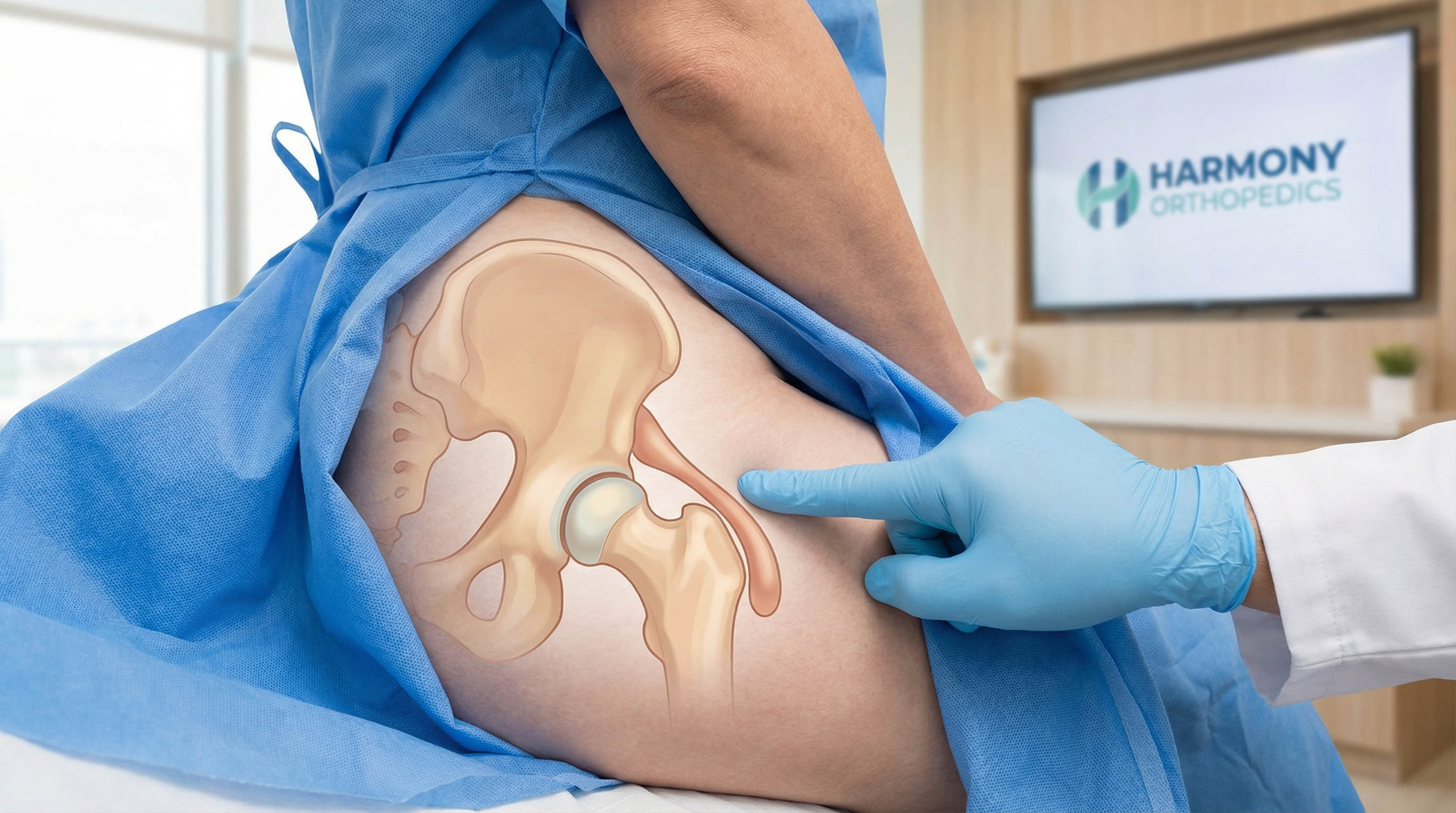
Hip bursitis (greater trochanteric pain syndrome) examination and PRP treatment
What Is Hip Bursitis?
The greater trochanter is the bony prominence on the outer side of the upper femur. Several structures converge here: the trochanteric bursa (a fluid-filled sac that reduces friction), and the tendons of the gluteus medius and gluteus minimus muscles. Greater trochanteric pain syndrome is an umbrella term that captures inflammation and degeneration of these structures, including trochanteric bursitis, gluteal tendinopathy, or both. Modern imaging and research have shown that pure bursitis (isolated bursal inflammation) is less common than previously thought, and gluteal tendon degeneration is often the primary driver of pain.
GTPS is particularly common in middle-aged women. Risk factors include hip abductor weakness, iliotibial band tightness, leg length discrepancy, obesity, and prior hip surgery. The hallmark symptom is lateral hip pain that worsens with lying on the affected side, climbing stairs, prolonged walking, and crossing the legs. The pain can radiate down the outer thigh and is often confused with referred back pain or nerve root irritation.
Conservative management includes activity modification, NSAIDs, physical therapy targeting hip abductor strengthening and load management, and corticosteroid injections. For patients who achieve only temporary relief with cortisone, or who have had multiple cortisone injections, PRP is a biologically distinct next step. PRP targets the degenerative component of the gluteal tendons rather than simply suppressing bursal inflammation.
Application
Injection Target
Evidence Level
Typical Protocol
Best Candidates
Greater Trochanteric Pain Syndrome (Hip Bursitis)
Trochanteric bursa and/or gluteal tendon enthesis under ultrasound guidance
PRP for GTPS is injected under ultrasound guidance to target the trochanteric bursa, the gluteal tendon enthesis (tendon attachment to bone), or both, depending on where imaging identifies the primary pathology. The concentrated platelet growth factors, PDGF, TGF-β, IGF-1, and VEGF, act on bursal tissue to modulate chronic inflammation, and on degenerative tendon tissue to stimulate tenocyte activity, collagen production, and structural repair.
Because GTPS often involves gluteal tendinopathy at the enthesis rather than isolated bursitis, PRP is particularly relevant when tendon degeneration is identified on ultrasound or MRI. In that context, PRP targets the underlying tendon pathology, the same mechanism that drives its effectiveness in tendinopathies elsewhere, rather than simply suppressing synovial inflammation. Ultrasound guidance ensures accurate delivery to the pathological tissue, whether peritendinous, intratendinous, or subbursal.
Unlike cortisone, PRP does not carry risks of tendon weakening with repeated use. For patients with significant tendinopathic changes on imaging who have already received multiple cortisone injections, PRP avoids compounding the structural risk while still delivering active treatment to the degenerated tissue.
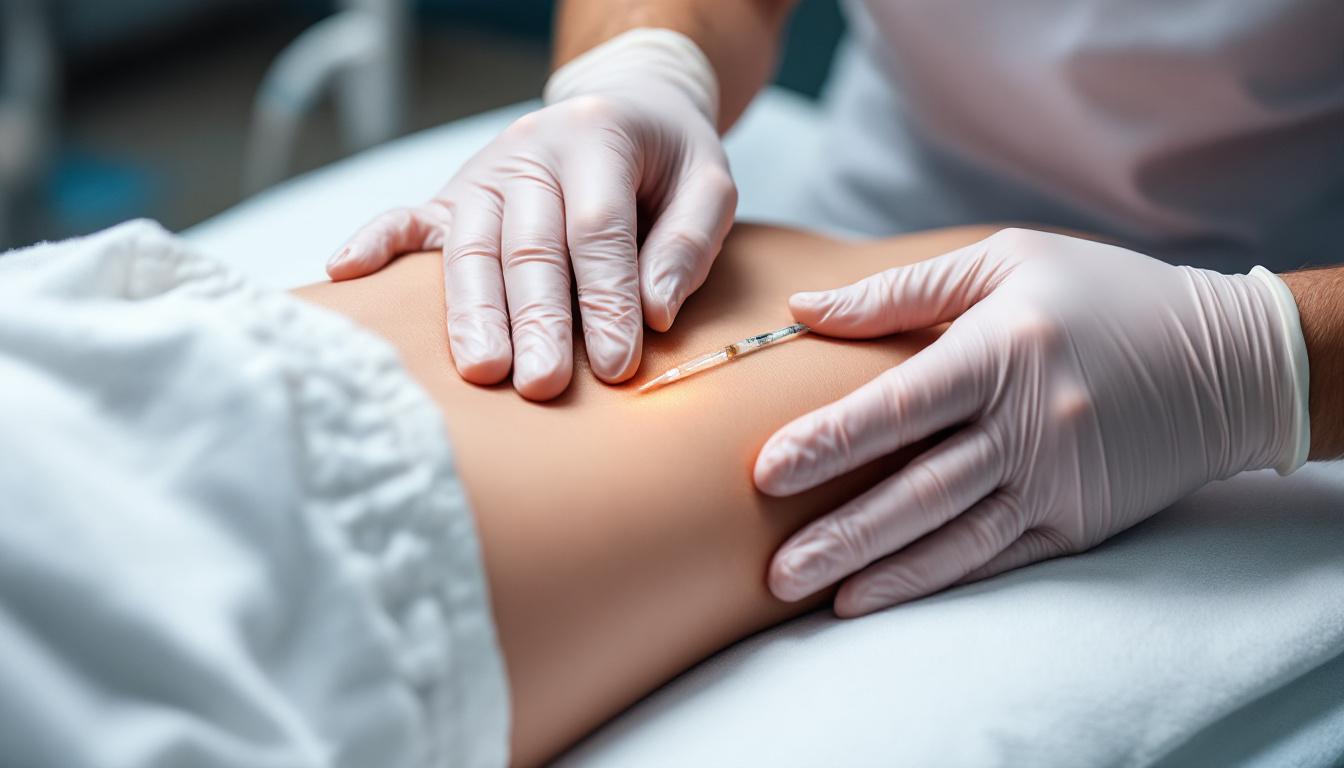
PRP injection into the greater trochanteric bursa under ultrasound guidance
What the Research Shows
The evidence for PRP in GTPS is genuinely mixed, and the highest-quality trial is a negative study. A 2025 double-blind randomized controlled trial of 79 patients comparing leukocyte-rich PRP to saline placebo for refractory GTPS1, published in the Journal of Bone and Joint Surgery, found no statistically significant difference between PRP and placebo at any follow-up point through 12 months. Both groups showed improvement from baseline, consistent with natural history, physical therapy participation, and placebo effects. The authors concluded they could not support routine PRP use for this condition.
A 2024 systematic review of 9 studies involving 508 patients with GTPS treated with PRP2, published in Cureus, found that 8 of 9 studies reported meaningful improvement and sustained symptom relief with PRP. Several studies documented better outcomes with PRP than with corticosteroid injections. The authors concluded PRP appears to be an effective treatment option for GTPS that does not respond to conservative therapy, while acknowledging the need for larger, higher-quality trials.
The honest summary: the most rigorous evidence (2025 JBJS double-blind placebo-controlled RCT) found no specific biological effect of PRP beyond placebo for GTPS. Earlier studies have shown PRP superior to cortisone at longer follow-up, and the 2024 systematic review is broadly positive. The literature is genuinely conflicted. PRP remains a reasonable option for patients who have failed cortisone and want to avoid further steroid exposure, but informed consent requires acknowledging the highest-quality evidence shows it may not outperform placebo.
PRP vs. Cortisone for Hip Bursitis
Corticosteroid injection is the standard first-line injection for GTPS. It reduces pain quickly, most patients feel relief within 1–2 weeks, and is appropriate as an initial intervention while physical therapy is optimized. The common clinical experience is that cortisone relief is real but often temporary, wearing off within 4–12 weeks, with recurrence common in patients who have underlying gluteal tendinopathy rather than isolated bursitis.
PRP works more slowly, improvement typically begins at 4–8 weeks, but addresses the tendinopathic component of GTPS that cortisone does not. Repeated cortisone injections at the tendon enthesis carry documented risks of tendon weakening. For patients with recurrent GTPS despite multiple cortisone injections, PRP is a biologically distinct option that avoids further cortisone exposure while targeting the pathological tissue directly.
Who Is a Good Candidate?
PRP is most appropriate for patients with confirmed GTPS (by clinical assessment and ultrasound or MRI) who have had one or more cortisone injections without lasting relief, or who have significant tendinopathic changes on imaging alongside the bursitis. Patients with chronic symptoms (3+ months), evidence of gluteal tendon degeneration, and a desire to avoid further steroid exposure are the best candidates. Physical therapy with targeted hip abductor loading should be incorporated regardless of injection choice.
Patients with acute or early-onset GTPS who have not yet tried cortisone are generally better served by first-line treatment. Patients with complete gluteal tendon tears are surgical candidates and should be evaluated for tendon repair rather than injection therapy. Active local infection and clotting disorders are contraindications.
What to Expect
GTPS PRP is performed as an outpatient procedure under ultrasound guidance. A blood draw is centrifuged to prepare the platelet-rich fraction, which is then injected into the identified pathological tissue, the trochanteric bursa, the gluteal tendon enthesis at the greater trochanter, or both, with real-time ultrasound confirming accurate placement. The procedure takes approximately 20–30 minutes. Expect 2–5 days of increased lateral hip soreness, a normal inflammatory healing response.
Activity modification should continue for 1–2 weeks. Specifically, avoid lying directly on the injected hip and minimize hip adduction (crossing legs, sitting low) during early recovery. Meaningful improvement in lateral hip pain typically begins at 4–8 weeks. Most protocols start with one injection and reassess at 6–8 weeks. Concurrent physical therapy targeting hip abductor strengthening and tendon load management is essential, injection therapy alone, without addressing the mechanical loading factors, leads to higher recurrence rates.
1. Atchia I, Ali M, Oderuth E, Holleyman R, Malviya A. Efficacy of Platelet-Rich Plasma Versus Placebo for the Treatment of Greater Trochanteric Pain Syndrome: A Double-Blinded Randomized Controlled Trial. J Bone Joint Surg Am. 2025;107(5):444-451. doi:10.2106/JBJS.24.00763. PMID: 39804899.
2. Ahmed H, Tarar MY, Khalid A, et al. Greater Trochanteric Pain Syndrome and the Efficacy of Platelet-Rich Plasma Injections: A Systematic Review. Cureus. 2024;16(10):e72597. doi:10.7759/cureus.72597. PMC: 11604237.
3. Begkas D, Chatzopoulos ST, Touzopoulos P, et al. Ultrasound-guided Platelet-rich Plasma Application Versus Corticosteroid Injections for the Treatment of Greater Trochanteric Pain Syndrome: A Prospective Controlled Randomized Comparative Clinical Study. Cureus. 2020;12(1):e6583. doi:10.7759/cureus.6583. PMID: 32051796.
This content is for educational purposes only and does not constitute medical advice. Consult a qualified healthcare provider before starting any treatment.
Frequently Asked Questions
Find a Hip Bursitis PRP Specialist Near You
Browse our directory of verified providers who offer PRP injections for greater trochanteric pain syndrome and other hip conditions.