Explore how PRP injections can treat hip osteoarthritis. Learn about platelet-rich plasma therapy benefits, recovery, and results for hip osteoarthritis.
Hip osteoarthritis causes progressive groin pain, stiffness, and loss of range of motion that conventional injections often fail to resolve durably. PRP (Platelet-Rich Plasma) for hip osteoarthritis is an emerging orthobiologic option, though the evidence is more nuanced than for knee OA. A 2023 meta-analysis of 8 studies found PRP significantly reduced hip pain compared to baseline, while a 2024 systematic review of 5 randomized controlled trials found outcomes comparable to hyaluronic acid. Patients who have exhausted cortisone and are delaying hip replacement are the primary candidates.
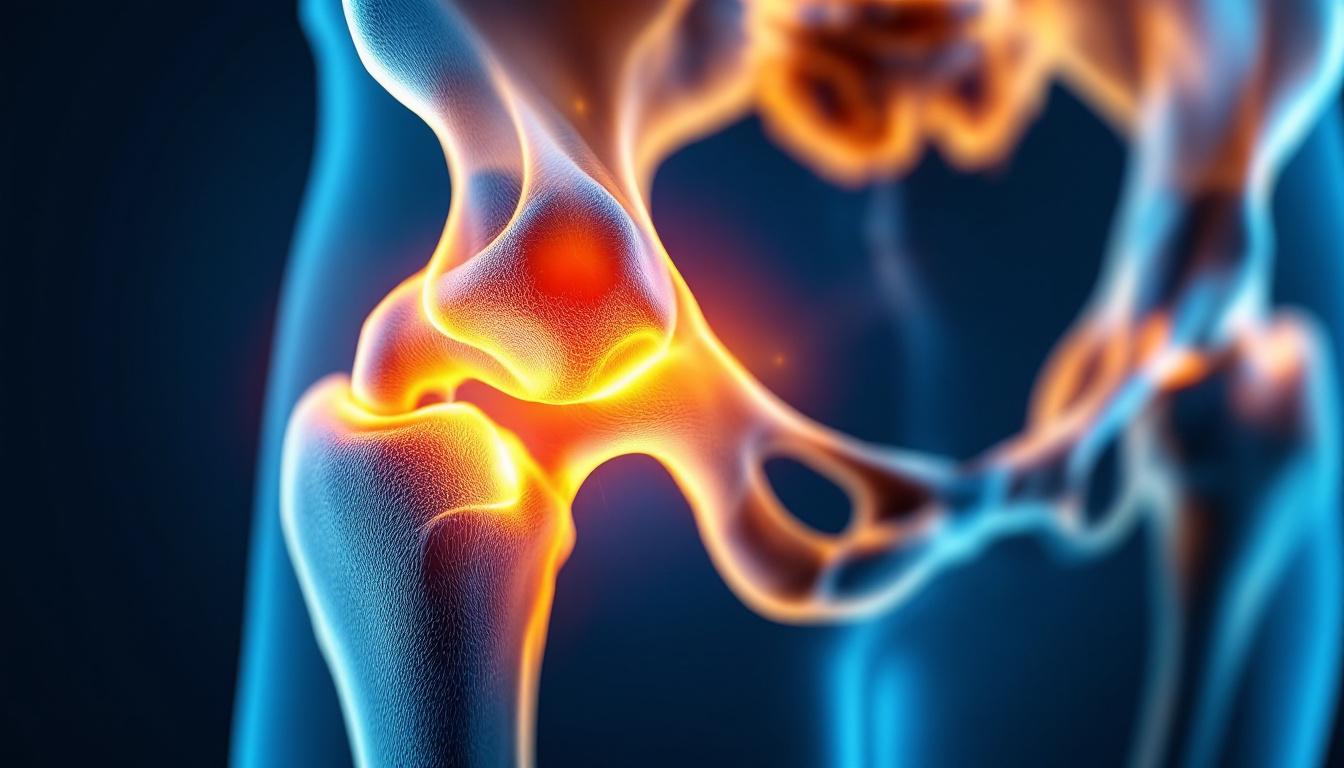
Hip osteoarthritis joint degeneration
What Is Hip Osteoarthritis?
Hip osteoarthritis (hip OA) is the gradual breakdown of cartilage within the hip joint, the ball-and-socket articulation between the femoral head and the acetabulum. As cartilage wears away, joint space narrows, subchondral bone is exposed, and the characteristic symptoms develop: deep groin pain, stiffness after rest, reduced range of motion, and pain with weight-bearing activities like walking, climbing stairs, and getting in and out of chairs.
Hip OA is common, estimates suggest it affects 10–25% of adults over 60. It is more prevalent in people with prior hip trauma, congenital hip dysplasia, femoroacetabular impingement (FAI), inflammatory arthritis, or obesity. Primary idiopathic hip OA also occurs without a clear structural cause and is the most common form. Unlike knee OA, hip OA tends to be more anatomically constrained, the deep joint, limited soft-tissue access, and thick musculature around the hip make injection accuracy particularly important.
Conservative management follows a stepwise approach: weight management, physical therapy focusing on hip abductor and external rotator strengthening, NSAIDs, corticosteroid injections, and hyaluronic acid (HA) viscosupplementation. When these fail, total hip arthroplasty (THA) is highly effective, but most patients want to delay surgery as long as possible. For this group, PRP is a biologically rational option for maintaining non-operative management.
Application
Injection Target
Evidence Level
Typical Protocol
Best Candidates
Hip Osteoarthritis
Intra-articular hip joint under ultrasound or fluoroscopic guidance
PRP for hip osteoarthritis is delivered as an intra-articular injection, directly into the hip joint space under ultrasound or fluoroscopic guidance. The concentrated platelet growth factors, PDGF, TGF-β, IGF-1, and VEGF, work to modulate the chronic inflammatory state within the joint, reduce the activity of degradative enzymes (MMPs, IL-1β, TNF-α) that break down cartilage, and create a more anabolic microenvironment that supports chondrocyte function and synovial health.
The biological mechanism for hip OA mirrors that for knee OA: PRP targets the shared cartilage degradation biology rather than simply suppressing symptoms. Whether this translates into measurable structural preservation of hip cartilage over time has not yet been established by long-term imaging studies, the available evidence is clinical (pain and function) rather than structural.
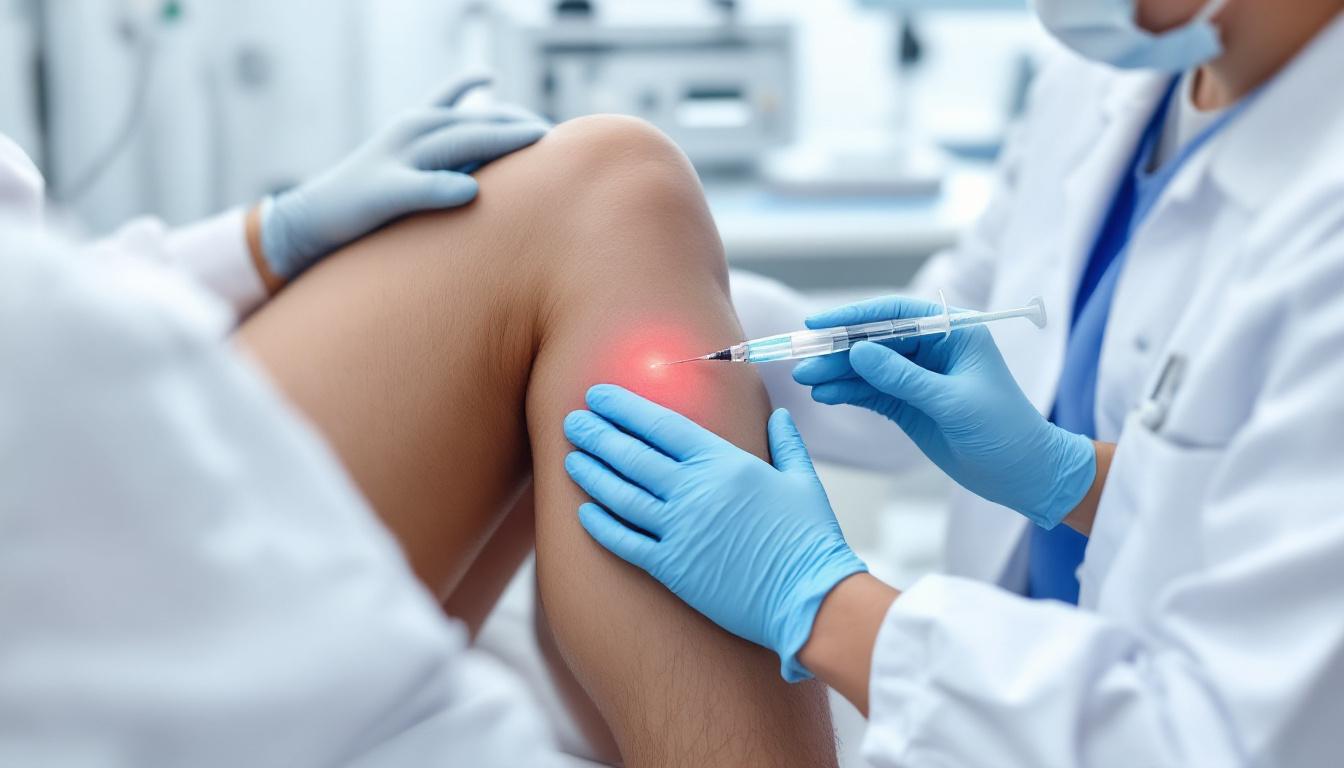
Ultrasound guidance is standard for hip joint injection. The hip is a deep joint surrounded by significant musculature, accurate intra-articular placement requires image guidance. Fluoroscopy (X-ray guidance) is also used, particularly when ultrasound visualization is limited. Inaccurate placement significantly reduces the effectiveness of any injectate, making guided technique essential for hip injections.
Ultrasound-guided PRP injection for hip osteoarthritis
What the Research Shows
The evidence base for PRP in hip OA is smaller and more mixed than for knee OA, a point that requires honest acknowledgment. A 2023 systematic review and meta-analysis of 8 studies involving 331 patients with hip osteoarthritis1, published in the American Journal of Sports Medicine, found that intra-articular PRP significantly reduced pain compared to baseline at multiple time points, with the greatest effect at 1–2 months. Functional improvements were documented at the same interval. Leukocyte-poor PRP preparations outperformed leukocyte-rich formulations, and single injections were more effective than multiple for pain reduction. No lasting adverse effects were reported.
A 2024 systematic review of 5 randomized clinical trials on PRP for hip osteoarthritis2, published in Cureus, found that all 5 included RCTs demonstrated significant pain reduction and functional improvement with PRP, with no serious adverse events. PRP outcomes compared favorably to hyaluronic acid across the included studies. The authors concluded that PRP appears to be a safe and effective treatment option for hip OA, while acknowledging the need for standardized protocols and longer follow-up data.
A 2024 double-blind randomized clinical trial of 60 patients comparing PRP to saline placebo for hip osteoarthritis3, published in the Turkish Journal of Physical Medicine and Rehabilitation, found no statistically significant difference between PRP and saline placebo on pain, function, or quality of life at 6 months. Both groups showed some improvement from baseline, suggesting that placebo effects and joint lavage from injection may contribute to observed benefits.
The honest summary: PRP for hip OA shows consistent pain reduction compared to pre-treatment baseline and compares favorably to hyaluronic acid in head-to-head studies. However, the one placebo-controlled trial found no difference from saline at 6 months, a finding that raises genuine uncertainty about the magnitude of PRP's specific biological effect in this joint. PRP is a reasonable next step for patients who have failed cortisone and want to delay surgery, but the evidence does not yet support it as strongly as for knee osteoarthritis.
PRP vs. Cortisone for Hip Osteoarthritis
Cortisone remains the standard first-line injection for hip OA pain flares. It acts quickly, most patients feel meaningful relief within 1–2 weeks, and is appropriate as a bridge to physical therapy or while evaluating further options. The key limitations are durability (relief typically fades in 4–12 weeks) and the risks associated with repeated injections, including cartilage thinning, femoral head avascular necrosis with high cumulative doses, and masking of pain that may accelerate mechanical overuse.
PRP works more slowly, meaningful improvement typically begins at 4–8 weeks, but the biological action at the joint level may produce more sustained benefit. For patients who have had cortisone injections without lasting relief, PRP is a biologically distinct next step before considering more invasive options. Unlike repeated cortisone, PRP does not carry documented cartilage degradation risks.
Who Is a Good Candidate?
PRP is most appropriate for patients with mild-to-moderate hip osteoarthritis (Kellgren-Lawrence grade II–III) who have had cortisone or HA injections without lasting benefit, or who want to minimize steroid exposure. Patients who are delaying hip replacement surgery and have exhausted conservative care are the primary target population. Leukocyte-poor PRP preparations may produce better results in the hip joint based on available evidence.
Patients with severe bone-on-bone arthritis (grade IV) and advanced joint destruction have limited cartilage remaining and are unlikely to derive significant benefit from any injection therapy. These patients are surgical candidates and should discuss timing of total hip arthroplasty with their surgeon. Patients with active infection, inflammatory arthropathy requiring disease-modifying therapy, or clotting disorders are not candidates for PRP.
What to Expect
Hip OA PRP is performed as an outpatient procedure under ultrasound or fluoroscopic guidance. A blood draw is centrifuged to prepare the platelet-rich fraction, which is then injected into the hip joint via an anterior or anterolateral approach with real-time imaging confirming accurate intra-articular placement. The procedure takes approximately 30–45 minutes. Expect 2–5 days of increased hip soreness, a normal inflammatory healing response.
Light walking is generally permitted the same day. High-impact activity and heavy loading should be avoided for 1–2 weeks. Meaningful improvement in hip pain and function typically begins at 4–8 weeks. Most protocols start with one injection and reassess at 6–8 weeks. A second injection may be considered for partial responders; single injections may outperform multiple injections based on current evidence.
Physical therapy targeting hip abductor strengthening, external rotator activation, and gait mechanics is important alongside PRP. Maintaining dynamic hip stability reduces mechanical stress on the arthritic joint surfaces and helps preserve the benefits of injection therapy.
1. Lim A, Zhu JB, Khanduja V. The Use of Intra-articular Platelet-Rich Plasma as a Therapeutic Intervention for Hip Osteoarthritis: A Systematic Review and Meta-analysis. Am J Sports Med. 2023;51(9):2487-2497. PMID: 35971803.
2. Almutairi AN, Alazzeh MS. Efficacy and Safety of Platelet-Rich Plasma (PRP) Intra-articular Injections in Hip Osteoarthritis: A Systematic Review of Randomized Clinical Trials. Cureus. 2024;16(10):e72057. PMID: 39569300.
3. Topaloglu M, et al. Effect of platelet-rich plasma injections versus placebo on pain and quality of life in patients with hip osteoarthritis: A double-blind, randomized clinical trial. Turk J Phys Med Rehabil. 2024;70(2):212-220. PMID: 38948640.
This content is for educational purposes only and does not constitute medical advice. Consult a qualified healthcare provider before starting any treatment.
Frequently Asked Questions
Find a Hip Osteoarthritis PRP Specialist Near You
Browse our directory of verified providers who offer PRP injections for hip osteoarthritis and other hip conditions.