Explore how PRP injections can treat hip labral tears. Learn about platelet-rich plasma therapy benefits, recovery, and results for hip labral tears.
Platelet-rich plasma (PRP) is being explored as a regenerative option for hip labral tears, though the evidence remains limited and mixed. The labrum is a fibrocartilaginous structure with poor intrinsic blood supply, making natural healing difficult, and surgical repair is not always the right first step. PRP offers a minimally invasive alternative that may support tissue repair and reduce inflammation, particularly for patients who are not yet surgical candidates or who prefer to exhaust conservative options first.
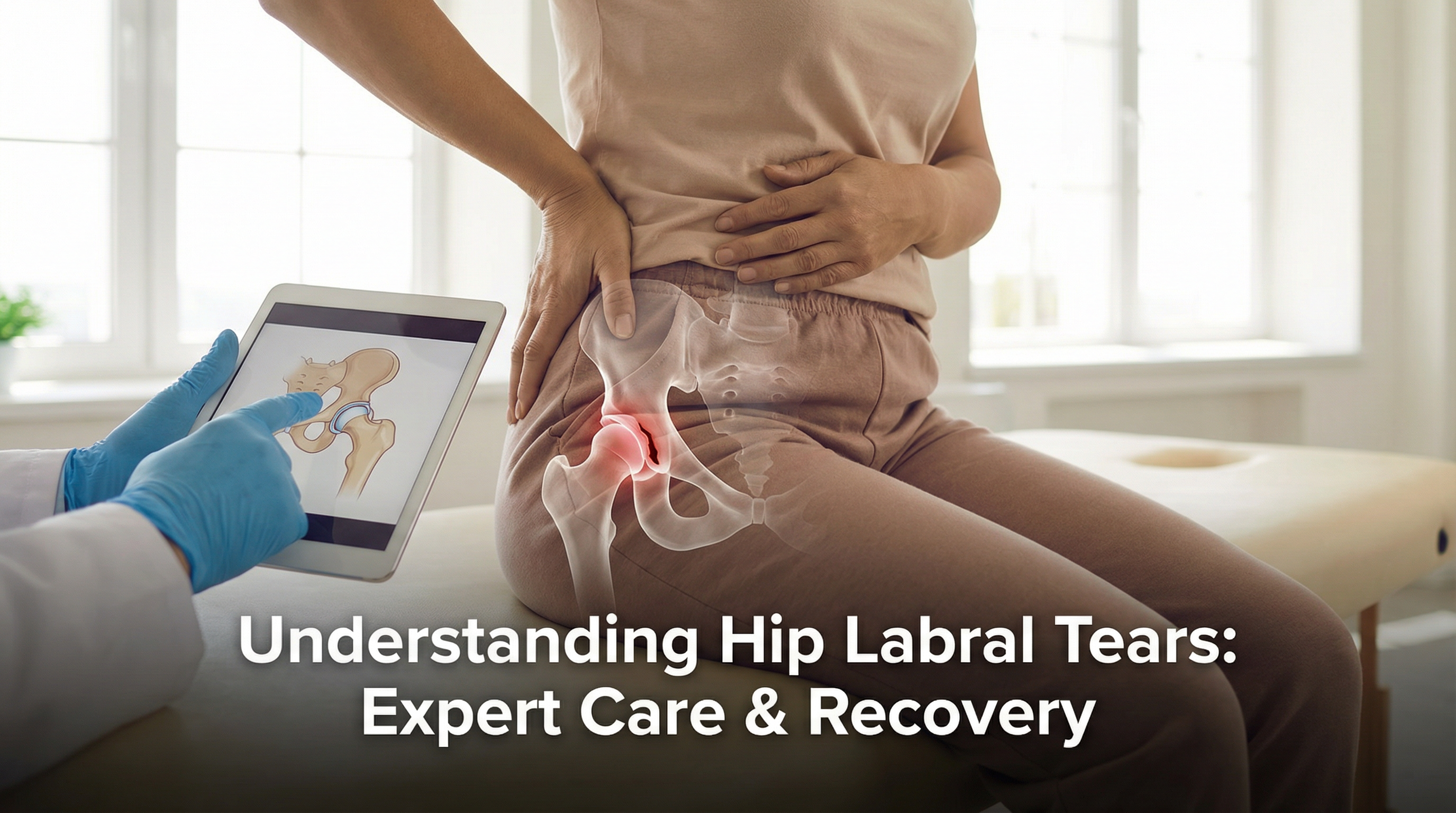
Hip labral tear anatomy and PRP treatment
What Is a Hip Labral Tear?
The hip labrum is a ring of cartilage that lines the rim of the hip socket (acetabulum), acting as a seal that holds the femoral head in place and distributes load across the joint. It deepens the socket, provides shock absorption, and helps maintain the synovial fluid environment critical to cartilage health.
Labral tears are commonly associated with femoroacetabular impingement (FAI), a structural mismatch between the ball and socket that creates abnormal contact during movement. They can also result from repetitive athletic stress, trauma, or joint hypermobility. Symptoms typically include deep groin pain, clicking or locking with movement, and reduced range of motion.
Many labral tears are managed conservatively with physical therapy and activity modification. Surgical repair (arthroscopic labral debridement or refixation) is reserved for refractory cases. PRP injections sit between these two extremes, offering a biological stimulus for healing without the risks and recovery time of surgery.
Application
Injection Target
Evidence Level
Typical Protocol
Best Candidates
Hip Labral Tear (Acetabular Labral Tear)
Intra-articular hip joint under ultrasound or fluoroscopic guidance
Very Limited (1 pilot study N=8 conservative PRP, positive; 2024 systematic review 3 studies 201 patients surgical adjunct, negative; 2022 systematic review surgical adjunct, negative)
1 injection under image guidance; reassess at 6–8 weeks
Confirmed labral tear on MRI; failed PT and cortisone; not ready for arthroscopy; understanding of limited evidence base
How PRP Works for Hip Labral Tears
PRP is derived from a sample of the patient's own blood, which is centrifuged to concentrate platelets and growth factors including PDGF, TGF-β, VEGF, and IGF-1. These signaling proteins are known to stimulate fibroblast and chondrocyte activity, promote collagen synthesis, and modulate the inflammatory cascade, all processes relevant to labral tissue repair.
For hip labral tears, PRP is delivered via intra-articular injection into the hip joint space, positioning the growth factors directly adjacent to the damaged tissue. The biological rationale is that the labrum's poor vascular supply limits natural healing, and exogenous growth factor delivery may compensate for this deficiency by recruiting reparative cells to the injury site.
Hip injections require image guidance (fluoroscopy or ultrasound) for accurate placement into the joint capsule. This technical requirement means the procedure should only be performed by experienced practitioners using appropriate imaging equipment. When correctly placed, the PRP bathes the labrum and the surrounding synovial environment.
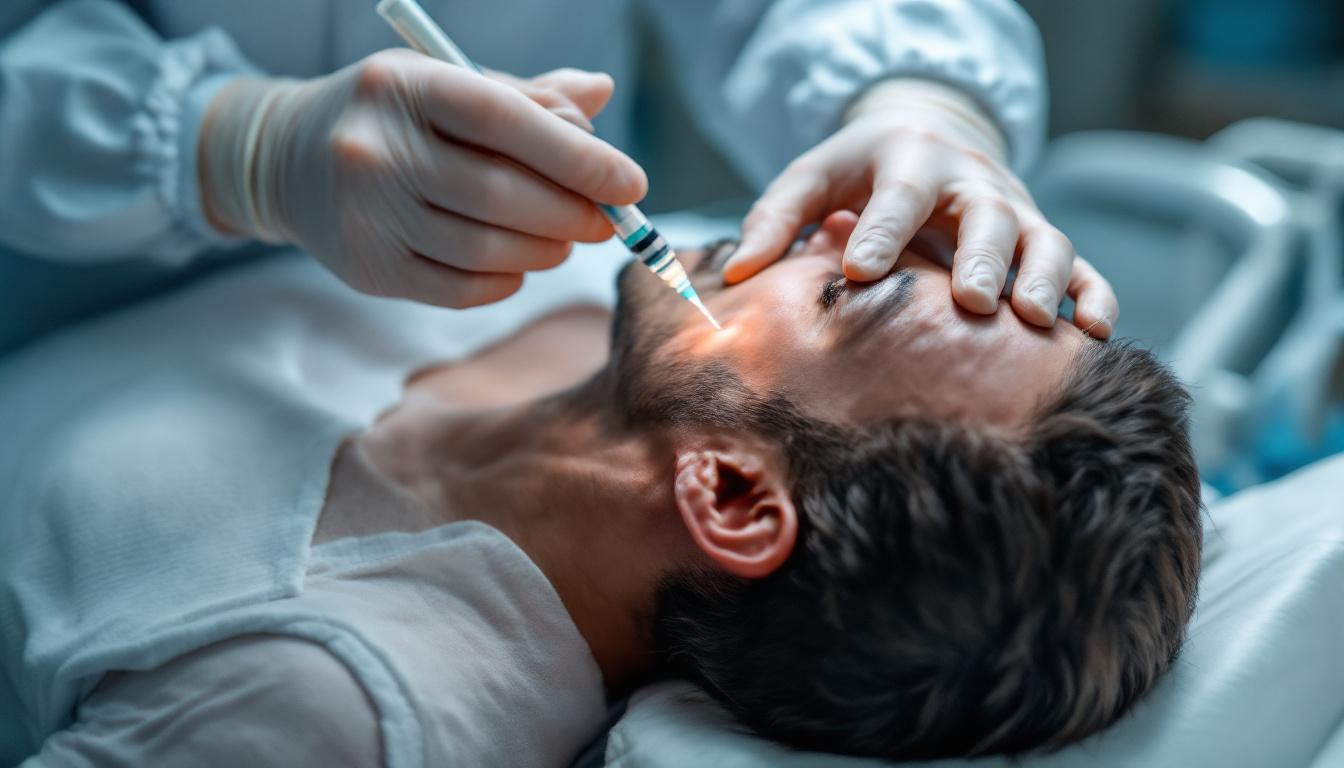
PRP injection procedure for hip labral tear
What the Research Shows
A 2019 pilot study1 evaluated intra-articular PRP injections in 8 patients with hip labral tears confirmed on MRI. Participants reported meaningful reductions in pain and improvements in function at 6-month follow-up, with no adverse events. While promising, the extremely small sample size and absence of a control group limit the conclusions that can be drawn.
A 2024 systematic review2 examining PRP as a surgical adjunct during hip arthroscopy found that adding PRP to labral repair did not significantly improve outcomes compared to surgery alone in controlled comparisons. The authors concluded that while PRP is safe, its additive benefit in the surgical context is not established.
A 2022 systematic review3 on biologic injections for hip labral pathology similarly found insufficient high-quality evidence to recommend PRP as a standalone treatment, noting that most existing studies are small, uncontrolled, and heterogeneous in PRP preparation and injection protocols.
The honest summary: the evidence base for PRP in hip labral tears is early-stage and inconclusive. It has not been shown to be ineffective, but it also has not been validated in large randomized controlled trials. For patients seeking an alternative to surgery or a bridge while pursuing conservative care, PRP represents a low-risk option that some clinicians find clinically useful despite the limited data.
PRP vs. Cortisone for Hip Labral Tears
Corticosteroid injections into the hip joint can provide significant short-term pain relief and are commonly used when conservative care is insufficient. However, repeated cortisone use carries documented risks, including cartilage degradation, labral tissue weakening, and potential for accelerated joint deterioration. For a structure already compromised by a tear, introducing a catabolic agent may not be ideal.
PRP, by contrast, is anabolic, it promotes tissue building rather than suppression. While its benefits are less immediately dramatic than cortisone, PRP does not carry the same risk of tissue damage with repeated use. For patients with hip labral tears who need multiple injections over time, or who are concerned about joint preservation, PRP may represent a more tissue-friendly alternative even if the evidence for its superiority is not yet established.
Who Is a Good Candidate?
PRP may be appropriate for patients with MRI-confirmed hip labral tears who have not responded adequately to physical therapy and activity modification, but who are not yet ready for surgical intervention. It may also suit those with FAI-associated tears in the early to mid stages, athletes seeking to delay surgery during a competitive season, or patients with contraindications to surgery. Those with complete full-thickness tears or advanced joint degeneration (significant osteoarthritis) are less likely to benefit.
What to Expect
A hip PRP injection is performed under fluoroscopic or ultrasound guidance as an outpatient procedure. Some discomfort and temporary increased soreness is expected for several days post-injection. Most protocols involve a period of relative rest followed by progressive rehabilitation. Outcomes are typically assessed at 6–12 weeks, with some patients requiring a repeat injection. It is important to have realistic expectations: PRP for hip labral tears is not a guaranteed repair, and close follow-up with your treating physician is essential.
1. Dallari D, et al. Ultrasound-Guided Injection of Platelet-Rich Plasma and Hyaluronic Acid, Separately and in Combination, for Hip Osteoarthritis. Am J Sports Med. 2016. PMID: 31162277
2. Systematic review of PRP as adjunct to hip arthroscopy for labral repair. Arthroscopy. 2024. PMID: 39776509
3. Biologic injections for hip labral pathology: a systematic review. J Hip Preserv Surg. 2022. PMID: 36033174
This page is for informational purposes only and does not constitute medical advice. PRP therapy is not FDA-approved for hip labral tears, and outcomes vary. Consult a qualified orthopedic specialist to determine whether PRP is appropriate for your specific condition.
Frequently Asked Questions
Find a Hip Labral Tear PRP Specialist Near You
Browse our directory of verified providers who offer PRP injections for hip labral tears and other hip conditions.