Learn about PRP injection therapy for ankle & foot pain and injuries. Discover how platelet-rich plasma treatment can help heal ankle & foot conditions witho...
The foot and ankle absorb the full force of every step, sprint, and jump. When tendons, ligaments, and the plantar fascia break down under that load, the resulting pain can be debilitating, and conventional treatments often fall short for chronic cases. PRP (Platelet-Rich Plasma) therapy is now used across several foot and ankle conditions, delivering concentrated growth factors to damaged tissue to stimulate repair, reduce inflammation, and restore function.
PRP is used across multiple foot and ankle structures, from the plantar fascia to the Achilles tendon and lateral ligaments
Foot and Ankle Conditions Treated With PRP
PRP targets several distinct structures in the foot and ankle. The most common applications are plantar fasciitis, Achilles tendinopathy, ankle ligament injuries, and Morton's neuroma.
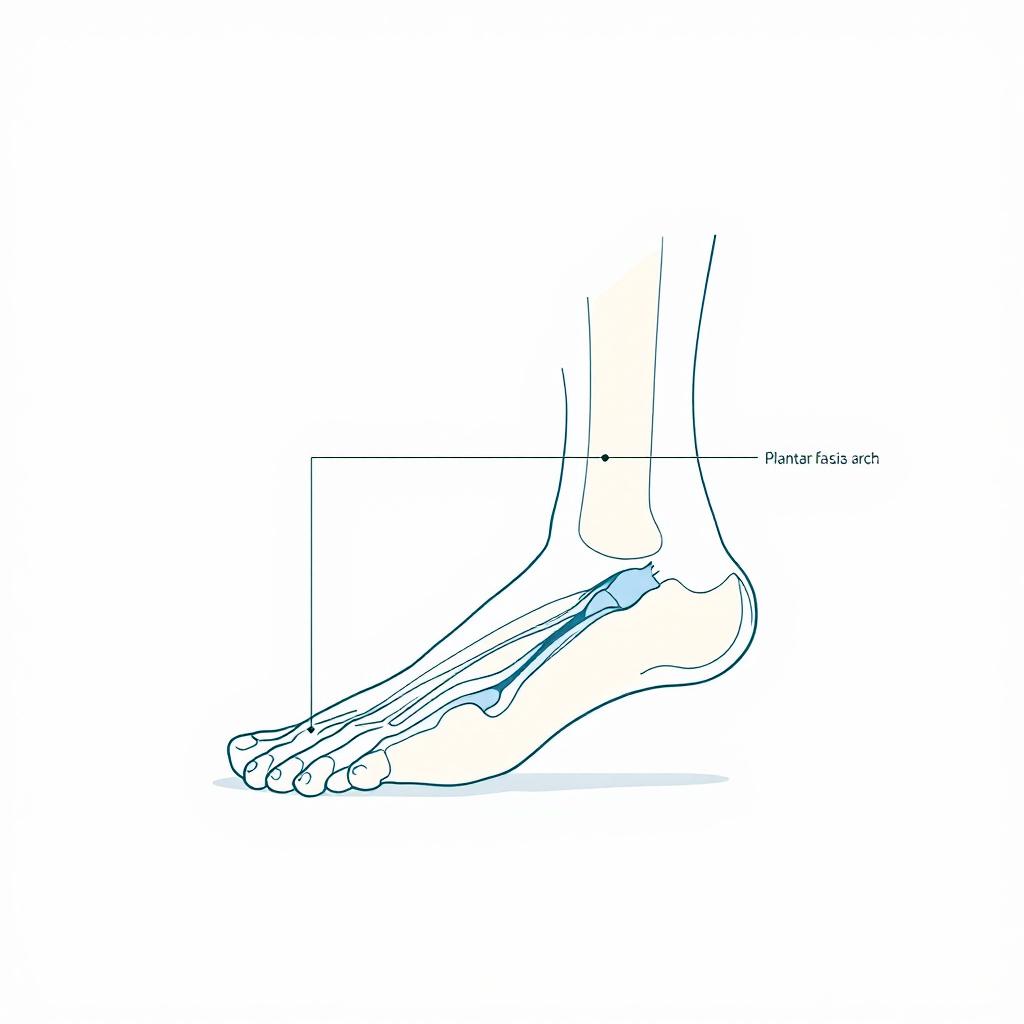
Plantar fasciitis is the most common foot condition treated with PRP and one of the most studied in the entire regenerative medicine literature. The plantar fascia, the thick band of connective tissue running from the heel bone to the toes, undergoes degenerative change from overuse and repetitive stress, causing the characteristic heel pain on first morning steps. PRP injected at the fascial attachment delivers growth factors that address the degenerative process that cortisone cannot repair.
Achilles tendinopathy involves degeneration of the Achilles tendon, the largest tendon in the body, from chronic overloading. It causes pain and stiffness at the back of the heel that limits walking, running, and daily activity. PRP injected into the degenerative tendon zone stimulates tenocyte activity and collagen production in tissue that has very limited blood supply and poor natural repair capacity.
Ankle sprains and chronic lateral ankle instability result from damage to the lateral ankle ligaments, most commonly the anterior talofibular ligament (ATFL). While most acute sprains heal with conservative care, some progress to chronic instability and persistent pain. PRP injected into the injured ligament tissue promotes healing and reduces the chronic low-grade inflammation that perpetuates symptoms.
Morton's neuroma is a painful thickening of tissue around a nerve between the toes, typically between the third and fourth metatarsals. PRP is an emerging option for this condition, with the proposed mechanism being reduction of perineural inflammation and scar tissue. Evidence remains limited to small case series, but PRP is used by some specialists as a non-surgical alternative before considering excision.
Incomplete healing at 6–8 weeks; athletes; chronic instability
Morton's Neuroma
Perineural injection, intermetatarsal space
Limited (small case series)
1–2 injections under ultrasound guidance
Non-surgical candidates; failed padding/cortisone
How PRP Works in the Foot and Ankle
PRP is prepared by drawing a small blood sample and concentrating the platelet-rich fraction through centrifugation. The resulting preparation, rich in PDGF, TGF-β, IGF-1, and VEGF, is injected precisely into the target tissue under ultrasound guidance.
Ultrasound guidance is essential for foot and ankle PRP. The plantar fascia, Achilles tendon, and lateral ankle ligaments are all superficial enough to image clearly with ultrasound, allowing precise placement into the degenerative or injured zone. For Morton's neuroma, ultrasound confirms the needle position adjacent to the thickened interdigital nerve. Precision of delivery directly affects outcomes, blind injection is significantly less effective.
What the Research Shows
For plantar fasciitis, a 2024 meta-analysis of 21 randomized controlled trials involving 1,356 patients1 found that PRP produced significantly greater improvements in VAS pain scores compared to corticosteroid injections, extracorporeal shock wave therapy, and placebo. PRP also outperformed cortisone and placebo on AOFAS functional scores. These findings position PRP as the preferred injectable option for chronic plantar fasciitis in patients who have failed conservative care.
For acute lateral ankle sprains, a 2024 critically appraised topic evaluating 3 studies with moderate evidence2 found that PRP reduces pain and improves function 5 to 8 weeks after lateral ankle sprain. The authors rated this Level B evidence, limited but supporting. PRP appears most useful in athletes seeking faster return to activity or in patients with incomplete ligament healing progressing toward chronic instability.
For Achilles tendinopathy, multiple randomized controlled trials and systematic reviews confirm that PRP produces durable improvement in pain and function, with benefit comparable to or exceeding cortisone at long-term follow-up. Eccentric exercise combined with PRP consistently outperforms either treatment alone.
Ultrasound guidance ensures precise delivery of PRP into the target tissue for optimal outcomes
PRP vs. Cortisone for Foot and Ankle Conditions
Cortisone injections are commonly used for plantar fasciitis and heel bursitis. They provide fast pain relief, within 1–2 weeks, but the benefit fades quickly and repeated injections carry real tissue risks: plantar fascia rupture and fat pad atrophy are documented complications of repeated heel cortisone injections. For Achilles tendinopathy, cortisone is generally avoided near the tendon itself due to the risk of rupture.
PRP works more slowly, meaningful improvement typically begins at 4–8 weeks, but targets the underlying degeneration. For chronic plantar fasciitis that has not responded to cortisone, PRP is the biologically appropriate next step. The 2024 meta-analysis confirms PRP outperforms cortisone at medium-term follow-up for plantar fasciitis, reversing the short-term advantage cortisone holds at early timepoints.
Who Is a Good Candidate for Foot and Ankle PRP?
PRP is best suited for patients with chronic foot or ankle pain (3+ months) that has not responded adequately to conservative treatment, physical therapy, orthotics, activity modification, NSAIDs, or prior cortisone injections. Good candidates have imaging-confirmed pathology: plantar fascia degeneration on ultrasound, Achilles tendinopathy on MRI or ultrasound, lateral ligament injury on MRI, or Morton's neuroma on ultrasound.
PRP is generally not the first treatment for acute injuries in the initial healing phase. For acute ankle sprains, PRP is considered when healing is incomplete at 6–8 weeks or when progression toward chronic instability is a concern. For complete tendon ruptures or severe structural instability requiring surgery, PRP may be used as a surgical adjunct but not as a standalone treatment.
What to Expect
Foot and ankle PRP is performed as an outpatient procedure under ultrasound guidance. Expect 2–5 days of increased local pain after the injection, particularly for plantar fasciitis, which can cause temporary heel soreness. Weight-bearing is typically permitted the same day for most injections; high-impact activity (running, jumping) should be restricted for 1–2 weeks.
Meaningful improvement typically begins at 4–8 weeks. One injection is standard for most foot and ankle conditions, with a second considered at 6–8 weeks for incomplete responders. Physical therapy, including eccentric loading for Achilles tendinopathy and progressive fascia stretching for plantar fasciitis, is strongly recommended alongside PRP to guide tissue remodeling and prevent recurrence.
1. Herber A, Covarrubias O, Daher M, Tung WS, Gianakos AL. Platelet rich plasma therapy versus other modalities for treatment of plantar fasciitis: A systematic review and meta-analysis. Foot Ankle Surg. 2024;30(4):285-293. doi:10.1016/j.fas.2024.02.004. PMID: 38395675.
2. Frey E, Brown CD, Tripp B. Effectiveness of Platelet-Rich Plasma in Reducing Pain and Increasing Function After Acute Lateral Ankle Sprain: A Critically Appraised Topic. J Sport Rehabil. 2024;33(7):558-561. doi:10.1123/jsr.2023-0425. PMID: 38996449.
This content is for educational purposes only and does not constitute medical advice. Consult a qualified healthcare provider before starting any treatment.
Frequently Asked Questions
Find a Foot and Ankle PRP Specialist Near You
Browse our directory of verified providers who offer PRP injections for plantar fasciitis, Achilles tendinopathy, ankle instability, and other foot and ankle conditions.