
PRP for Plantar Fasciitis

    Explore how PRP injections can treat plantar fasciitis. Learn about platelet-rich plasma therapy benefits, recovery, and results for plantar fasciitis.
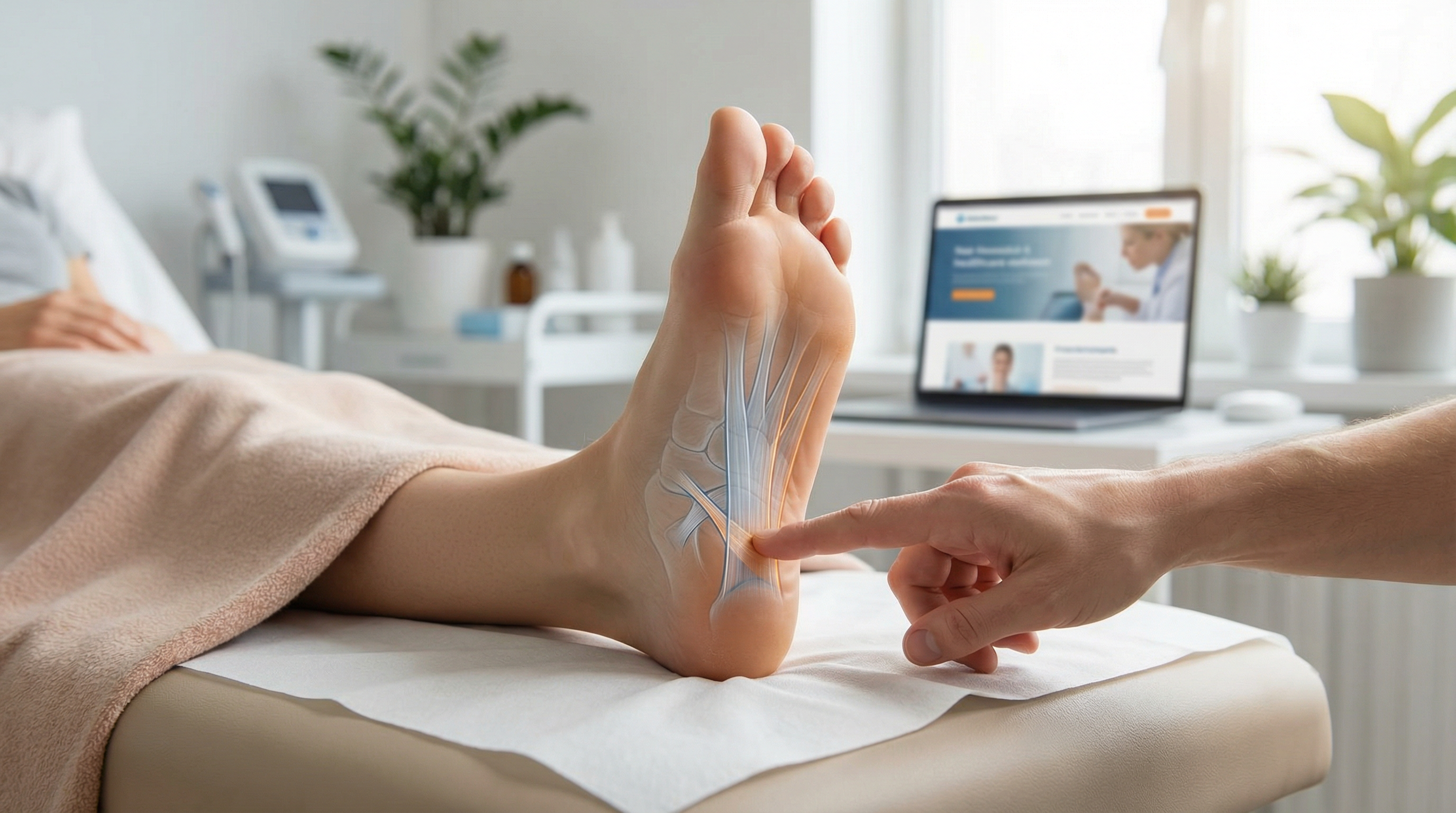
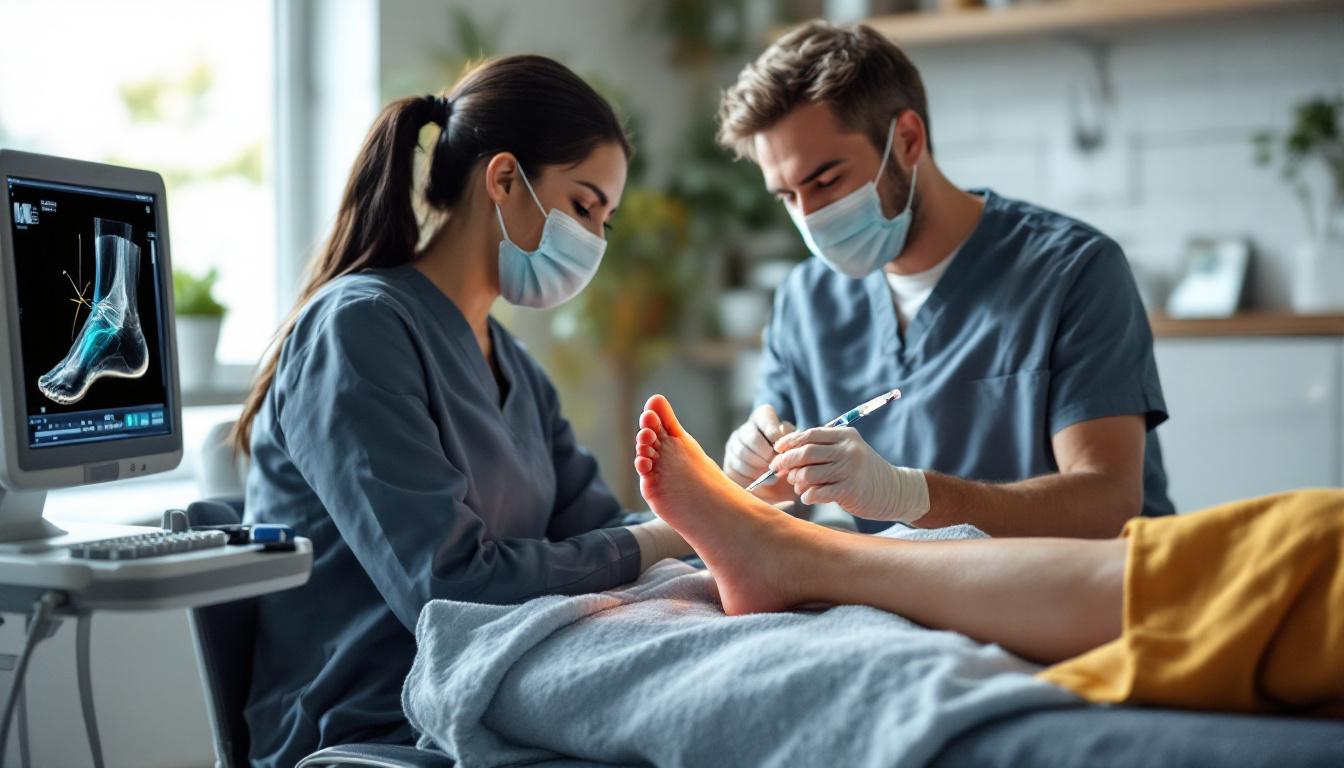
    Plantar fasciitis is the most common cause of heel pain, affecting approximately 2 million Americans each year. PRP therapy offers a regenerative alternative to corticosteroid injections by delivering concentrated growth factors directly to the damaged plantar fascia, stimulating natural tissue repair rather than suppressing inflammation.
    Ultrasound-guided PRP injection for plantar fasciitis heel pain
    Ultrasound-guided PRP injection for plantar fasciitis heel pain

    What Is Plantar Fasciitis?

    The plantar fascia is a thick band of connective tissue running along the bottom of the foot, connecting the heel bone (calcaneus) to the base of the toes. Plantar fasciitis develops when repetitive stress causes microtears and degenerative changes in this tissue, producing stabbing heel pain that is typically worst with the first steps in the morning or after prolonged periods of rest. Despite its name, research increasingly identifies plantar fasciitis as a degenerative condition, fasciosis, rather than purely inflammatory, making regenerative treatments like PRP well-suited to address the underlying pathology.

    How PRP Therapy Works for Plantar Fasciitis

    Platelet-Rich Plasma is produced by drawing a small amount of your blood and centrifuging it to concentrate platelets, growth factors (PDGF, TGF-β, VEGF, IGF-1), and bioactive proteins. When injected under ultrasound guidance into the thickened, degenerative region of the plantar fascia at its calcaneal insertion, these growth factors activate local fibroblasts to synthesize new collagen, promote angiogenesis to restore blood supply, and trigger a controlled healing cascade. Because the plantar fascia has inherently poor vascularity, PRP compensates by delivering a concentrated dose of regenerative factors precisely where they are needed most.
    PRP blood preparation and concentration process
    PRP blood preparation and concentration process

    What the Research Shows

    Clinical evidence for PRP in plantar fasciitis is robust and growing. A 2025 systematic review and meta-analysis found that ultrasound-guided PRP injection produced significantly greater reductions in pain and improvements in function compared to corticosteroid injection at 6 and 12 months, with durable benefits maintained over long-term follow-up.[1] A 2024 randomized controlled trial confirmed that PRP outperforms traditional conservative treatments including physical therapy and NSAIDs for chronic plantar fasciitis that has failed to respond to initial management.[2] Mechanistic research published in PubMed Central demonstrated that PRP upregulates collagen synthesis genes and downregulates key inflammatory mediators within the fascia, providing a molecular explanation for its clinically observed long-term benefit.[3]

    PRP vs. Cortisone Injections for Heel Pain

    Corticosteroid injections are a common first-line treatment for plantar fasciitis and can provide rapid but short-lived pain relief. Repeated cortisone use carries significant risks including plantar fascia rupture, fat pad atrophy, and progressive collagen degeneration that may worsen the underlying condition over time. PRP addresses the root cause of chronic heel pain by stimulating tissue regeneration. Head-to-head clinical studies consistently show that while cortisone may offer faster initial relief, PRP delivers superior outcomes at 3, 6, and 12 months, reduces recurrence rates, and eliminates the risks associated with steroid use.

    Am I a Candidate for PRP?

    PRP is most appropriate for patients with plantar fasciitis lasting more than 3 months that has not responded to conservative measures such as stretching programs, custom orthotics, night splints, or physical therapy. Ideal candidates have imaging evidence of plantar fascia thickening or partial tears on ultrasound or MRI and are seeking a non-surgical solution before considering procedures such as extracorporeal shockwave therapy or plantar fascia release surgery. Patients on anticoagulant therapy or with active foot infection are generally not candidates.

    What to Expect

    After a brief blood draw, your blood is centrifuged to prepare the PRP concentrate. The injection is performed under ultrasound guidance to ensure precise delivery into the most damaged portion of the plantar fascia at the heel attachment. Mild post-injection soreness lasting 3–7 days is normal as the healing response activates. Most patients report meaningful improvement within 4–8 weeks, with continued functional gains over 3–6 months. Explore our full PRP treatment process →

    Sources

    1. PubMed PMID 40913486, Systematic review and meta-analysis: PRP vs. corticosteroid injection for plantar fasciitis (2025)
    2. PubMed PMID 38395675, Randomized controlled trial: PRP for chronic plantar fasciitis resistant to conservative treatment (2024)
    3. PMC11909744, Molecular mechanisms of platelet-rich plasma in plantar fascia regeneration
    This content is for informational purposes only and does not constitute medical advice. Consult a qualified healthcare provider before beginning any treatment program.
    TreatmentMechanismDuration of ReliefBest ForLimitations
    PRP InjectionStimulates tissue repair via growth factors6–12+ monthsChronic cases (3+ months)Cost; 4–8 weeks to feel results
    Cortisone InjectionSuppresses inflammation short-term4–8 weeksAcute flare-upsWeakens fascia with repeat use; short-lived
    ESWT (Shockwave)Promotes healing via acoustic waves3–6 monthsChronic fasciitisMultiple sessions required; variable results
    Physical TherapyStretching and strengthening the fascia/calfLong-term (with compliance)Mild to moderate casesTime-intensive; slow to show effect
    Orthotics / Night SplintsOffloads and stretches the plantar fasciaSymptom managementPrevention and early-stage careDoes not heal underlying damage

    Frequently Asked Questions

    Find a Plantar Fasciitis PRP Specialist

    Search our verified directory of orthopedic PRP providers who treat heel pain and plantar fasciitis.

    Search Providers

    Other Conditions

    PRP for Achilles Tendinitis

    Explore how PRP injections can treat achilles tendinitis. Learn about platelet-rich plasma therapy benefits, recovery, and results for achilles tendinitis.

    PRP for ACL Injuries

    Explore how PRP injections can treat acl injuries. Learn about platelet-rich plasma therapy benefits, recovery, and results for acl injuries.

    PRP for Ankle Sprains

    Explore how PRP injections can treat ankle sprains. Learn about platelet-rich plasma therapy benefits, recovery, and results for ankle sprains.

    PRP for Carpal Tunnel Syndrome

    Explore how PRP injections can treat carpal tunnel syndrome. Learn about platelet-rich plasma therapy benefits, recovery, and results for carpal tunnel syndr...

    PRP for Chronic Low Back Pain

    Explore how PRP injections can treat chronic low back pain. Learn about platelet-rich plasma therapy benefits, recovery, and results for chronic low back pain.

    PRP for De Quervain's Tenosynovitis

    Explore how PRP injections can treat de quervain's tenosynovitis. Learn about platelet-rich plasma therapy benefits, recovery, and results for de quervain's ...

    PRP for Disc Degeneration

    Explore how PRP injections can treat disc degeneration. Learn about platelet-rich plasma therapy benefits, recovery, and results for disc degeneration.

    PRP for Elbow Bursitis

    Explore how PRP injections can treat elbow bursitis. Learn about platelet-rich plasma therapy benefits, recovery, and results for elbow bursitis.

    PRP for Facet Joint Syndrome

    Explore how PRP injections can treat facet joint syndrome. Learn about platelet-rich plasma therapy benefits, recovery, and results for facet joint syndrome.

    PRP for Frozen Shoulder

    Explore how PRP injections can treat frozen shoulder. Learn about platelet-rich plasma therapy benefits, recovery, and results for frozen shoulder.

    Find a Specialist

    Connect with board-certified providers offering PRP therapy.