PRP as an Alternative to Joint Replacement Surgery: Who Qualifies?
Can PRP therapy help you avoid knee or hip replacement? Learn who qualifies for PRP as an alternative to surgery, what the evidence shows, and when surgery becomes necessary.
March 6, 2026
For patients with knee or hip osteoarthritis severe enough to raise the question of joint replacement, PRP therapy offers a compelling alternative worth serious consideration. PRP is not a replacement for surgery in every case — but for a meaningful subset of patients, it can reduce pain, improve function, and delay or eliminate the need for a major operation.
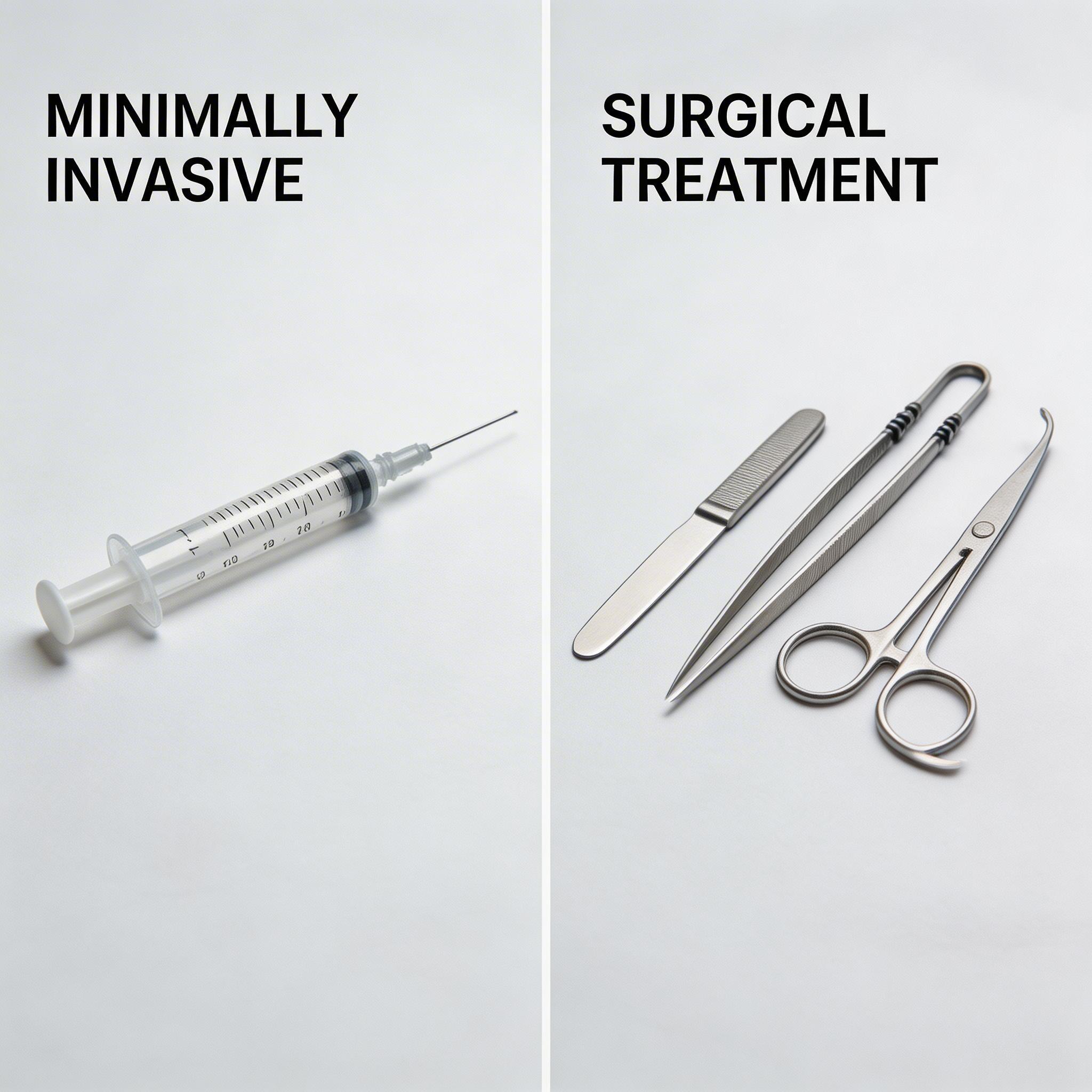
PRP therapy offers a minimally invasive alternative worth trying before joint replacement surgery
Can PRP Replace Joint Replacement Surgery?
PRP cannot regenerate lost cartilage or restore bone structure in a joint destroyed by end-stage osteoarthritis. In that sense, it is not a direct substitute for total joint replacement in advanced disease.
However, for patients with mild to moderate osteoarthritis — even those whose orthopedist has mentioned the possibility of eventual surgery — PRP offers a real opportunity to reduce symptoms and forestall that decision for years. A systematic review published in the Journal of Orthopaedic Surgery and Research1 found PRP produced sustained improvements through 12 months in knee OA patients. Some longer follow-up studies suggest benefits lasting 2 years or more.
The goal is not to pretend surgery will never be needed — it is to determine whether you can maintain acceptable function and quality of life without it for the foreseeable future. Many patients who begin with that question find they do not need surgery for 5, 10, or more years.
Who Is a Candidate for PRP Instead of Surgery?
You are likely a good candidate for PRP as a surgical alternative if:
Your osteoarthritis is mild to moderate. On imaging (X-ray or MRI), this corresponds roughly to Kellgren-Lawrence grade 1 to 3 for knee OA. Patients with grade 4 disease (complete cartilage loss, bone-on-bone contact) are less likely to achieve meaningful PRP benefit.
You have not exhausted conservative options. Physical therapy, weight management, activity modification, and other non-surgical treatments should have been tried first.
You are not a surgical emergency. Joint replacement surgery is typically elective for osteoarthritis. If there is no acute structural crisis requiring immediate repair, taking a 3 to 6-month trial of PRP is a reasonable strategy before committing to surgery.
You have realistic expectations. PRP works by reducing inflammation and supporting tissue repair. It does not rebuild lost cartilage. Patients who understand they are seeking durable symptom management — not a structural cure — tend to be more satisfied with outcomes.
The Case for Trying PRP Before Surgery
Joint replacement surgery is a major intervention. It carries real risks — infection, blood clots, implant failure, nerve injury — and requires 3 to 6 months of recovery. For younger patients, implant longevity is a concern: most knee and hip replacements last 15 to 20 years, meaning a 55-year-old who undergoes surgery may need revision surgery in their 70s.
Against that backdrop, a $1,500 to $3,000 PRP course that provides 12 to 24 months of meaningful pain relief represents exceptional value. A cost-effectiveness analysis in Arthroscopy2 confirmed that PRP for knee OA is cost-effective over a 2-year horizon compared to continuing with other injections.
If PRP works well, it can be repeated annually or every 18 months as a long-term management strategy. This approach is increasingly common among patients and physicians who see joint replacement as a last resort rather than a first response to moderate OA. Learn more about knee osteoarthritis treatment options and hip osteoarthritis treatment options.
When Surgery Is the Better Choice
PRP is not appropriate for every patient, and pretending otherwise would be dishonest. Surgery is likely the better path when:
You have end-stage osteoarthritis with severe cartilage loss and bone-on-bone contact. Your quality of life is significantly impaired and conservative measures including PRP have failed. Your joint has structural instability (severe ligament insufficiency, severe deformity) that requires mechanical correction. You have an active lifestyle and need a durable structural fix rather than ongoing injections.
A candid conversation with an orthopedic surgeon and a regenerative medicine specialist — ideally both — gives you the best perspective on where you fall on this spectrum. See our guide on PRP success rates to understand candidacy factors in more detail.
Sources
1. Shen L, Yuan T, Chen S, et al. The temporal effect of platelet-rich plasma on pain and physical function in the treatment of knee osteoarthritis: systematic review and meta-analysis of randomized controlled trials. J Orthop Surg Res. 2017;12(1):16. PubMed
2. Belk JW, Kraeutler MJ, Houck DA, et al. What Is the Appropriate Price for Platelet-Rich Plasma Injections for Knee Osteoarthritis? A Cost-Effectiveness Analysis. Arthroscopy. 2020;36(5):1397–1403. PubMed
Frequently Asked Questions
Considering Your Options? Start with a Consultation.
A PRP specialist can evaluate your imaging and help you understand whether PRP is a viable alternative to surgery for your situation.