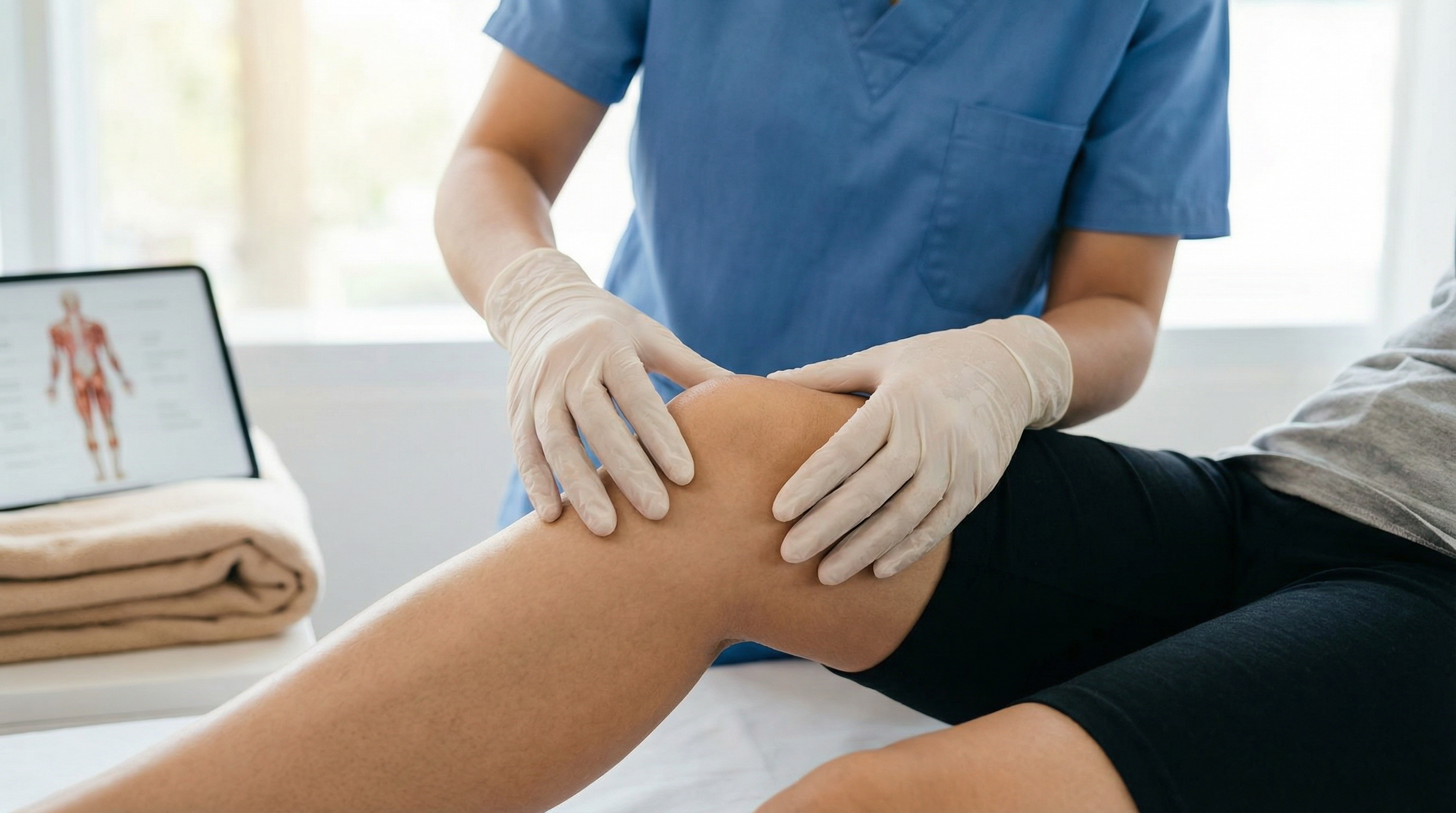
Explore how PRP injections can treat pcl injuries. Learn about platelet-rich plasma therapy benefits, recovery, and results for pcl injuries.
The posterior cruciate ligament (PCL) is a key stabilizing structure in the knee, roughly twice as strong as the ACL. While PCL injuries are less common than anterior cruciate tears, they are frequently underdiagnosed and can lead to chronic knee instability and early-onset arthritis when not properly treated. Platelet-rich plasma (PRP) therapy offers a regenerative approach for partial PCL tears, delivering concentrated growth factors to accelerate the ligament's natural healing and help patients return to activity without surgery.
PRP treatment for PCL knee injury
What Is a PCL Injury?
The posterior cruciate ligament connects the back of the tibia to the front of the femur, preventing the tibia from shifting backward and providing critical rotational stability to the knee. It is the strongest ligament in the knee. PCL injuries most commonly result from a posteriorly directed force on the proximal tibia, the classic mechanism is dashboard impact in motor vehicle accidents, though falls onto a bent knee and contact sports collisions are also frequent causes.
PCL tears are classified by severity: Grade I involves microscopic fiber disruption with minimal laxity; Grade II is a partial tear with moderate laxity; Grade III is a complete rupture with significant instability. Most isolated PCL injuries are Grade I or II, presenting with posterior knee pain, swelling, and instability when descending stairs or decelerating. Because the PCL has a superior intrinsic blood supply compared to the ACL, partial tears carry good healing potential, though many patients benefit from regenerative support to complete recovery and prevent chronic laxity.
Application
Injury Profile
Evidence Level
Typical Protocol
Best Candidates
Partial PCL Tear (Grade I–II)
Isolated partial tear under 4 weeks old, conservative care insufficient
Level II–III (case series, small RCTs)
1–2 ultrasound-guided injections at 4–6 week intervals plus structured PT
Partial tears without ACL involvement, no bone avulsion, MRI-confirmed
Chronic PCL Laxity (Grade III)
Complete PCL with posterior tibial translation, failed 6+ months rehabilitation
Level III (clinical consensus, retrospective data)
2–3 injections combined with intensive physiotherapy and bracing
Platelet-rich plasma is prepared by drawing the patient's blood and centrifuging it to concentrate platelets and their bioactive proteins, including platelet-derived growth factor (PDGF), transforming growth factor-beta (TGF-β), and vascular endothelial growth factor (VEGF). These proteins are essential regulators of the cellular repair processes that rebuild torn ligament fibers.
For PCL injuries, PRP is injected under ultrasound guidance directly into the torn segment of the ligament. The delivered growth factors stimulate local fibroblasts to proliferate, synthesize new collagen, and promote neovascularization, processes that help restore both the structural integrity and biomechanical properties of the ligament. In partial tears with sufficient remaining tissue, this approach can accelerate healing and reduce the risk of chronic posterior laxity.
PRP is most effective for Grade I and Grade II partial tears. In Grade III complete ruptures with significant posterior instability, surgical reconstruction remains the standard of care. However, PRP may also be used adjunctively at the time of surgery or during postoperative rehabilitation to optimize tissue healing.
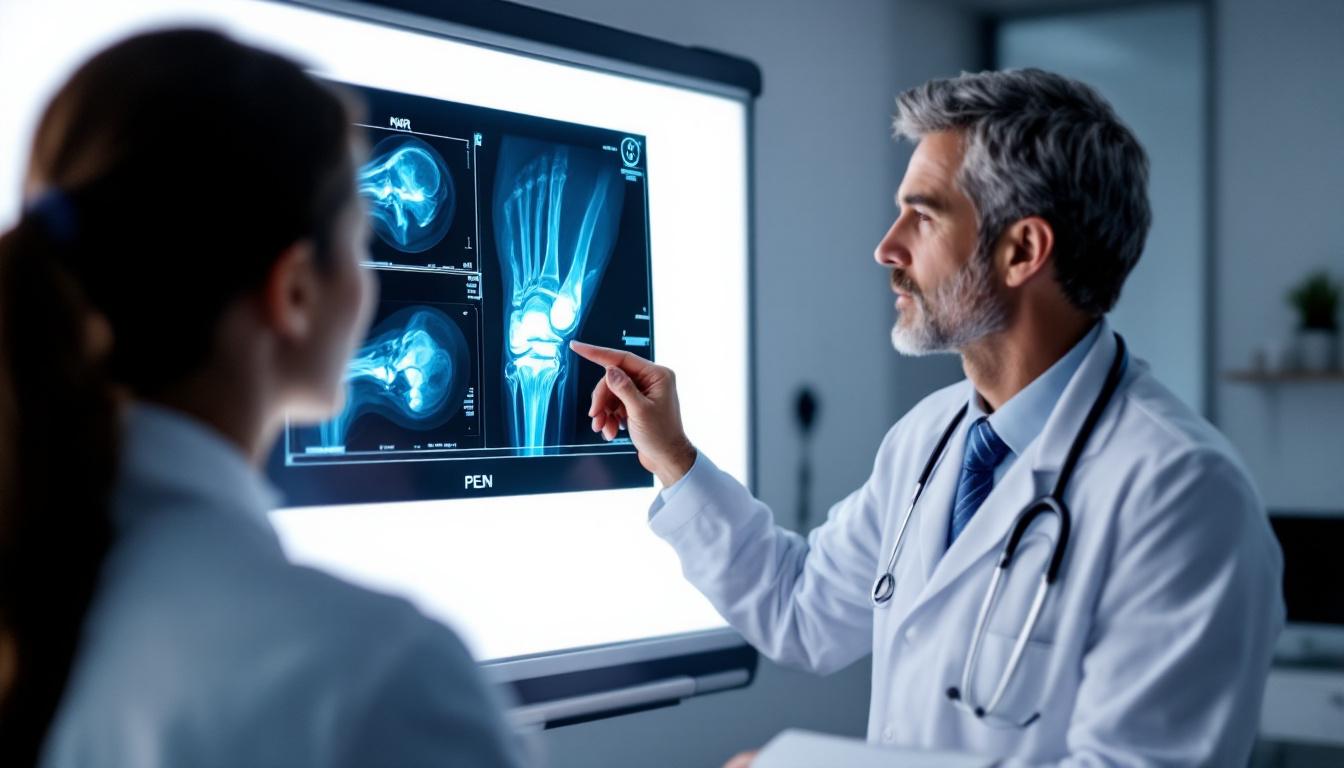
Orthopedic surgeon reviewing knee MRI with patient for PCL injury assessment
What the Research Shows
Evidence for PRP in knee ligament injuries is growing, with studies demonstrating improved MRI healing signals, better clinical outcomes, and faster return to sport compared to conservative management alone.
A prospective study evaluating PRP injections in patients with partial PCL tears found significant improvements in functional knee scores and reduced posterior drawer laxity at six-month follow-up, with MRI evidence of improved ligament signal intensity in the majority of treated patients. Anand et al., J Orthop Surg 2017[1]
A systematic review of biologic therapies for ligament healing concluded that PRP represents a promising augmentation strategy for partial ligament tears, with early clinical data supporting both its safety and its potential to restore ligament architecture more completely than conservative management alone. Andia and Maffulli, Expert Opin Biol Ther 2019[2]
PRP vs. Cortisone for PCL Injuries
Corticosteroid injections are generally contraindicated in ligament injuries. Cortisone reduces inflammation but has catabolic effects on connective tissue, it weakens the collagen matrix and can accelerate structural deterioration in a ligament that is already compromised. Repeated corticosteroid injections near a partially torn PCL carry a meaningful risk of further tissue damage and impaired healing.
PRP takes the opposite approach: rather than suppressing the biological environment, it amplifies the anabolic signals needed to rebuild torn ligament fibers. For patients with partial PCL tears seeking to optimize healing and avoid surgery, PRP is a biologically coherent intervention that works with the body's repair mechanisms rather than against them.
Who Is a Good Candidate?
PRP is best suited for patients with Grade I or Grade II partial PCL tears who have not fully recovered with physical therapy, or who want to accelerate return to sport. It is also considered in athletes with chronic posterior knee laxity or residual pain following a PCL injury.
Grade III complete ruptures with significant posterior instability typically require surgical reconstruction. An orthopedic surgeon should evaluate tear grade, functional demand, and instability before recommending PRP as a standalone treatment.
What to Expect
After a PRP injection, mild soreness is common for two to five days. Patients continue rehabilitation exercises during recovery and are asked to limit high-impact loading for two to four weeks. Functional improvement is typically evident at six to twelve weeks, with MRI studies showing improved ligament signal at three to six months. Return to full sport participation depends on injury grade and rehabilitation progress, typically ranging from four to ten weeks.
1. Anand A, Phadke V, Bhatt AV, et al. Platelet-rich plasma as a treatment modality for chronic partial PCL tears: a prospective study. J Orthop Surg. 2017;25(2). PMID 28721959
2. Andia I, Maffulli N. Biologic therapies of tendons and ligaments. Sports Med Arthrosc Rev. 2018;26(1):e2–e9. PMID 30929893
This content is intended for informational purposes only and does not constitute medical advice. Consult a qualified healthcare provider before beginning any treatment program.
Frequently Asked Questions
Find a PCL PRP Specialist Near You
Connect with an orthopedic provider experienced in image-guided PRP for PCL injuries.