
PRP for Shoulder Bursitis

    Explore how PRP injections can treat shoulder bursitis. Learn about platelet-rich plasma therapy benefits, recovery, and results for shoulder bursitis.


    Subacromial bursitis is one of the most common causes of shoulder pain, affecting the bursa, a fluid-filled sac that cushions the rotator cuff tendons from the overlying acromion bone. When conservative treatments fail to provide lasting relief, PRP therapy offers a regenerative approach that targets the chronic inflammation and tissue damage underlying persistent bursitis.
    Shoulder anatomy showing the subacromial bursa targeted by PRP therapy
    Shoulder anatomy showing the subacromial bursa targeted by PRP therapy

    What Is Shoulder Bursitis?

    The subacromial bursa is a fluid-filled sac that reduces friction between the rotator cuff tendons and the overlying acromion. When this bursa becomes inflamed, from overuse, injury, or age-related degeneration, the result is subacromial bursitis: pain with overhead movement, tenderness at the lateral shoulder, and limited range of motion.
    Subacromial bursitis frequently coexists with rotator cuff tendinopathy. When the two conditions occur together, the underlying tissue dysfunction tends to be more severe and more resistant to standard treatments such as NSAIDs and cortisone injections.

    How PRP Therapy Works for Shoulder Bursitis
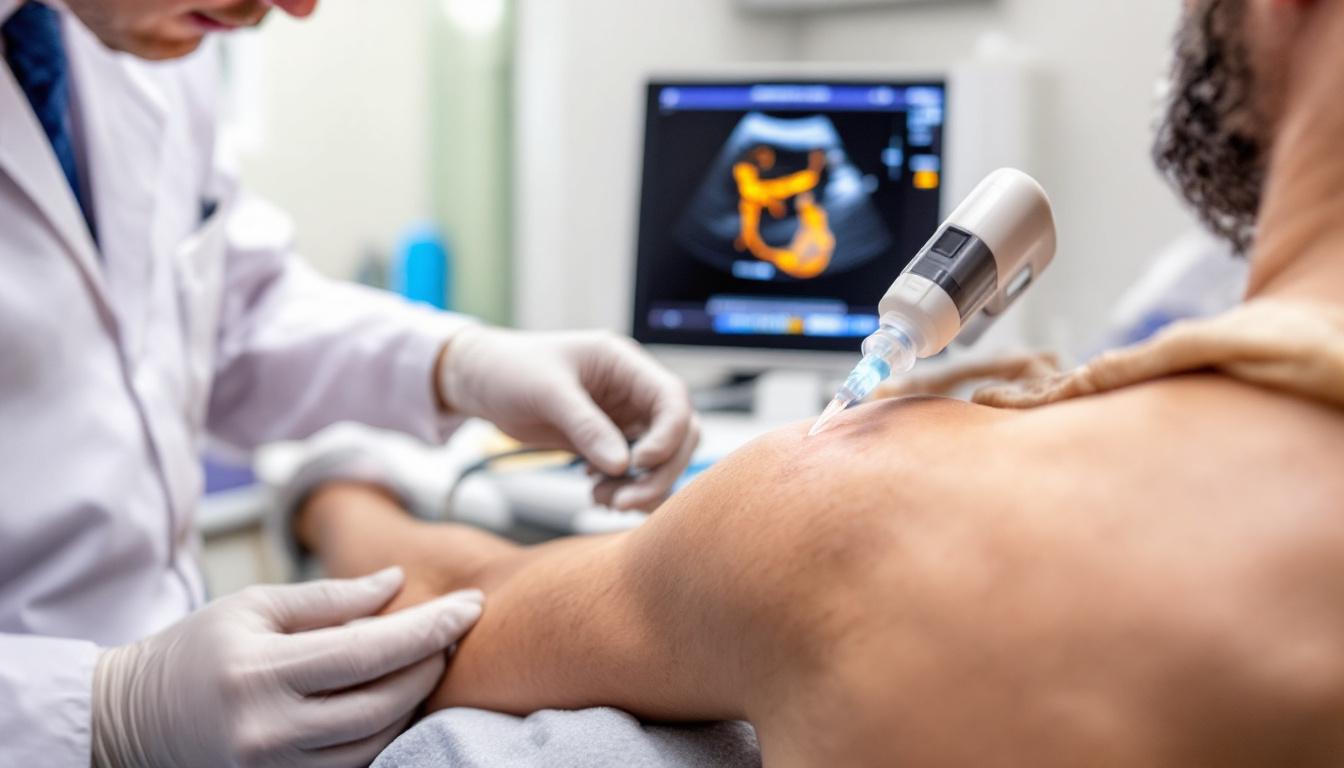
    PRP concentrates your own platelets and delivers growth factors directly into the subacromial space under ultrasound guidance. The key mechanism involves modulating the chronic inflammatory state of the bursa, PRP's cytokine profile suppresses pro-inflammatory interleukins while promoting tissue remodeling and collagen synthesis in the surrounding tendons.
    For patients with combined bursitis and rotator cuff tendinopathy, a single ultrasound-guided PRP injection can address both pathologies simultaneously, delivering growth factors to the bursa, subacromial space, and rotator cuff insertion with precise anatomic targeting.
    Ultrasound-guided PRP injection into the subacromial space for shoulder bursitis treatment
    Ultrasound-guided PRP injection into the subacromial space for shoulder bursitis treatment

    What the Research Shows

    A 2016 randomized trial (PMID 26846205) compared subacromial PRP to corticosteroid injection in patients with chronic shoulder impingement and bursitis. At 3 months both groups showed improvement, but the PRP group demonstrated significantly superior outcomes at 6 months, while the cortisone group's pain scores returned toward baseline.
    A systematic review of PRP for subacromial shoulder pathology (PMID 30343375) found consistent evidence of PRP superiority over cortisone at follow-up timepoints beyond 3 months, supporting PRP as the preferred treatment when durable rather than short-term relief is the goal.

    PRP vs. Cortisone for Shoulder Bursitis

    Corticosteroid injection into the subacromial space provides effective short-term pain relief in many patients but the benefit is typically temporary (4–12 weeks), and repeated injections can weaken the rotator cuff tendons that pass through the same space.
    PRP's growth factor mechanism directly counteracts the tendon-weakening effects of cortisone: rather than suppressing tissue metabolism, it stimulates repair. For patients with recurring bursitis or concurrent tendinopathy, this distinction is clinically significant.

    Who Is a Candidate for PRP?

    Patients with subacromial bursitis who have not achieved lasting relief from physical therapy or cortisone injections, particularly those with concurrent rotator cuff tendinopathy on imaging, are strong candidates for subacromial PRP.
    Most protocols involve 1–2 injections over 4–6 weeks, with improvement progressing over 8–12 weeks. Athletes and active patients who cannot risk the tendon-weakening effects of repeated cortisone are particularly well suited to PRP as a first-line regenerative treatment.

    Sources

    1. Randomized trial comparing subacromial PRP to cortisone for shoulder impingement. PMID 26846205
    2. Systematic review of PRP for subacromial shoulder pathology. PMID 30343375
    Disclaimer: This content is for informational purposes only and does not constitute medical advice. Consult a qualified healthcare provider before pursuing any treatment.
    ApplicationInjection TargetEvidence LevelTypical ProtocolBest Candidates
    Subacromial Bursitis / Shoulder ImpingementSubacromial-subdeltoid bursa under ultrasound guidanceModerate-Strong (2024 double-blind RCT 100 patients; 2024 RCT 60 patients)1 injection under ultrasound guidance; reassess at 6–8 weeksChronic bursitis (3+ months); failed cortisone; recurrent; avoiding repeat steroid exposure

    Frequently Asked Questions

    Find a Shoulder Bursitis PRP Specialist Near You

    Browse our directory of verified providers who offer PRP injections for shoulder bursitis and related shoulder conditions.

    Search Providers

    Other Conditions

    PRP for Achilles Tendinitis

    Explore how PRP injections can treat achilles tendinitis. Learn about platelet-rich plasma therapy benefits, recovery, and results for achilles tendinitis.

    PRP for ACL Injuries

    Explore how PRP injections can treat acl injuries. Learn about platelet-rich plasma therapy benefits, recovery, and results for acl injuries.

    PRP for Ankle Sprains

    Explore how PRP injections can treat ankle sprains. Learn about platelet-rich plasma therapy benefits, recovery, and results for ankle sprains.

    PRP for Carpal Tunnel Syndrome

    Explore how PRP injections can treat carpal tunnel syndrome. Learn about platelet-rich plasma therapy benefits, recovery, and results for carpal tunnel syndr...

    PRP for Chronic Low Back Pain

    Explore how PRP injections can treat chronic low back pain. Learn about platelet-rich plasma therapy benefits, recovery, and results for chronic low back pain.

    PRP for De Quervain's Tenosynovitis

    Explore how PRP injections can treat de quervain's tenosynovitis. Learn about platelet-rich plasma therapy benefits, recovery, and results for de quervain's ...

    PRP for Disc Degeneration

    Explore how PRP injections can treat disc degeneration. Learn about platelet-rich plasma therapy benefits, recovery, and results for disc degeneration.

    PRP for Elbow Bursitis

    Explore how PRP injections can treat elbow bursitis. Learn about platelet-rich plasma therapy benefits, recovery, and results for elbow bursitis.

    PRP for Facet Joint Syndrome

    Explore how PRP injections can treat facet joint syndrome. Learn about platelet-rich plasma therapy benefits, recovery, and results for facet joint syndrome.

    PRP for Frozen Shoulder

    Explore how PRP injections can treat frozen shoulder. Learn about platelet-rich plasma therapy benefits, recovery, and results for frozen shoulder.

    Find a Specialist

    Connect with board-certified providers offering PRP therapy.