
PRP for Tennis Elbow

    Explore how PRP injections can treat tennis elbow. Learn about platelet-rich plasma therapy benefits, recovery, and results for tennis elbow.
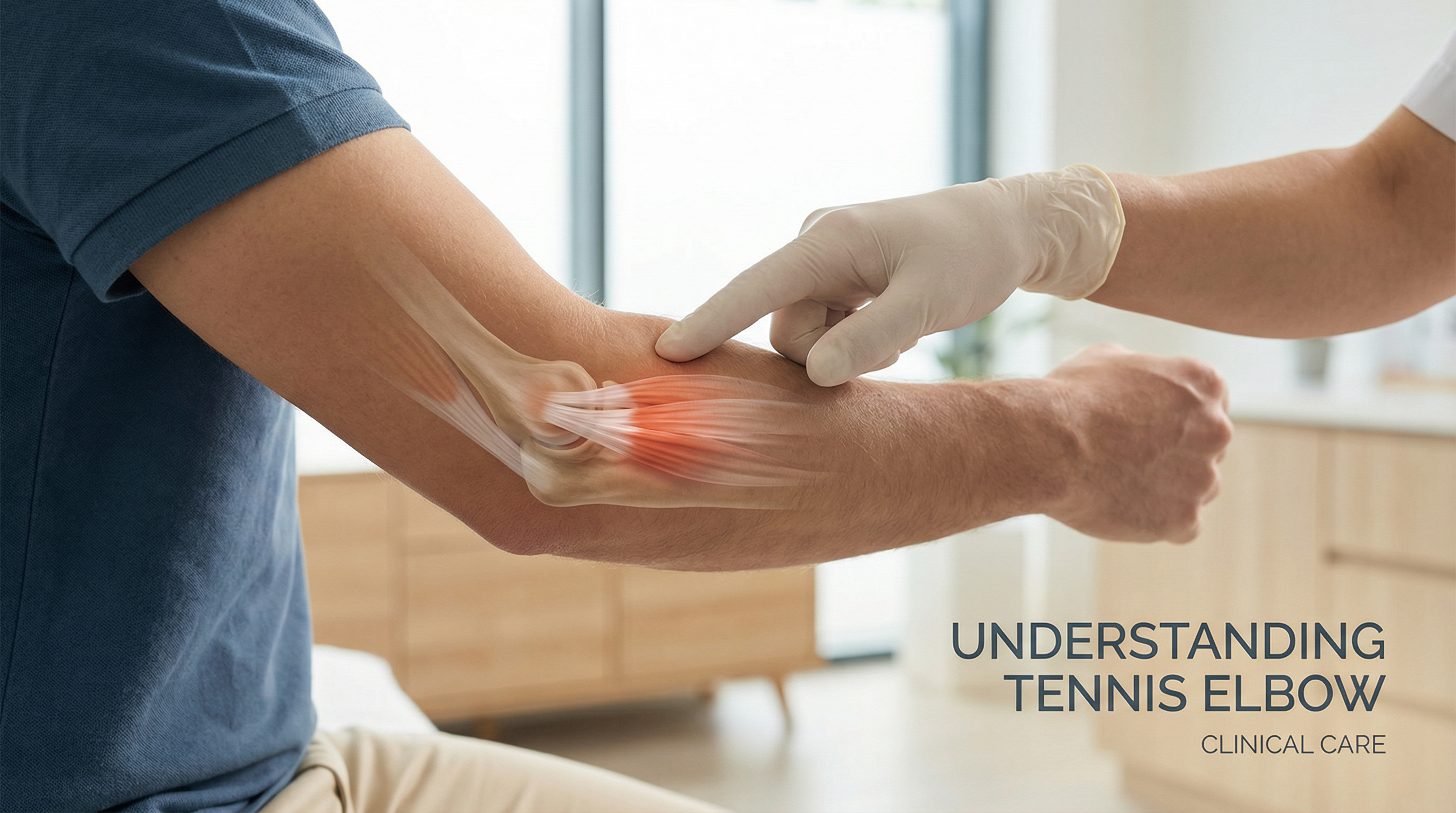
    Tennis elbow, lateral epicondylitis, is one of the most studied conditions in PRP research. Caused by microtearing and failed healing of the common extensor tendon at the elbow, it affects both athletes and desk workers. PRP has emerged as a leading non-surgical option backed by multiple randomized controlled trials.
    PRP injection for tennis elbow and lateral epicondylitis
    PRP injection for tennis elbow and lateral epicondylitis

    What Is Tennis Elbow (Lateral Epicondylitis)?

    Lateral epicondylitis results from repetitive stress to the extensor carpi radialis brevis (ECRB) tendon where it attaches to the lateral epicondyle of the humerus. Despite the name, only about 5% of cases involve tennis players, it is equally common in carpenters, painters, plumbers, and computer users. The condition is fundamentally degenerative (tendinosis) rather than inflammatory, which is why anti-inflammatory treatments like cortisone injections often provide only short-term relief.

    How PRP Therapy Works for Tennis Elbow

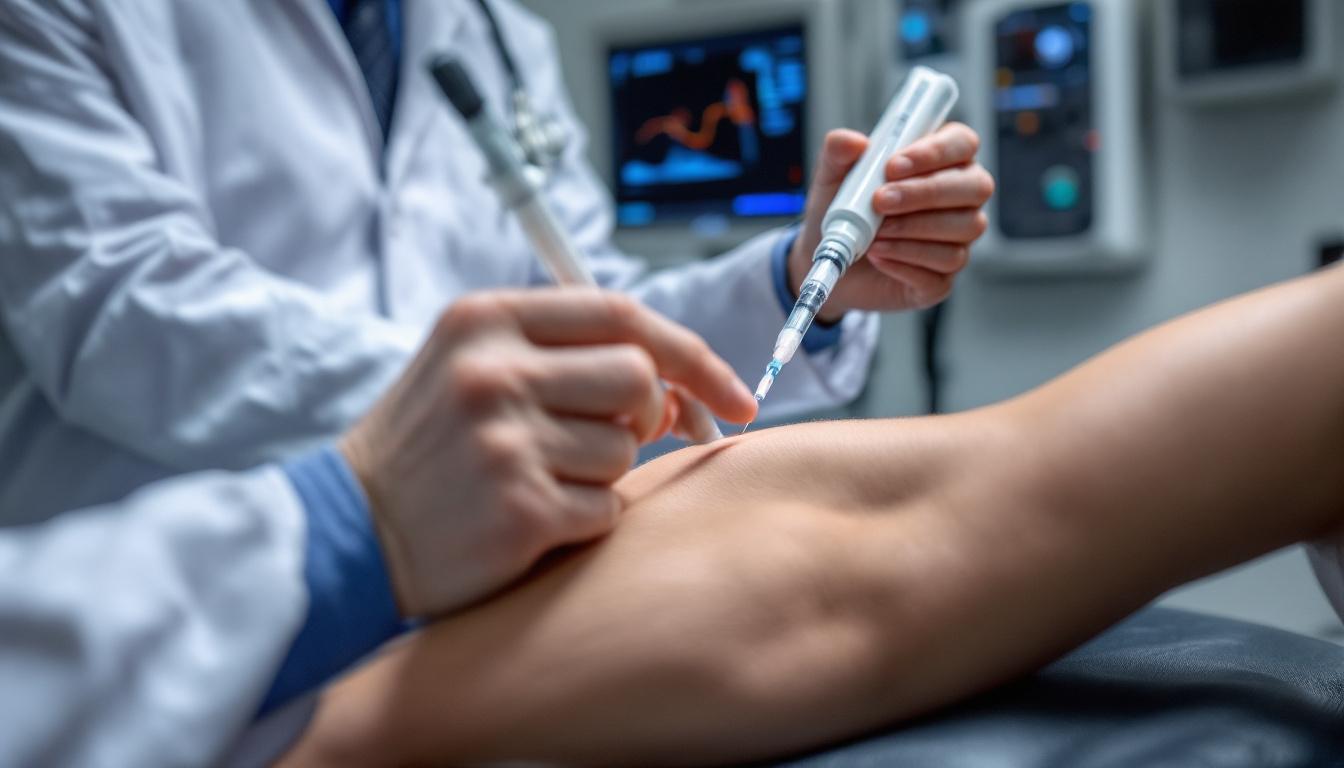
    PRP delivers concentrated growth factors, including PDGF, TGF-β1, and IGF-1, directly into the degenerated tendon tissue, stimulating fibroblast recruitment, collagen synthesis, and neovascularization. Because lateral epicondylitis represents a failure of the tendon's natural healing cascade, PRP addresses the biological root cause rather than simply suppressing inflammation.
    Ultrasound-guided PRP injection at the lateral epicondyle
    Ultrasound-guided PRP injection at the lateral epicondyle

    What the Research Shows

    A landmark 2010 randomized controlled trial by Peerbooms et al. (PMID 20111659) found PRP superior to corticosteroid injection for lateral epicondylitis at 1-year follow-up, with 73% of PRP patients achieving success versus 49% in the cortisone group. A 2011 follow-up study by Gosens et al. (PMID 21965019) extended the observation to 2 years and confirmed that the advantage of PRP over corticosteroid widened over time, as cortisone patients showed recurrence while PRP patients maintained durable improvement.

    PRP vs. Cortisone for Tennis Elbow

    Cortisone injections provide faster initial relief, typically within 1–2 weeks, but multiple studies show this advantage reverses by 3 months. By 6–12 months, cortisone-treated patients frequently report outcomes worse than baseline due to tendon tissue weakening. PRP's onset is slower, typically requiring 4–8 weeks to appreciate full benefit, but produces durable results by driving actual tissue repair rather than masking symptoms.

    Who Is a Candidate for PRP?

    Ideal candidates include adults with lateral epicondylitis confirmed by clinical exam or diagnostic ultrasound, symptom duration of 3 months or longer, and prior failure of at least one conservative treatment such as physical therapy, NSAIDs, or bracing. Patients with occupational repetitive strain or bilateral elbow involvement are also good candidates. If shoulder pain is co-occurring, our page on rotator cuff tears covers related upper-extremity PRP applications.

    Sources

    Peerbooms JC, et al. Positive effect of an autologous platelet concentrate in lateral epicondylitis in a double-blind randomized controlled trial. Am J Sports Med. 2010;38(2):255-262. PMID 20111659. Gosens T, et al. Ongoing positive effect of platelet-rich plasma versus corticosteroid injection in lateral epicondylitis: a double-blind randomized controlled trial with 2-year follow-up. Am J Sports Med. 2011;39(6):1200-1208. PMID 21965019.
    This page is for informational purposes only and does not constitute medical advice. Consult a qualified healthcare provider to determine whether PRP therapy is appropriate for your condition.
    Outcome MeasureShort-Term (<2 months)Mid-Term (2–6 months)Long-Term (>6 months)
    VAS Pain ScoreCortisone better (P=0.03)No significant differencePRP better (MD −1.60, P<0.001)
    DASH Functional ScoreCortisone slightly betterNo significant differencePRP better (MD −4.87, P<0.001)
    Mayo Elbow PerformanceSimilarSimilarPRP better (MD 16.53, P=0.03)
    Recurrence RiskLow (cortisone)Cortisone wears offLower with PRP
    Tendon Tissue EffectCortisone may weaken tendon, PRP promotes repair

    Frequently Asked Questions

    Find a Tennis Elbow PRP Specialist Near You

    Browse our directory of verified orthopedic PRP providers who specialize in elbow tendinopathy and lateral epicondylitis.

    Search Providers

    Other Conditions

    PRP for Achilles Tendinitis

    Explore how PRP injections can treat achilles tendinitis. Learn about platelet-rich plasma therapy benefits, recovery, and results for achilles tendinitis.

    PRP for ACL Injuries

    Explore how PRP injections can treat acl injuries. Learn about platelet-rich plasma therapy benefits, recovery, and results for acl injuries.

    PRP for Ankle Sprains

    Explore how PRP injections can treat ankle sprains. Learn about platelet-rich plasma therapy benefits, recovery, and results for ankle sprains.

    PRP for Carpal Tunnel Syndrome

    Explore how PRP injections can treat carpal tunnel syndrome. Learn about platelet-rich plasma therapy benefits, recovery, and results for carpal tunnel syndr...

    PRP for Chronic Low Back Pain

    Explore how PRP injections can treat chronic low back pain. Learn about platelet-rich plasma therapy benefits, recovery, and results for chronic low back pain.

    PRP for De Quervain's Tenosynovitis

    Explore how PRP injections can treat de quervain's tenosynovitis. Learn about platelet-rich plasma therapy benefits, recovery, and results for de quervain's ...

    PRP for Disc Degeneration

    Explore how PRP injections can treat disc degeneration. Learn about platelet-rich plasma therapy benefits, recovery, and results for disc degeneration.

    PRP for Elbow Bursitis

    Explore how PRP injections can treat elbow bursitis. Learn about platelet-rich plasma therapy benefits, recovery, and results for elbow bursitis.

    PRP for Facet Joint Syndrome

    Explore how PRP injections can treat facet joint syndrome. Learn about platelet-rich plasma therapy benefits, recovery, and results for facet joint syndrome.

    PRP for Frozen Shoulder

    Explore how PRP injections can treat frozen shoulder. Learn about platelet-rich plasma therapy benefits, recovery, and results for frozen shoulder.

    Find a Specialist

    Connect with board-certified providers offering PRP therapy.