PRP Therapy as an Alternative to Hip Replacement Surgery
Learn how PRP therapy can reduce hip pain and delay or avoid hip replacement surgery. Evidence-based guide with clinical research and cost comparisons.
April 2, 2026
Hip replacement surgery is one of the most common orthopedic procedures in the United States, with over 450,000 total hip arthroplasties performed each year. The procedure can be life-changing for patients with severe hip osteoarthritis, but it is major surgery with real risks, a lengthy recovery, and costs that routinely exceed $40,000. If you are exploring every option before committing to a hip replacement, platelet-rich plasma (PRP) therapy is emerging as a promising treatment that may reduce your pain, improve your function, and help you delay or even avoid the operating room.
This guide covers what the clinical research says about PRP injections as a hip replacement alternative, who is most likely to benefit, how PRP compares to other injectable treatments, and when surgery is still the best path forward.
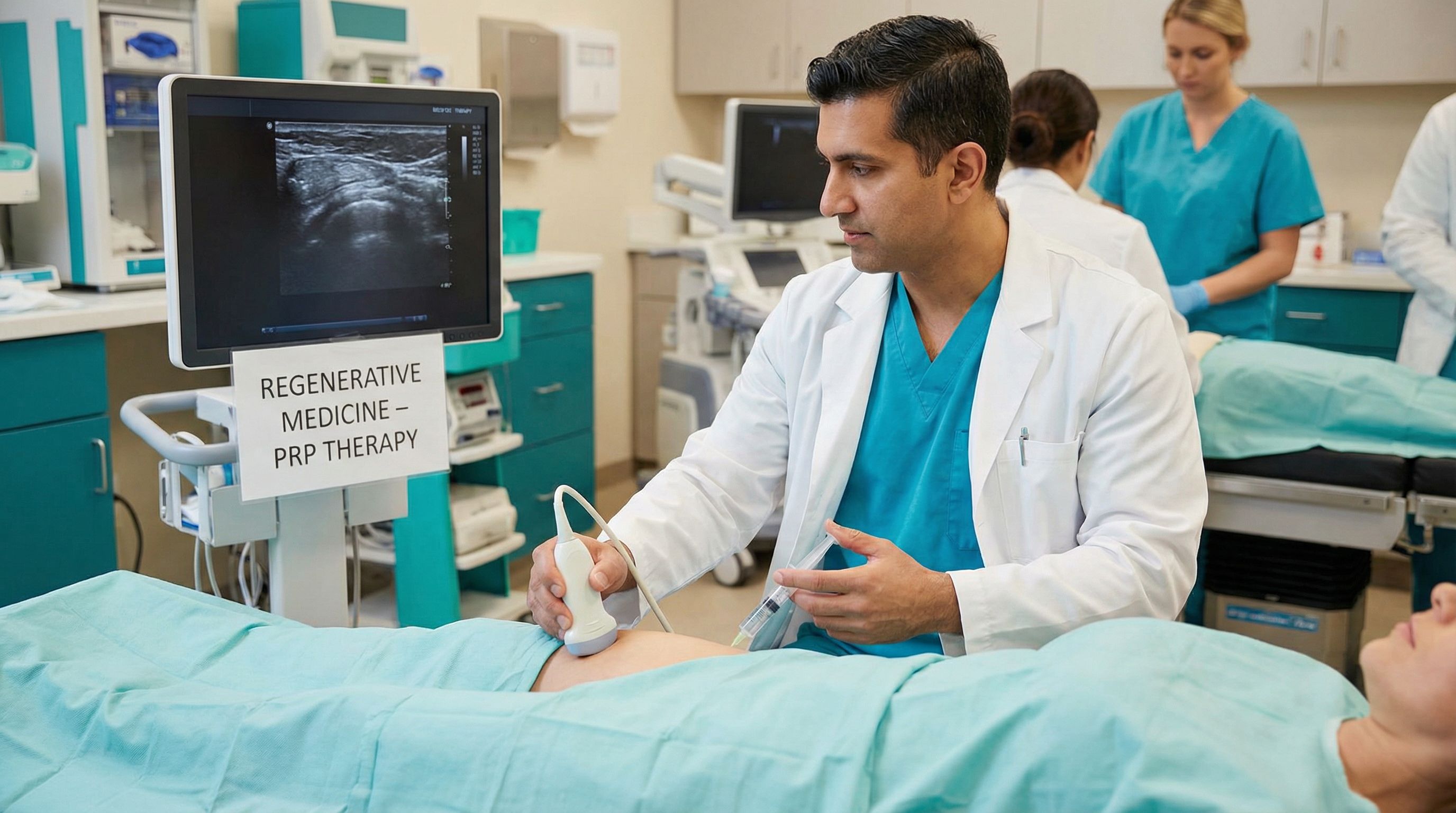
Ultrasound-guided PRP injection delivers concentrated healing factors directly into the hip joint.
Why Patients Seek Alternatives to Hip Replacement
The American Joint Replacement Registry reports steady year-over-year growth in hip replacement procedures, and projections estimate the number could reach 652,000 annually in the United States by 2030.1 Total hip arthroplasty (THA) has high satisfaction rates and modern implants can last 20 years or more. But there are compelling reasons to explore alternatives first.
Recovery from hip replacement typically takes 3 to 6 months for a return to daily activities, with full recovery often stretching to a year. Complication rates include a 1% to 2% risk of prosthetic joint infection, a 2% dislocation rate in the first year, and a 4.3 per 1,000 revision rate due to infection alone over 4.6 years.2 For patients who undergo revision hip surgery, the dislocation rate jumps to 28%, and periprosthetic fracture rates climb to 4% to 11%.2
Then there is the financial burden. The average total hip replacement costs between $31,000 and $45,000 without insurance, with some estimates ranging as high as $74,000 depending on the facility and region.3
These risks, recovery times, and costs explain why more patients and orthopedic specialists are investigating biological treatments like PRP to manage hip osteoarthritis before turning to joint replacement.
What Is PRP and How Does It Work in the Hip Joint?
Platelet-rich plasma is a concentrated preparation derived from your own blood. A small blood draw is processed in a centrifuge to separate the platelet-rich layer, which is then injected directly into the hip joint under ultrasound guidance.
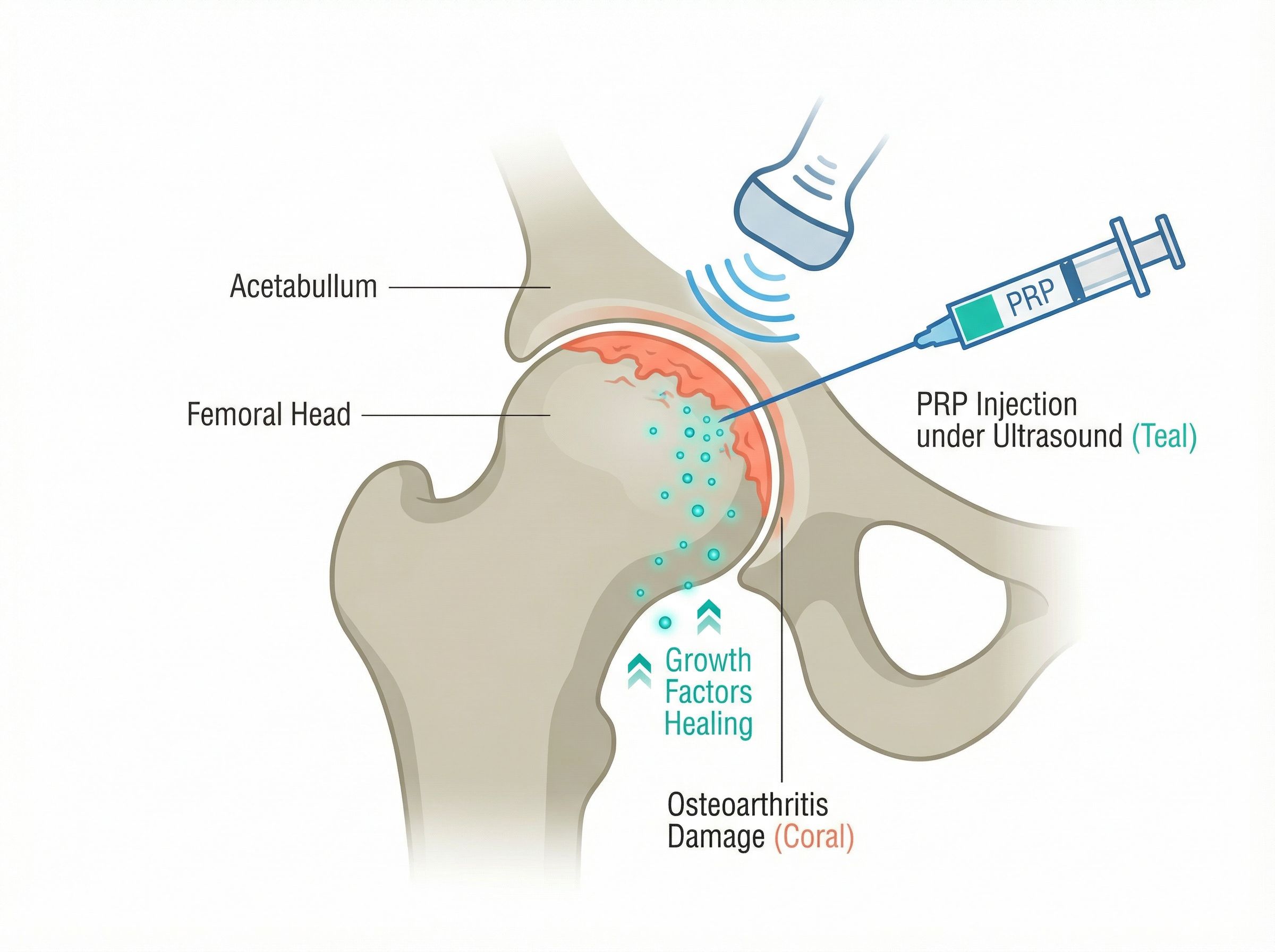
Platelets contain growth factors that regulate tissue repair and inflammation. When injected into an osteoarthritic hip, PRP delivers a concentrated dose of platelet-derived growth factor (PDGF), transforming growth factor beta (TGF-B), and vascular endothelial growth factor (VEGF). These growth factors work together to reduce inflammation, stimulate cartilage cell activity, improve synovial fluid quality, and slow cartilage breakdown.
The hip joint presents unique considerations compared to the knee. It sits deeper in the body, has a tighter joint capsule, and receives blood supply differently. This is why ultrasound-guided injection is particularly important for hip PRP treatments to ensure accurate placement within the joint space.
What the Research Says: PRP for Hip Osteoarthritis
Pain Reduction and Functional Improvement
According to PubMed, a 2025 observational study by Bian et al. published in Annals of Medicine compared PRP to hyaluronic acid (HA) in 150 patients with hip osteoarthritis. The PRP group showed statistically significant improvements across all outcome measures at 3, 6, and 12 months, including reductions in VAS pain scores (MD 2.238, 95% CI 0.065 to 3.21), improvements in WOMAC functional scores (MD 1.033, 95% CI 0.06 to 1.526), and gains in Harris Hip Scores (MD 1.02, 95% CI 0.06 to 1.126). The researchers also found a moderate correlation between anti-inflammatory IL-10 levels and pain reduction in the PRP group, suggesting PRP may work partly through immune modulation. DOI4
A landmark randomized controlled trial by Dallari et al. compared three treatment arms in 111 patients with hip osteoarthritis: PRP alone, PRP combined with hyaluronic acid, and HA alone. Patients received three weekly ultrasound-guided injections, and outcomes were measured at 2, 6, and 12 months. At the 6-month mark, the PRP group had the lowest pain scores across all groups, with a mean VAS of 21 compared to 44 in the HA group (P < .0005). Notably, adding HA to PRP did not improve results, suggesting PRP alone delivers the therapeutic benefit. DOI5
PRP Outperforms Hyaluronic Acid for Hip Pain
According to PubMed, a 2025 double-blind randomized controlled trial by Okanoue et al. published in the Journal of Hip Preservation Surgery evaluated PRP versus HA in 42 patients with hip osteoarthritis secondary to developmental dysplasia of the hip. The PRP group showed significantly greater pain-VAS improvement (38.5 points) compared to the HA group (18.7 points, P = .041). PRP also demonstrated sustained improvement across 24 weeks, while HA showed significant improvement only at the 16-week mark. This is the first double-blind RCT to evaluate PRP specifically in patients with hip OA and DDH, and it demonstrated that PRP significantly reduced pain regardless of the degree of acetabular dysplasia. DOI6
Large-Scale Evidence: Meta-Analyses and Systematic Reviews
According to PubMed, a 2026 meta-analysis by Li and Wu published in BMC Musculoskeletal Disorders pooled data from 11 double-blind randomized controlled trials involving 851 participants. PRP injection resulted in a significant improvement in the WOMAC Total score compared to control treatments (SMD: -8.53, 95% CI: -14.52 to -2.55, P = 0.005). Subgroup analyses revealed that the benefit was especially pronounced in patients younger than 60 years. DOI7
A 2025 systematic review by Scott et al. at the Mayo Clinic, published in Orthopedic Reviews, examined 36 studies covering six different orthobiologic therapies for hip OA, including 11 PRP-specific studies. The review found overall improvement in patient-reported outcome measures after orthobiologic injections, with PRP showing promise for improving pain and function. The authors noted that outcomes were best in patients with moderate (Kellgren-Lawrence grade 2-3) hip osteoarthritis. DOI8
Belk et al. published a systematic review and meta-analysis of Level I and II randomized controlled trials in Arthroscopy that included 211 PRP patients and 197 HA patients with hip OA. While both treatments produced meaningful clinical improvements, no statistically significant differences were found between PRP and HA groups in WOMAC, VAS, or Harris Hip Score outcomes. The authors concluded that patients can expect similarly beneficial short-term clinical outcomes from either treatment. DOI9
Regenerative Approaches as Hip Replacement Alternatives
According to PubMed, one of the most striking recent studies comes from Wasilczyk et al., published in Biomedicines in 2025. This double-blind randomized controlled trial enrolled 38 patients who had already been referred for total hip arthroplasty and evaluated an ultrasound-guided nanosurgery and bioengineering treatment (NSBT) using modified PRP. The study group experienced dramatic improvements: VAS pain scores dropped from 7.8 to 0.2 (P < 0.0001), WOMAC scores improved from 76.2 to 10.5 (P < 0.0001), and Harris Hip Scores rose from 56.4 to 93.0. Range of motion showed substantial gains in flexion, external rotation, and internal rotation. The control group, which received non-standardized PRP and HA, showed less pronounced improvements. DOI10
While this study had a small sample size and the modified PRP protocol is not yet widely available, it demonstrates that regenerative approaches have the potential to produce meaningful results even in patients who were considered surgical candidates.
PRP vs. Corticosteroid Injections for the Hip
Corticosteroid injections remain the most commonly prescribed injection for hip osteoarthritis, providing rapid anti-inflammatory relief. However, their effects typically last only 4 to 8 weeks, and repeated injections may accelerate cartilage degradation over time.
PRP works through a fundamentally different mechanism. Rather than suppressing inflammation temporarily, PRP delivers growth factors that support tissue repair and modulate the immune response. While PRP may take longer to reach full effect (typically 4 to 6 weeks), the benefits tend to last longer, with studies showing sustained improvement at 6 and 12 months.
PRP growth factors reduce inflammation and stimulate cartilage repair in the hip joint.
Who Is a Good Candidate for PRP Instead of Hip Replacement?
PRP therapy tends to work best for specific patient profiles. Based on the available evidence, you may be a strong candidate if you meet several of the following criteria.
Mild to moderate hip osteoarthritis (Kellgren-Lawrence grade 2-3). The research consistently shows better outcomes in patients who still have some remaining cartilage. Patients with bone-on-bone (grade 4) arthritis are less likely to see meaningful improvement from PRP alone.8
Age under 60. The Li and Wu meta-analysis found that PRP benefits were most significant in patients younger than 60 years, likely because younger patients have a stronger biological healing response.7
Desire to delay surgery. For patients who are not yet ready for hip replacement due to age, activity level, or personal preference, PRP can serve as a bridge treatment that manages symptoms while preserving the option for surgery later.
Failed conservative treatments. If physical therapy, weight management, oral anti-inflammatories, and activity modification have not provided adequate relief, PRP represents a reasonable next step before considering surgery.
Conditions beyond standard OA. The Okanoue et al. RCT demonstrated that PRP is effective even in patients with hip OA secondary to developmental dysplasia, suggesting benefit across a range of hip pathologies.6 PRP also shows promise for related hip conditions such as hip bursitis and hip labral tears.
What Does PRP Treatment for the Hip Look Like?
A typical PRP protocol for hip osteoarthritis involves a series of ultrasound-guided intra-articular injections. Based on the clinical literature, most treatment protocols include 2 to 3 injections spaced 1 to 4 weeks apart, with injection volumes ranging from 3 to 8 mL per session.
Research indicates that leukocyte-poor PRP preparations may produce slightly better results for hip OA, with one systematic review finding significantly larger pain reductions with LP-PRP compared to leukocyte-rich formulations.8
The procedure is performed in an office setting and takes about 30 to 45 minutes, including blood draw, processing, and injection. Most patients experience mild soreness at the injection site for 1 to 3 days. Unlike hip replacement surgery, there is no hospitalization, no general anesthesia, and no extended rehabilitation period.
A single PRP treatment session typically costs between $500 and $2,500, depending on the provider and preparation method. A full treatment course of 2 to 3 sessions runs approximately $1,000 to $7,500 total. Even if treatment needs to be repeated annually, the cumulative cost over several years is a fraction of a hip replacement.
Total hip replacement surgery costs between $31,000 and $74,000, factoring in surgeon fees, hospital stay, implant costs, anesthesia, and postoperative rehabilitation.3 Additional costs from lost work time during the 3-to-6 month recovery period push the true financial impact even higher.
For patients who can delay hip replacement by even a few years through PRP therapy, the cost savings are significant. For a comprehensive cost breakdown, visit our PRP cost guide.
When Hip Replacement Is Still the Right Choice
PRP is not a replacement for hip replacement in all cases. Surgery remains the gold standard for patients with severe, end-stage hip osteoarthritis (Kellgren-Lawrence grade 4) where there is minimal remaining cartilage and significant structural damage.
Hip replacement should be strongly considered when pain is severe and constant, including at rest and during sleep; when mobility limitations prevent basic daily activities like walking, climbing stairs, or putting on shoes; when multiple conservative and injection-based treatments have failed to provide meaningful relief; and when imaging shows bone-on-bone contact with significant joint space narrowing, femoral head collapse, or large bone spurs.
In these situations, total hip arthroplasty offers a reliable path to restored function and pain relief. The decision should be made collaboratively between you and your orthopedic specialist based on imaging, symptoms, functional limitations, and your personal goals.
The Bottom Line
The evidence for PRP as a hip osteoarthritis treatment continues to grow. Multiple randomized controlled trials and systematic reviews show that PRP reduces pain and improves function in patients with mild to moderate hip OA, with benefits lasting 6 to 12 months or longer. For the right patient, PRP therapy can serve as a meaningful alternative or bridge to hip replacement surgery, offering symptom relief with minimal risk, no downtime, and a fraction of the cost.
1. Sloan M, Premkumar A, Sheth NP. Projected volume of primary total joint arthroplasty in the U.S., 2014 to 2030. J Bone Joint Surg Am. 2018;100(17):1455-1460.
2. Gundtoft PH, Pedersen AB, Varnum C, Overgaard S. Increased mortality after prosthetic joint infection in primary THA. Clin Orthop Relat Res. 2017;475(11):2623-2631.
3. Hip replacement cost by country 2026. World Population Review. Accessed April 2026.
4. Bian G, Zhao W, Zhang L. Comparative efficacy of platelet-rich plasma injection vs ultrasound-guided hyaluronic acid injection in the rehabilitation of hip osteoarthritis: an observational study. Ann Med. 2025;57(1):2524091. DOI
5. Dallari D, Stagni C, Rani N, et al. Ultrasound-guided injection of platelet-rich plasma and hyaluronic acid, separately and in combination, for hip osteoarthritis: a randomized controlled study. Am J Sports Med. 2016;44(3):664-671. DOI
6. Okanoue Y, Ikeuchi M, Dan J, Teranishi Y. Effectiveness of platelet-rich plasma in pain management of osteoarthritis with developmental dysplasia of the hip: a double-blind, randomized controlled trial. J Hip Preserv Surg. 2025;12(4):230-236. DOI
7. Li S, Wu T. Investigating the therapeutic impact of platelet-rich plasma on knee, hip, and traumatic osteoarthritis: a meta-analysis and systematic review. BMC Musculoskelet Disord. 2026;27(1). DOI
8. Scott P, Hegarty CJ, Kang L, et al. Orthobiologic injections for hip osteoarthritis: a systematic review of clinical outcomes. Orthop Rev (Pavia). 2025;17:151461. DOI
9. Belk JW, Kraeutler MJ, Houck DA, et al. Platelet-rich plasma versus hyaluronic acid for hip osteoarthritis yields similarly beneficial short-term clinical outcomes: a systematic review and meta-analysis of level I and II randomized controlled trials. Arthroscopy. 2022;38(3):951-960. DOI
10. Wasilczyk C, Wasilczyk B. Nanosurgery and bioengineered regenerative protocols for the treatment of hip osteoarthritis: a double-blind randomized controlled trial as an alternative to surgical hip replacement. Biomedicines. 2025;13(4):987. DOI
Find a PRP Specialist Near You
Search our verified directory of orthopedic PRP providers who specialize in regenerative treatments.